EU Unveils ‘Made in Europe’ Regulations, Offering Some Relief to FTA Partners
Brussels – The European Union has unveiled a new set of regulations designed to bolster its domestic manufacturing base, dubbed the ‘Made in Europe’ strategy. The regulations, formalized as the Industrial Acceleration Act (IAA), prioritize European-made components in public procurement and subsidy allocation, aiming to increase the manufacturing sector’s contribution to the EU’s gross domestic product from 14% to 20%. A key element of the plan, and a source of some anxiety for trading partners, is the definition of “European origin,” which ultimately includes countries with existing Free Trade Agreements (FTAs) with the EU, offering a degree of respite to nations like South Korea.
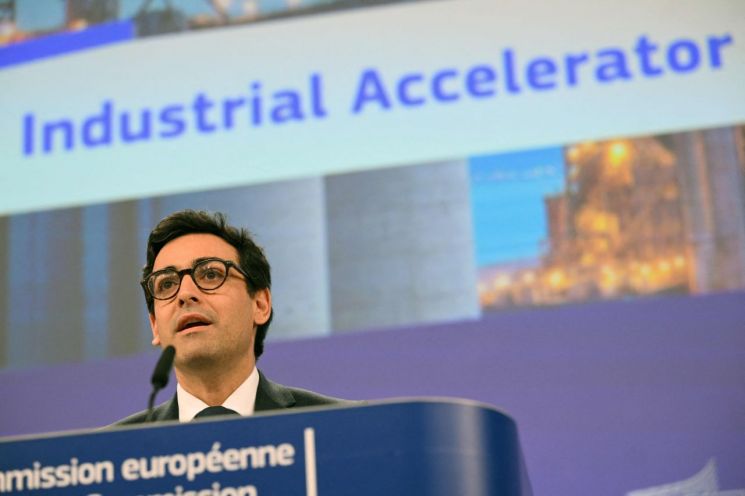
The IAA, announced on March 4, 2026, by European Commissioner for Industry and Prosperity, Stefan Sjöstedt, represents a significant shift in the EU’s industrial policy. It comes amid growing concerns about economic security and a desire to reduce reliance on external supply chains, particularly in strategically important sectors like automotive, steel, cement, aluminum, and renewable energy technologies. The move is as well a response to similar protectionist measures implemented by the United States and China, as Commissioner Sjöstedt emphasized during a press conference in Brussels. “We are re-establishing the economic principles for the 21st century,” he stated, adding that the IAA will “create jobs, reduce external dependencies, and strengthen our economic sovereignty.”
Under the IAA, companies seeking access to EU public funds will be required to meet minimum thresholds for European-sourced components. For example, electric vehicle manufacturers hoping to receive subsidies will need to demonstrate that at least 70% of their vehicle parts are produced within the EU. The regulations also impose conditions on large-scale foreign investments, requiring a minimum proportion of EU workers to be employed and potentially mandating technology transfer.
Internal Divisions and the Definition of ‘Made in Europe’
The path to the IAA’s adoption was not without its challenges. Member states were deeply divided over the scope of the “Made in Europe” criteria, leading to delays in the announcement. Germany, a major exporter, voiced concerns that overly strict rules could trigger retaliatory measures from trading partners and disrupt established supply chains. France, advocated for a narrower definition, limiting European origin to the 27 EU member states plus Norway, Iceland, and Liechtenstein – countries already part of the European Single Market.
The core disagreement centered on whether to extend preferential treatment to countries outside the EU, even those considered “trusted partners.” Germany and other Northern European nations argued that such an approach could be discriminatory and counterproductive. The European Commission reached a compromise: countries with existing FTAs with the EU, or those participating in the World Trade Organization’s (WTO) Government Procurement Agreement (GPA), will be treated on a reciprocal basis, meaning their products will be considered equivalent to EU-made goods if they offer similar market access to European companies. The WTO GPA is a plurilateral agreement aimed at opening government procurement markets among its signatories. More information on the WTO GPA can be found on the WTO website.
This compromise provides some relief to countries like South Korea, which has a comprehensive FTA with the EU. Without this provision, Korean manufacturers could have faced significant barriers to accessing EU public contracts and subsidies. The EU-Korea FTA, which entered into force in 2011, has significantly boosted trade between the two regions. Details on the EU-Korea FTA are available on the European Commission’s trade website.
Foreign Direct Investment Restrictions
Beyond procurement and subsidies, the IAA also introduces new regulations governing foreign direct investment (FDI). Companies with a global production capacity exceeding 40% are subject to stricter scrutiny when investing over €100 million within the EU. These investments will be required to meet specific criteria, including a minimum of 50% EU labor employment and a cap of 49% foreign ownership. Technology transfer requirements are also included.
These FDI provisions are widely seen as targeting Chinese companies, particularly those accused of engaging in “state-sponsored” investments that prioritize market share over job creation and technology transfer. European officials have expressed concerns that some Chinese firms are simply establishing assembly plants within the EU without contributing significantly to the local economy or fostering innovation.
Impact and Future Outlook
The IAA is expected to have a far-reaching impact on European industry and its trading partners. The European Commission estimates that the strategy will aid increase the manufacturing sector’s share of the EU’s GDP from 14% to 20%. It also aims to prevent an anticipated loss of 600,000 jobs in the automotive industry over the next decade and create 150,000 new jobs in other sectors. The EU’s public procurement market, representing approximately 14% of the overall economy, will serve as a key lever for driving these changes.
But, the IAA is not without its potential risks. Critics warn that the regulations could lead to trade disputes and retaliatory measures from other countries. The success of the strategy will depend on the EU’s ability to strike a balance between protecting its domestic industries and maintaining open trade relations. The implementation of the IAA will be closely monitored by businesses and governments around the world, particularly those with significant trade and investment ties to the EU.
The next key step in the IAA’s implementation will be the publication of detailed guidelines and implementing regulations by the European Commission in the coming months. These guidelines will provide clarity on the specific requirements for companies seeking to access EU funding and will outline the procedures for reviewing foreign investments. The Commission is expected to engage with stakeholders, including industry representatives and member states, to ensure a smooth and effective implementation process. Further updates and details will be available on the European Commission’s website. Stay informed about the IAA on the European Commission’s official website.
What are your thoughts on the EU’s new ‘Made in Europe’ strategy? Share your comments below and let us know how you think this will impact global trade and investment.
Worth a look
- Sargassum Seaweed Crisis: Why Mexico Faces Record-Breaking Algae Blooms in 2024
- China’s Political Outlook: Beidaihe Meeting and Upcoming Fifth Plenum Focus on Leadership and Economy
- Rays Acquire Right-Hander Freddy Peralta in Trade with Mets (archyworldys.com)
- California Top-Two Primaries: Strategic Impact on Congressional Races (world-today-news.com)