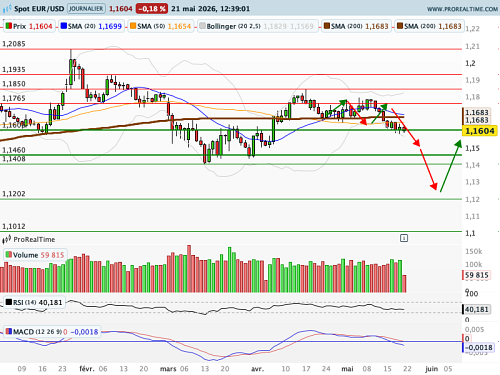
The global currency markets are reflecting a period of heightened caution this Friday, May 22, 2026, as the EUR/USD exchange rate hovers in a sensitive range. Investors are currently navigating a complex macroeconomic landscape, balancing shifting sentiment toward the U.S. Dollar against broader concerns regarding the economic stability of the Eurozone. As of early trading sessions, the pair is fluctuating near the 1.1616 mark, a movement that highlights the ongoing tug-of-war between regional growth data and international monetary policy expectations.
For market participants, the recent performance of the euro against the dollar serves as a vital indicator of investor confidence. While the currency pair has seen minor daily adjustments—recently logged at -0.03%—the broader context remains one of watchful observation. According to data tracked by Investing.com, the pair has been trading within a narrow daily range, reflecting a market that is waiting for clearer signals from central banks and regional economic reports.
Understanding Market Volatility and the EUR/USD Dynamic
The EUR/USD pair is arguably the most liquid and closely watched currency cross in the world. When we analyze the current market environment, we are looking at the result of a multifaceted interaction between the European Central Bank’s policy trajectory and the Federal Reserve’s stance on interest rates. As a financial journalist, I often remind my readers that currency fluctuations are rarely the result of a single factor. Instead, they are the aggregate response to geopolitical developments, trade negotiations and regional economic output.
Current market data from Yahoo Finance indicates that the EUR/USD pair is currently positioned in a range that has been influenced by a broader strengthening of the U.S. Dollar. This trend is frequently linked to broader market sentiment, where the dollar acts as a safe-haven asset during times of global uncertainty. The interplay between the euro and the dollar is not merely a number on a screen; it represents the collective assessment of economic health for two of the world’s most significant monetary blocs.
Factors Influencing the Current Outlook
Several key elements are currently shaping the trajectory of the EUR/USD pair. These include:
- Interest Rate Differentials: The gap between the yields offered on U.S. Treasuries compared to European sovereign debt continues to be a primary driver of capital flows.
- Geopolitical Developments: Ongoing international discussions and trade-related headlines can trigger rapid, short-term shifts in currency valuation.
- Economic Data Releases: Investors are particularly sensitive to reports concerning industrial output and service sector performance, as these metrics provide a window into the underlying strength of the Eurozone economy.
, as reported by Xe, exchange rates are mid-market figures and do not necessarily reflect the retail rates available to individual consumers or businesses during international money transfers. When assessing the impact of these currency movements on your own portfolio or business, always verify the specific transfer rates offered by your financial institution.
Strategic Considerations for Global Investors
For those managing exposure to the euro, the current environment demands a disciplined approach. The Eurozone’s service sector, often regarded as a key barometer for domestic economic health, is under significant scrutiny. When service sector performance shows signs of stagnation or contraction, it can weigh heavily on the euro, contributing to the downward pressure observed in the EUR/USD exchange rate.
Investors should look to official releases from the European Central Bank and the Federal Reserve for the most accurate guidance on upcoming policy adjustments. Relying on speculative market commentary can often lead to unnecessary volatility in one’s investment strategy. Instead, focusing on the fundamental economic indicators—such as inflation targets, employment data, and GDP growth forecasts—remains the most reliable path for long-term planning.
Key Takeaways for the Current Market
- Monitor Central Bank Communication: Policy statements from the ECB and the Fed are the most significant catalysts for sustained movement in the EUR/USD pair.
- Contextualize Daily Swings: Minor daily percentage changes, such as the recent -0.03% fluctuation, are common in liquid currency markets and should be viewed as part of a larger trend rather than an isolated event.
- Maintain Diversification: Given the inherent volatility of currency markets, maintaining a diversified portfolio remains a primary defense against unexpected fluctuations in the value of the euro or the dollar.
As we move through the remainder of the quarter, market participants should keep a close watch on scheduled economic calendars. The next series of high-impact data releases will likely provide the clarity needed to determine whether the current trends in the EUR/USD pair will persist or if a trend reversal is on the horizon. I encourage our readers to stay engaged with official updates and to conduct thorough due diligence before making significant adjustments to their financial positions. Please share your thoughts on the current economic climate in the comments section below.

Keep reading