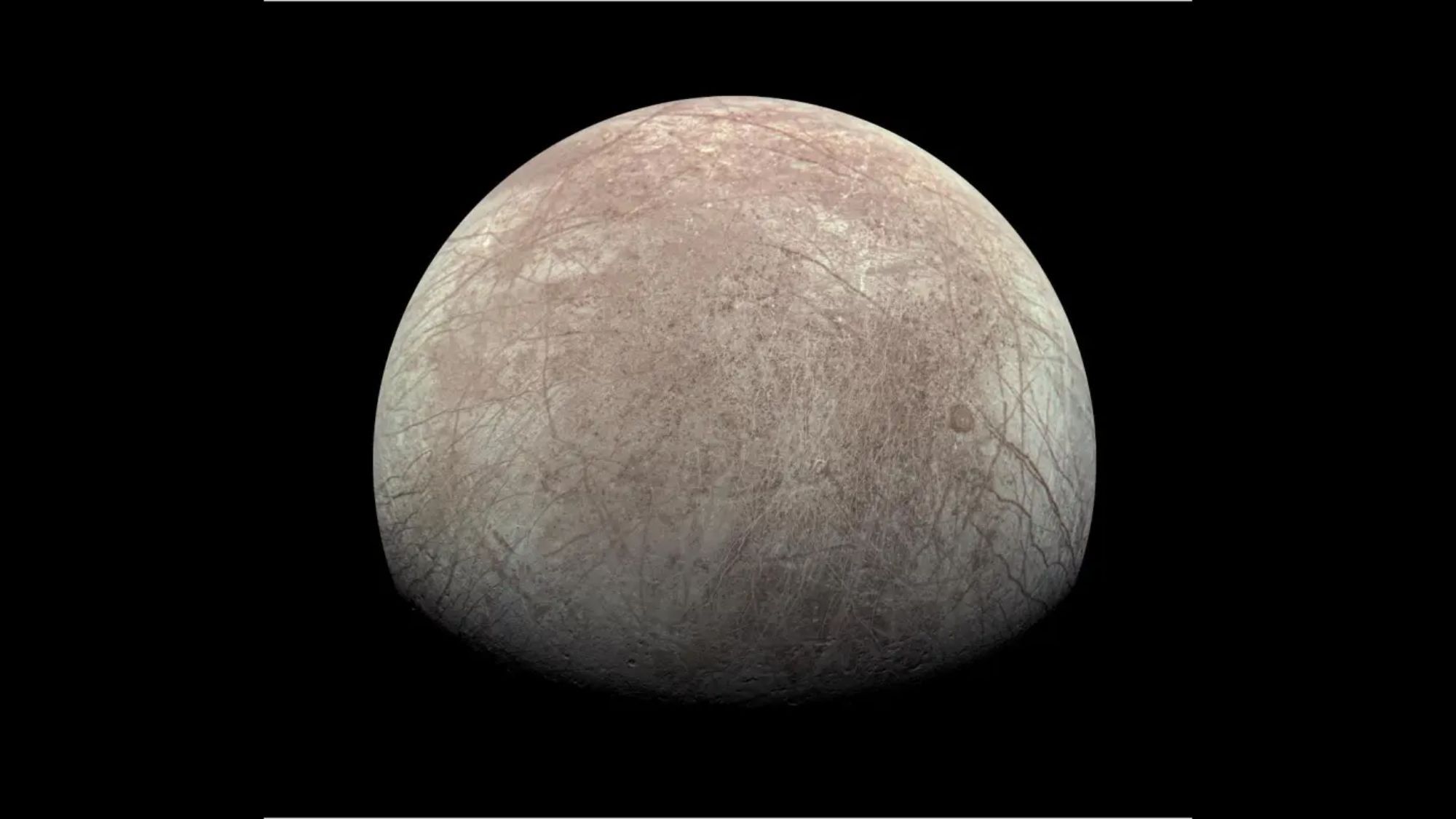
The spacecraft lifted off aboard a SpaceX Falcon Heavy rocket from Cape Canaveral, Fla., following an initial delay that kept the craft secured in a hangar to ride out Hurricane Milton.
Europa Clipper Launches on 1.8-Billion-Mile Journey to Jupiter
The launch marks the beginning of a 5½-year transit to the solar system’s largest planet. Jordan Evans, Europa Clipper project manager at NASA’s Jet Propulsion Laboratory, noted that the successful launch allowed NASA to officially retire a tremendous amount of mission risk. Teams at the Jet Propulsion Laboratory in La Cañada Flintridge applauded when the spacecraft separated from the rocket a little more than an hour after liftoff. Pranay Mishra, the mission’s flight director at JPL, marked the departure by stating, Please say goodbye to Clipper on its way to Europa.
Direct communication with the spacecraft was confirmed shortly after, and although mission managers noted signs that the propulsion system failed to vent, the craft rolled into its desired position, indicating the propulsion system is functioning properly.
Trajectory, Gravity Assists, and Arrival Timeline
Because a direct flight to Jupiter would demand more energy than the spacecraft can carry, the mission utilizes a complex trajectory through the inner Solar System. Spacedaily is borrowing momentum from planets along the way, having already passed Mars on 1 March 2025 to alter its speed and direction using the planet’s gravity.
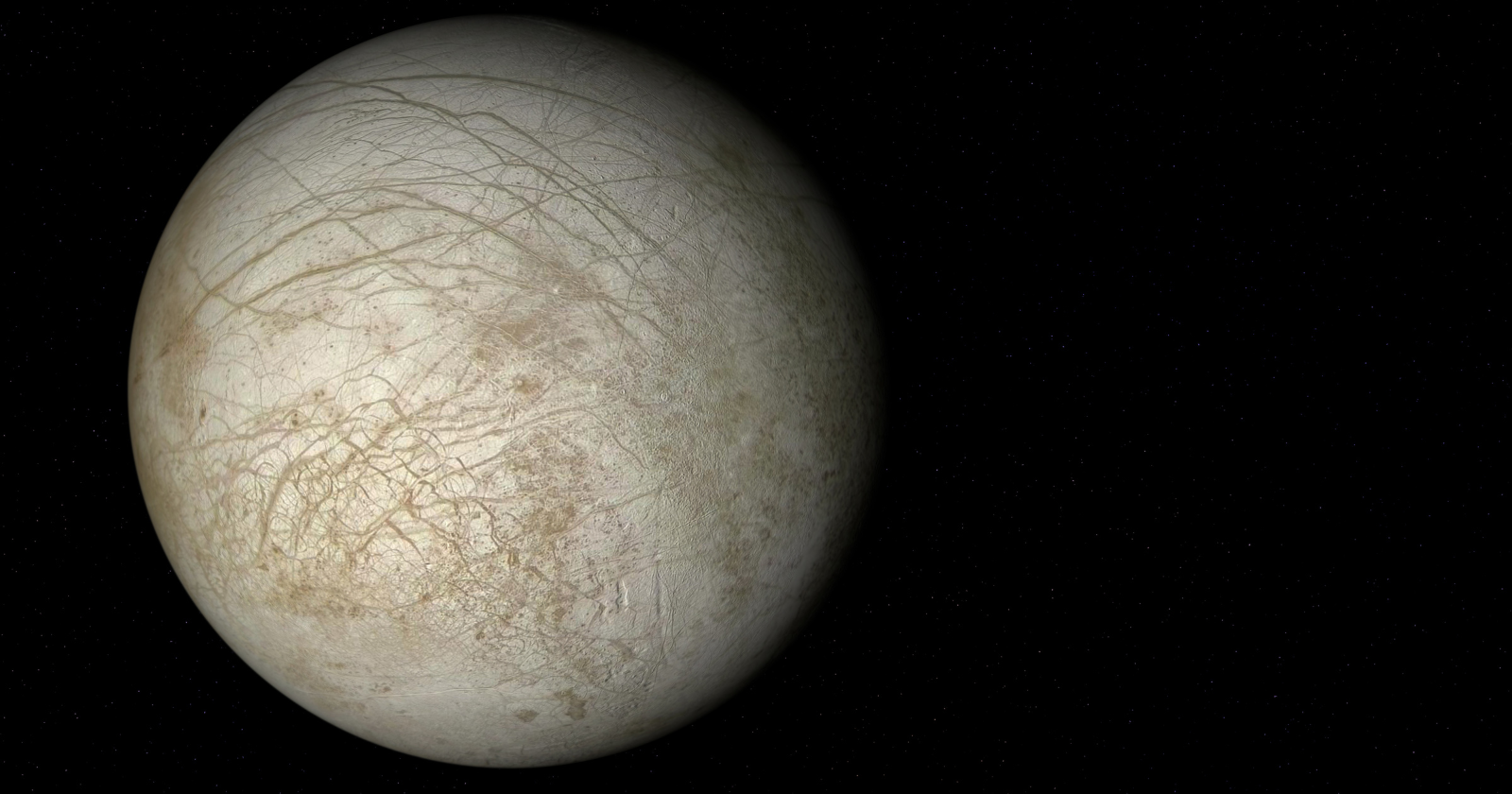
NASA currently plans a second gravity assist during a return encounter with Earth scheduled for 3 December 2026. That encounter will send the probe outward toward Jupiter, where it is scheduled to enter orbit in April 2030.
Scientific Objectives and Habitability Investigations
Scientists have advocated for a Europa mission for decades, building on data from historic missions like Voyager and Galileo that indicated the moon hides a global saltwater ocean beneath its frozen exterior. NASA estimates that this subterranean ocean may be 60 to 150 kilometres deep, potentially containing more than twice as much water as all of Earth’s oceans combined.
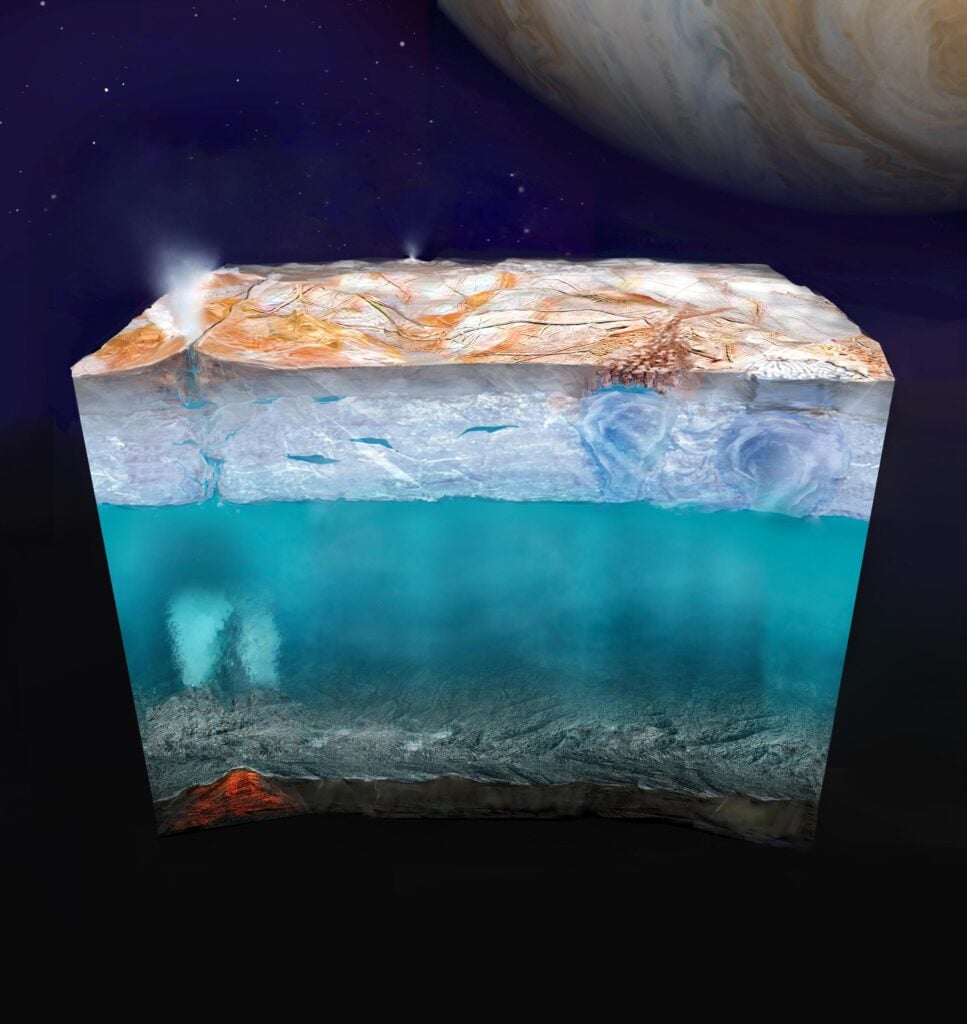
The spacecraft is the largest planetary probe ever built by NASA, but it is not a life-detection mission and is not equipped to drill through the ice or directly detect organisms. Instead, its instruments are designed to assess whether Europa has places where life could be supported. Clipper will execute 49 close flybys of the moon rather than entering a permanent orbit around Europa itself, a cautious architecture chosen because Europa sits deep inside Jupiter’s powerful radiation environment, where a continuously parked spacecraft would quickly absorb a damaging dose.
Scientific Challenges Regarding Ocean Connections
Recent scientific studies have added complexity to how researchers interpret what the spacecraft may find. The findings suggest that liquid rising from the ocean would move turbulently, shed heat rapidly, and freeze the cracks shut hours before reaching shallow depths.
There’s an icy shell, there’s water underneath, and there’s all this speculation about how that water can come from deep underground and make its way all the way up without freezing en route,
Ojha said in a statement. That’s really what we think we disproved.
Additional studies published in January examined seafloor dynamics and potential nutrient delivery mechanisms, noting that tidal forces acting on Europa’s rocky interior may be too weak to sustain extensive hydrothermal venting comparable to Earth’s deep-sea ecosystems.
Keep reading