
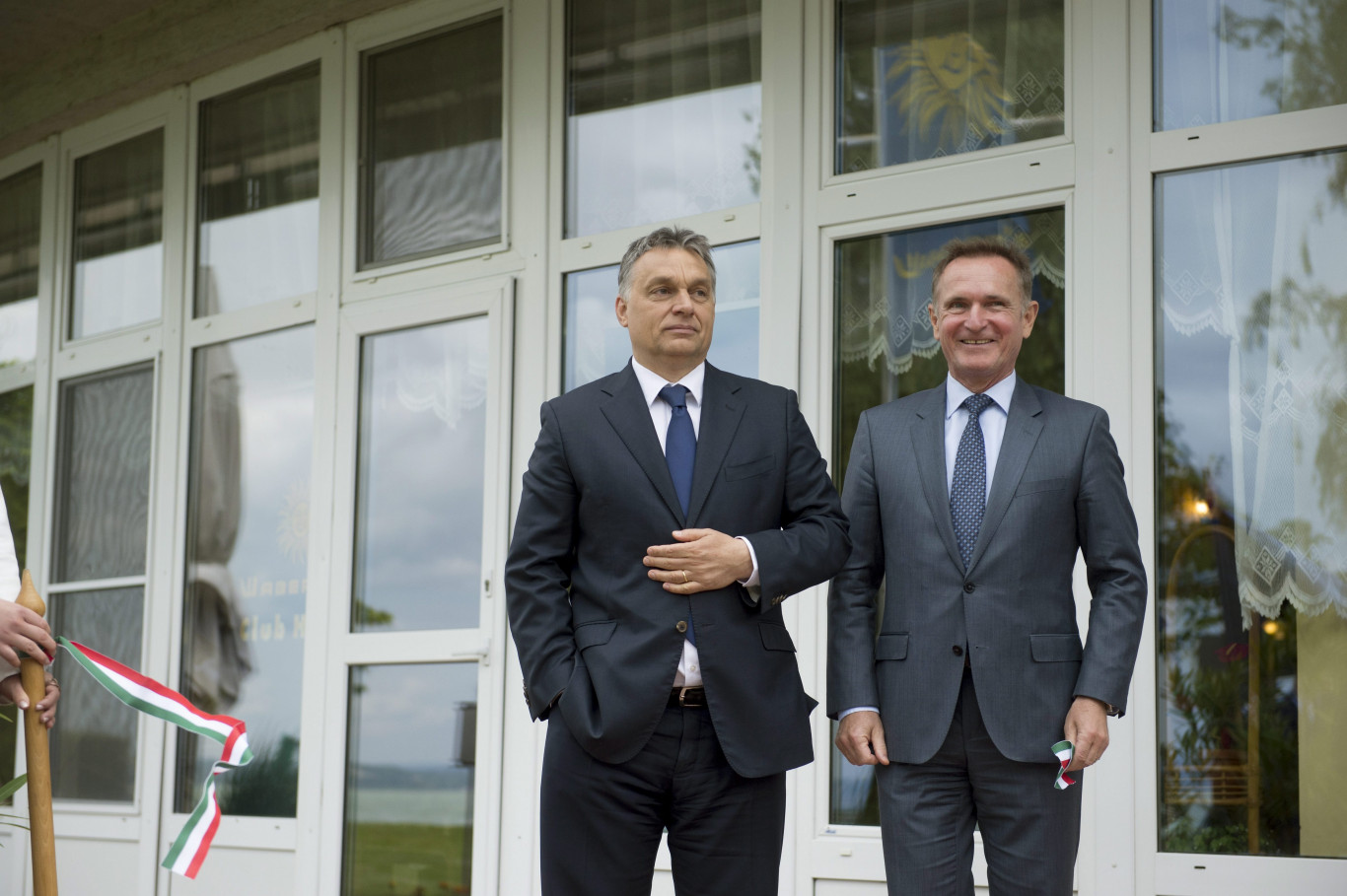
The political and economic landscape of Hungary continues to be shaped by the shifting alliances of its most influential business figures. Recently, Wáberer György, a prominent figure in the logistics sector and a former government commissioner, has drawn attention with a video encouraging voters to consider the geopolitical direction of the country. In the footage, Wáberer presents a stark choice, stating that citizens must decide whether they desire to belong to Europe or to the Russians.
This public stance marks a notable moment for Wáberer, whose professional trajectory has been closely tied to the Hungarian state and its inner circle. Once the owner of a massive transport empire, Wáberer has seen his role transition from a business titan to a government official and, eventually, to a figure whose primary assets were absorbed by other allies of the current administration. His recent comments on European versus Russian alignment come at a time when Hungary’s foreign policy remains a point of intense international scrutiny.
The transition of Wáberer’s influence is most evident in the fate of his namesake company, Waberer’s. The logistics firm, once a cornerstone of his wealth, has undergone a complete change in ownership. Through a series of acquisitions, the company shifted from Wáberer’s control to that of István Tiborcz, the son-in-law of Prime Minister Viktor Orbán. This corporate migration coincided with Wáberer’s own exit from formal government roles, illustrating the concentrated nature of economic power within the Hungarian political sphere.
The Corporate Transition of Waberer’s
The shift in ownership of the Waberer’s logistics company was a phased process. In July 2022, the BDPST Group, which is linked to István Tiborcz, first entered the company. By November 2022, the group’s stake had grown to 28.87 percent. The final transition occurred in February 2023, when Merkport Zrt.—a company 95 percent owned by the BDPST Group—increased its share to 49.64 percent by purchasing the 22.88 percent stake held by Wáberer György’s High Yield Vagyonkezelő Zrt. According to reports from February 2023, this transaction resulted in Wáberer relinquishing all his shares and resigning from the company’s board of directors.

Following this exit, the company has continued to expand under Tiborcz’s leadership. Recent developments show the company diversifying into passenger transport, acquiring a majority stake in a firm that operates a fleet of 170 buses. The energy giant MOL has also invested in the company, acquiring a 15 percent ownership stake in the Waberer’s transport business.
From Government Commissioner to Private Citizen
Parallel to the sale of his business interests, Wáberer’s role within the Hungarian government also shifted. In July 2020, he was appointed as the government commissioner responsible for the development of the Tokaj-Zemplén region. However, shortly after the finalization of the Waberer’s company sale in February 2023, his duties as a government commissioner ended.
The termination of his appointment was framed as being at his own request. According to an MTI communication, Wáberer sought to end his tenure to focus on his duties as a member of the board of trustees for the Tokaj-Hegyalja University Foundation. Even as his role as government commissioner ceased, he remained active in the Tokaj Wine Region and Development Council.
Key Milestones in Wáberer’s Professional Shift
| Date | Event/Action | Outcome |
|---|---|---|
| July 2020 | Appointment as Government Commissioner | Assumed responsibility for Tokaj-Zemplén region development |
| February 2023 | Sale of Waberer’s shares to Merkport Zrt. | Wáberer relinquished all shares and board membership |
| February 2023 | Resignation as Government Commissioner | Ended official state duties to focus on university foundation |
| April 2026 | Public appeal via video | Urged voters to choose between Europe and Russia |
The Geopolitical Context of the ‘Europe or Russia’ Choice
Wáberer’s recent assertion that voters must decide between “belonging to Europe or to the Russians” reflects the ongoing tension within Hungary’s political identity. This rhetoric is particularly striking given Wáberer’s history as one of Hungary’s wealthiest individuals—previously ranked as the 12th richest Hungarian—and his previous proximity to the state’s power structures.
The timing of this appeal, appearing in April 2026, suggests a shift in how former insiders are engaging with the public discourse. For a global audience, this highlights the volatility of political loyalty in regions where business interests and government appointments are deeply intertwined. The “choice” Wáberer describes is not merely a political preference but a fundamental question of strategic alignment for the Hungarian state.
Broader Implications for Hungarian Logistics and Energy
The evolution of the Waberer’s company into a broader logistics and transport hub under István Tiborcz and the involvement of MOL indicates a strategy of consolidation. The company’s move into passenger transport and the strategic investment by a state-influenced energy company like MOL suggest that the logistics sector is being integrated into a larger, more centralized economic network.
This consolidation is mirrored in other sectors. For instance, the state has transitioned various insurance assets to the Tiborcz business empire, continuing a trend of expansion into the domestic insurance market. Such moves underscore the systemic shift in Hungary’s economy, where large-scale assets are frequently transferred from individual entrepreneurs to a smaller circle of politically connected entities.
As Hungary navigates its relationship with the European Union and its neighbors, the public statements of figures like Wáberer serve as a barometer for the internal pressures facing the country. Whether these appeals lead to a broader shift in public sentiment or remain isolated instances of dissent remains to be seen.
The next confirmed checkpoint for observers of Hungarian political and economic trends will be the upcoming election cycles and the continued reporting on the ownership structures of the country’s largest logistics and energy firms. We encourage our readers to share their perspectives on these developments in the comments section below.