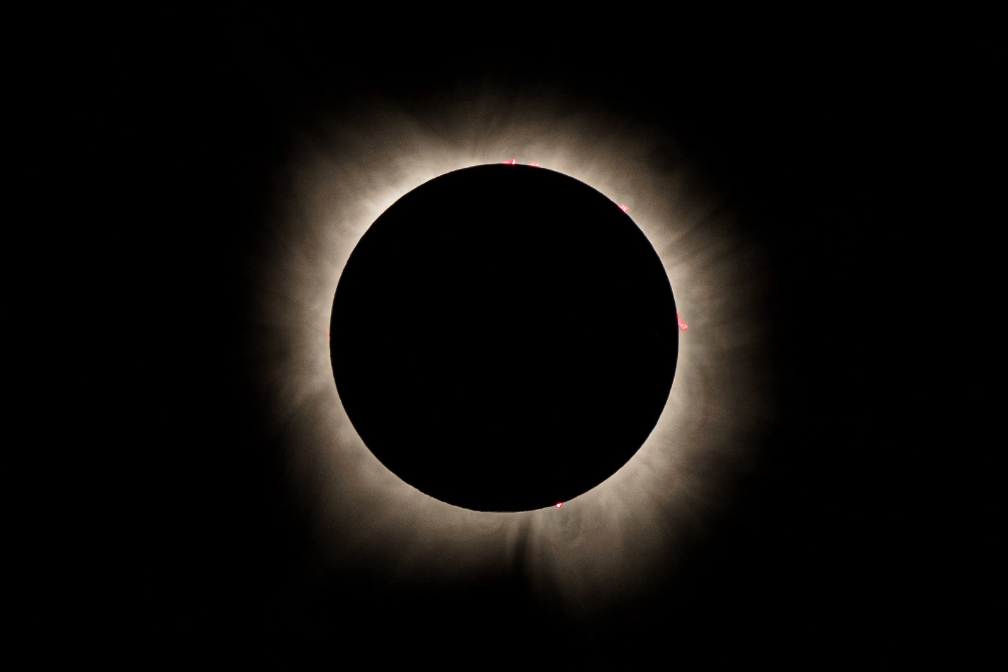
Europe is preparing for a rare astronomical event as a total solar eclipse arrives on August 12, 2026, culminating just minutes before local sunset. According to cnet.com, the path of totality will cross Greenland, Iceland, the northern half of Spain, and one corner of Portugal. Tens of millions of people across most of Europe and a sizable portion of northern Africa will also witness a partial solar eclipse occurring near sunset.
Europe and the Northern Hemisphere Prepare for an August Total Solar Eclipse
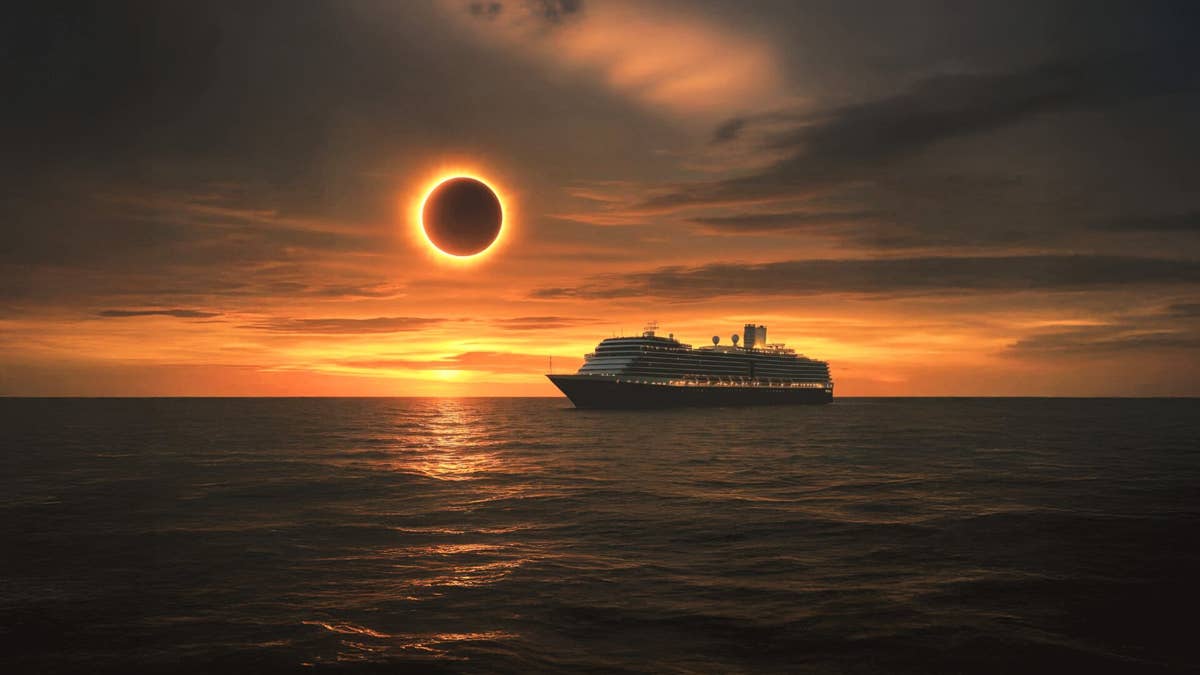
The timing creates a unique visual phenomenon. Dr. Adam Burgasser, a UC San Diego professor scheduled to sail aboard Holland America Line’s Oosterdam cruise ship to guide passengers off the coast of Spain, noted the distinct perspective of a horizon-level alignment. In parts of the western Mediterranean, totality will occur low on the horizon, creating a rare ‘sunset eclipse,’
Burgasser said, according to aol.com. He added that viewers will watch the sun and moon meet at the horizon with reds and oranges framed by the eclipse.
Viewing Locations on Land and Sea
While land-based viewers gather in parts of Northern Europe and Spain, cruise travelers are utilizing specialized marine itineraries for unobstructed horizons. Holland America Line’s Oosterdam is offering a 13-day sailing departing from Lisbon, Portugal, on August 9 that visits Alicante, Spain, before positioning off the Spanish coast. Princess Cruises, Celebrity Cruises, and Virgin Voyages also have Mediterranean solar eclipse cruises open for booking.
Meanwhile, institutions far from the path of totality are planning public events. In California, the Santa Barbara Museum of Natural History will project a live video feed from a telescope in Villalibado, Spain, courtesy of the Exploratorium. The broadcast in Fleischmann Auditorium will show totality starting at 11:29 a.m. Pacific time, lasting for 1 minute and 44 seconds. SBMNH Astronomy Programs Manager Ila Jade Komasa highlighted the communal aspect of the broadcast: One of my favorite things about a solar eclipse is how it connects people across the world,
she said.
Rarity and Global Scope of the Phenomenon
Sunset eclipses happen infrequently because solar eclipses typically last only a few hours, making simultaneous occurrence with local sunset rare. Furthermore, narrow paths of totality frequently cross oceans or uninhabited regions. In the last 15 years, only a handful of total eclipses have occurred late enough in the day while passing through populated areas, with prior examples occurring in South America in July 2019 and Asia in December 2019.

For North America, the 2026 event will have minimal visibility. According to NASA data cited by cnet.com, only states north of a conceptual line drawn from Alaska to North Carolina will experience a minor partial eclipse with less than 20% coverage. Russia offers a different trajectory: the eclipse begins at sunrise near the uninhabited Taymyr Peninsula, crosses the globe, and concludes with a partial eclipse at sunset for eastern regions.