
Beyond Dollars: Reclaiming Global Infrastructure Leadership Through Delivery adn Partnership
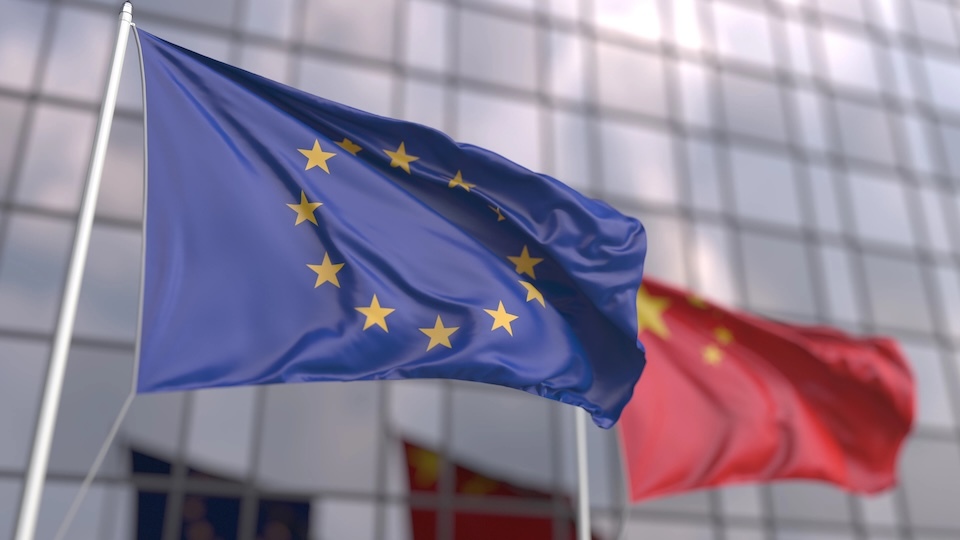
The competition for global infrastructure influence is intensifying, but framing it as a zero-sum game – a contest of dollars between Europe’s Global gateway and China’s Belt and Road initiative (BRI) - fundamentally misunderstands the priorities of partner nations. These countries aren’t seeking to “choose sides”; they are pragmatically evaluating which offers deliver the moast tangible benefits. The evidence is clear: leaders from key nations like Egypt, Kenya, Serbia, and Vietnam actively engage with both initiatives, prioritizing projects based on timely execution, reliability, and genuine economic impact. Europe’s success hinges not on demanding exclusivity, but on embracing this pluralism and competing through superior value creation.
for too long, the narrative surrounding infrastructure investment has been dominated by financial commitments. However,partner nations are increasingly focused on outcomes – local job creation,technology transfer,and,crucially,lasting maintenance budgets. A “values premium” – offering infrastructure with perceived political strings attached – will fall flat if it doesn’t translate into concrete improvements in people’s lives and economic opportunities. Europe must shift its focus from simply offering finance to delivering impactful, long-lasting infrastructure.
Winning on Delivery: A Five-Point Strategy
To effectively compete, Europe needs a strategic overhaul, moving beyond a proliferation of ambitious but disjointed projects towards a focused, results-oriented approach.This requires action on five key fronts:
1. Prioritization & Focus: The current catalog of “flagship” projects lacks strategic coherence. Europe must publish a concise, corridor-based shortlist of truly transformational investments – interconnectors, grid reinforcement, open-access rail, port rehabilitation, and digital backbone infrastructure. Crucially, this shortlist must be accompanied by clear explanations for why other proposals were not selected, fostering transparency and building trust. Sequencing these investments to ensure enabling works and offtake arrangements are secured before construction begins is paramount.
2. Risk Mitigation & Financial Innovation: Customary guarantees frequently enough address superficial issues. Europe needs to target the specific layers of risk that routinely derail deals: currency exposure in countries with local revenue streams, offtake uncertainty in politically fragile environments, and political force majeure in regions with weak governance. Pre-negotiated term sheets and a streamlined, one-stop guarantee window for projects exceeding a defined threshold will significantly reduce friction costs and accelerate financial closure. Moreover, any use of public funds must demonstrably “crowd in” credible private sector partners on terms that are resilient to political cycles, with clear reporting on mobilization by sector and instrument.
3. Accelerated Implementation: Standards are essential, but they shouldn’t equate to bureaucratic paralysis. Europe can dramatically shorten project timelines by implementing time-bound diligence windows, conducting environmental and social reviews in parallel rather than sequentially, and establishing framework agreements with pre-qualified Engineering, Procurement, and Construction (EPC) consortia. While a centralized, state-led model isn’t desirable, streamlining internal processes to ensure predictability is critical.
4. Outcome-Based Measurement: Vanity metrics – focusing on inputs rather than outputs - must be abandoned. Europe needs to track and report on indicators that directly impact people’s lives: megawatts of added energy capacity, improvements in grid reliability, reductions in transit times and logistics costs, broadband latency and affordability, the number of trainees certified and retained, and - crucially – the consistent funding of operations and maintenance budgets.Independent audits should be integrated as a core design feature, not a post-hoc exercise, demonstrating a commitment to transparency and accountability.
5. Strategic Alignment with Allies: The G7’s infrastructure partnership provides a valuable framework for coordinating European, American, and Japanese finance.However, an “umbrella” alone is insufficient. Success requires designated leads for specific corridors and sectors, interoperable de-risking instruments, and a shared communications platform. the Global Gateway should serve as Europe’s core contribution to this architecture, coordinating offers, co-funding guarantees, and presenting a unified front to partner nations – a single timetable, document set, and scoreboard.
The Geopolitical Dividend: Economic security and Trust
Successfully implementing this strategy yields a significant geopolitical dividend. A well-executed global Gateway becomes the visible manifestation of Europe’s economic security strategy, de-risking supply chains for critical minerals, clean energy components, and data. It offers partners a compelling bargain: high-quality public goods and predictable finance in exchange for open standards and a foundation of trust.
conversely, a failure to deliver will erode credibility, cannibalize existing growth funds, and reinforce the perception of europe as prioritizing process over progress. The answer isn’t a new slogan; it’s timely commissioning and reliable operations that endure beyond political transitions.
Beyond scale: Prioritizing Service Life
It’s crucial to acknowledge that Europe will not – and should not – attempt to replicate the sheer scale of the BRI, which is intrinsically linked to China’s unique political


