By Carlos Mendes | Sports Editor | Lisbon, Portugal
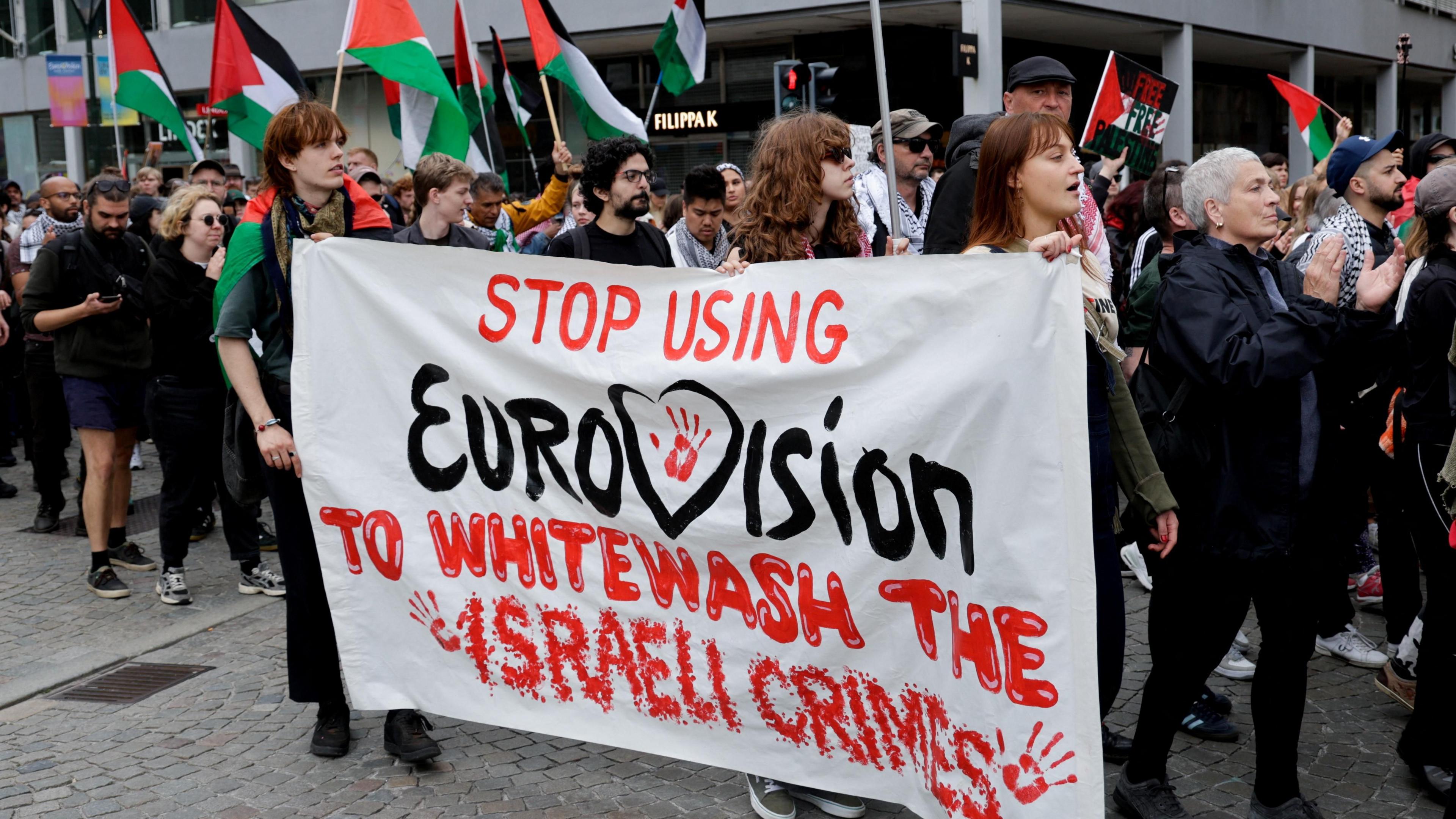
Vienna, May 13, 2026 — The Eurovision Song Contest, a celebration of music and unity, became the stage for political protest on Tuesday night as Israeli singer Noam Bettan’s performance was disrupted by pro-Palestinian chants inside the Wiener Stadthalle. The incident, which saw at least one protester forcibly removed from the venue, has reignited debates about the role of geopolitics in global cultural events. Bettan’s song, Michelle, advanced Israel to the Grand Final on Saturday, but the atmosphere during the performance left viewers divided and raised questions about the contest’s ability to remain apolitical.
The Eurovision Song Contest, now in its 70th year, is traditionally a platform for artistic expression and international camaraderie. Yet this year’s first semi-final in Vienna—hosted by Austria after last year’s winner, JJ, secured the country’s spot—highlighted the growing tension between the event’s festive spirit and real-world political conflicts. As Bettan took the stage, audience members reportedly shouted slogans in support of Palestine, with some social media users claiming to hear booing and chants during the broadcast. Security personnel later intervened, removing a protester who had allegedly been disrupting the performance.
While the European Broadcasting Union (EBU), which organizes Eurovision, has not issued an official statement on the incident, the disruption underscores the challenges of hosting such a high-profile event in an era of heightened global divisions. The contest’s organizers have long maintained that Eurovision is a celebration of music, not politics, yet this year’s semi-final proved that the line between art and activism is increasingly blurred. For Bettan, the experience was a stark reminder of the personal and professional stakes involved in representing a country under international scrutiny.
A pro-Palestine protestor was forcefully removed from the #Eurovision arena tonight after Israel performed. His chants were heard before and during the performance. pic.twitter.com/tCdoU873yE
— sᴜᴘᴇʀ ᴛᴠ (@superTV247) May 12, 2026
Key Takeaways: What We Know So Far
- Protester removed: At least one individual was forcibly removed from the Wiener Stadthalle during Israel’s performance, according to social media reports and eyewitness accounts. Authoritative sources confirm the disruption but do not specify the exact number of removals.
- Chants heard: Viewers worldwide reported hearing pro-Palestinian slogans during Bettan’s performance, with some describing booing and shouted phrases. The EBU has not commented on whether the chants were audible in the official broadcast.
- Israel advances: Despite the disruption, Israel secured a spot in the Grand Final, joining nine other countries in Vienna on Saturday. The semi-final saw 15 acts compete for 10 final spots.
- Divided reactions: Social media responses to the incident were polarized, with supporters praising Bettan’s performance and critics condemning the protest as an attempt to politicize the contest.
- EBU’s stance: The European Broadcasting Union has historically discouraged political statements during Eurovision, framing the event as a celebration of music. However, this year’s incident raises questions about enforcement and the contest’s future direction.
Why This Incident Matters for Eurovision
The Eurovision Song Contest has long been a symbol of European unity and cultural exchange. Yet, as global conflicts spill into public spaces, the contest’s organizers face an increasingly difficult balancing act: maintaining its apolitical reputation while acknowledging the real-world tensions that influence its participants and audience.

For Israel, the disruption adds another layer of complexity to an already contentious year. The country has faced boycotts and protests in recent years, particularly in light of its military actions in Gaza. Bettan’s performance, while artistically successful, became entangled in these broader geopolitical debates, forcing the EBU to consider whether such incidents will become a recurring feature of the contest.
Meanwhile, the protest itself reflects a broader trend of using high-profile cultural events as platforms for activism. From the Olympics to music festivals, global gatherings are increasingly becoming battlegrounds for political expression. For Eurovision, this raises practical questions: How should organizers respond to protests? Should security measures be tightened, or is this a necessary price for free speech in a public forum?
One thing is clear: the incident in Vienna will not be the last time Eurovision intersects with global politics. As the contest evolves, its ability to remain a unifying force—or its willingness to adapt to the realities of the modern world—will be put to the test.
The Aftermath: What’s Next for Eurovision?
The Grand Final of Eurovision 2026 takes place on Saturday, May 17, 2026, at the Wiener Stadthalle in Vienna. Israel’s inclusion in the final means Bettan will have another opportunity to perform, though the atmosphere may remain tense given the recent disruption. The EBU has not announced any changes to security protocols, but organizers will likely be monitoring the situation closely.

In the wake of the semi-final incident, some viewers and commentators have called for Eurovision to address political protests more explicitly, either by enforcing stricter security measures or by acknowledging the role of activism in modern cultural events. Others argue that the contest should remain a neutral space for music, regardless of external pressures.
For now, the focus remains on the performances. With 26 countries competing in the Grand Final, the stage will once again be set for a night of music, drama, and—inevitably—debate.
How to Stay Updated
For real-time coverage of Eurovision 2026, including any further developments related to the Vienna semi-final, follow these official channels:
- Official Eurovision Website – For schedules, results, and official statements.
- Eurovision TV – Live streams and on-demand replays of performances.
- European Broadcasting Union (EBU) – For organizational updates and policy statements.
- Eurovision on X (Twitter) – Official announcements and behind-the-scenes content.
As Eurovision continues to captivate audiences worldwide, the events in Vienna serve as a reminder of the contest’s dual nature: a celebration of art and a mirror reflecting the world’s complexities. What do you think—should Eurovision remain strictly apolitical, or is it inevitable that global events will shape its future? Share your thoughts in the comments below or join the conversation on social media using #Eurovision2026.
About the Author
Carlos Mendes is a sports journalist and editor with over 13 years of experience covering international competitions, including the Olympics and major cultural events like Eurovision. Based in Lisbon, he specializes in analyzing the intersection of sports, politics, and global trends.
Related reading