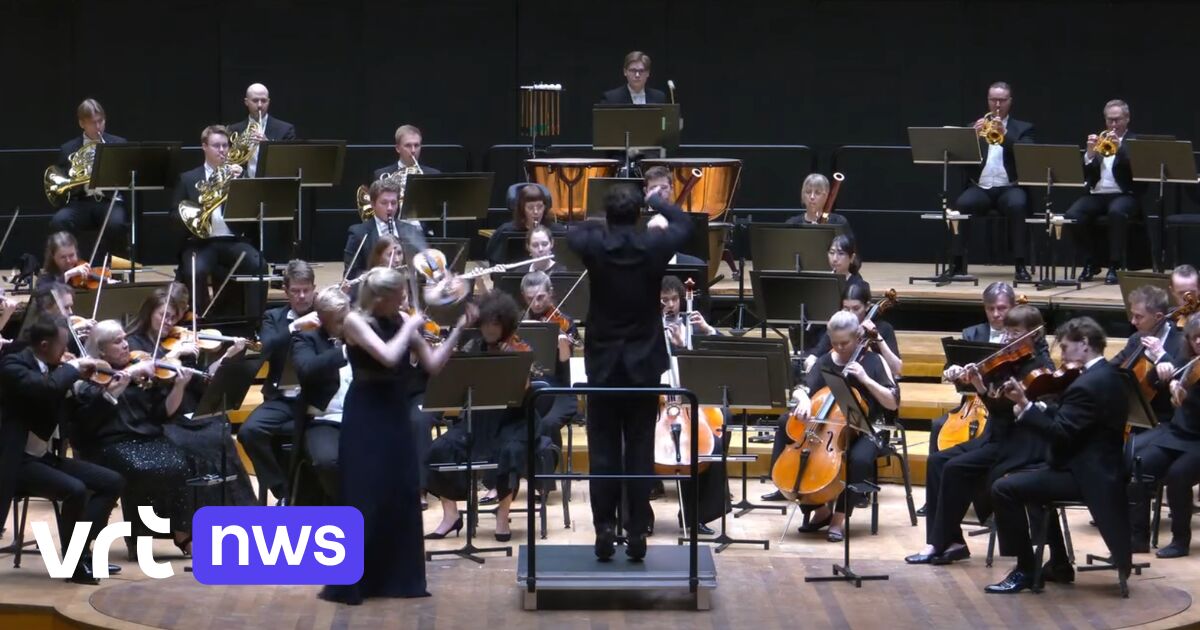
A remarkable incident involving a celebrated conductor and a priceless violin has drawn international attention after the musician’s instrument was reportedly struck from her hands during a heated rehearsal. Despite the alarming nature of the event, experts confirmed that the Stradivarius violin emerged without a single crack or scratch, prompting widespread relief and fascination across classical music circles. The episode, which unfolded during preparations for a major European concert series, has since sparked discussions about artist safety, instrument preservation, and the intense pressures inherent in high-level orchestral performance.
The confrontation occurred when the conductor, known for his passionate and demanding rehearsal style, became visibly frustrated during a complex passage in a late-Romantic symphony. Witnesses described how, in a moment of heightened emotion, he gestured forcefully toward the solo violinist, causing her bow hand to jerk and the instrument to fly from her grasp. The violin, believed to be a 1720 Antonio Stradivari valued at over €10 million, clattered to the stage floor before being swiftly recovered. Fortunately, both the soloist and those nearby confirmed that no physical harm came to anyone involved, and the instrument appeared unscathed upon immediate inspection.
What followed was an outpouring of disbelief and admiration for the resilience of the historic instrument. Luthiers and conservators emphasized that while Stradivarius violins are renowned for their exceptional craftsmanship and durability, surviving such an impact without damage is extraordinarily rare. One master violin maker based in Cremona noted that the violin’s arched top and back, combined with its dense maple and spruce construction, likely helped dissipate the force of the fall, preventing structural trauma. Still, he cautioned that such events should never be normalized, as even microscopic damage can affect tonal quality over time.
The soloist, a internationally acclaimed artist who has performed with leading orchestras from Berlin to Tokyo, later spoke publicly about the incident with characteristic grace. In a brief statement shared through her management, she expressed gratitude that the violin was unharmed and acknowledged the emotional intensity that can arise during collaborative artistic work. She emphasized her continued respect for the conductor’s musical vision while advocating for greater awareness of boundaries in rehearsal environments. Her remarks were widely interpreted as a call for mutual respect rather than condemnation, reflecting her desire to move forward constructively.
Industry professionals have since used the moment to highlight broader concerns about safety and well-being in elite music training and performance settings. While physical confrontations remain exceptionally rare, the pressures of perfectionism, hierarchical dynamics, and public scrutiny can contribute to tense atmospheres behind the scenes. Several music conservatories and professional associations have begun reviewing their codes of conduct, with some advocating for mandatory workshops on emotional intelligence and conflict resolution for conductors and ensemble leaders.
Meanwhile, the violin itself continues to be played in concerts across Europe, its tone described by listeners as unchanged and profoundly moving. Instrument experts recommend that even when no visible damage is present, such incidents warrant a thorough internal inspection using techniques like computerized tomography or tap-tone analysis to detect any hidden compromises to the wood or varnish. To date, no such advanced evaluation has been publicly disclosed, though the violin’s custodians have affirmed its ongoing suitability for performance.
As the orchestra prepares for its upcoming tour, which includes stops at major venues in Vienna, Amsterdam, and London, both the conductor and soloist are expected to continue their collaboration. The conductor, who has led some of Europe’s most prestigious ensembles, issued a private apology to the musician shortly after the incident, according to sources close to the organization. He has since spoken publicly about the importance of maintaining composure under pressure, calling the episode a sobering reminder of the responsibility leaders hold in artistic settings.
This unusual episode serves as a powerful reminder of the fragility and resilience embedded in the world of classical music—where centuries-old instruments carry not only immense monetary value but also irreplaceable cultural heritage. While the outcome was fortunate, the incident underscores the demand for environments where artistic passion can flourish without compromising safety, respect, or the integrity of the tools that make the music possible.
For ongoing updates on the orchestra’s tour schedule and performances featuring the Stradivarius violin, audiences are encouraged to consult the ensemble’s official website and verified social media channels. Those interested in learning more about the care and preservation of historic string instruments can explore resources from accredited institutions such as the Cremona Violin Museum or the Association of String Instrument Makers.
Have thoughts on how artistic intensity should be balanced with mutual respect in collaborative performance settings? Share your perspective in the comments below, and consider sharing this story with others who appreciate the intersection of art, history, and human endeavor.
- Concert Ticket Group Buying Prices Guide: Costs, Discounts & What to Expect
- Daveigh Chase’s Father Shares Heartbreaking Tribute on What Would Have Been Her 36th Birthday
- Anthony Joshua Knocks Out Kristian Prenga in Second Round (world-today-news.com)
- Why Some Plants Close Their Leaves Every Night (daybreakwire.com)