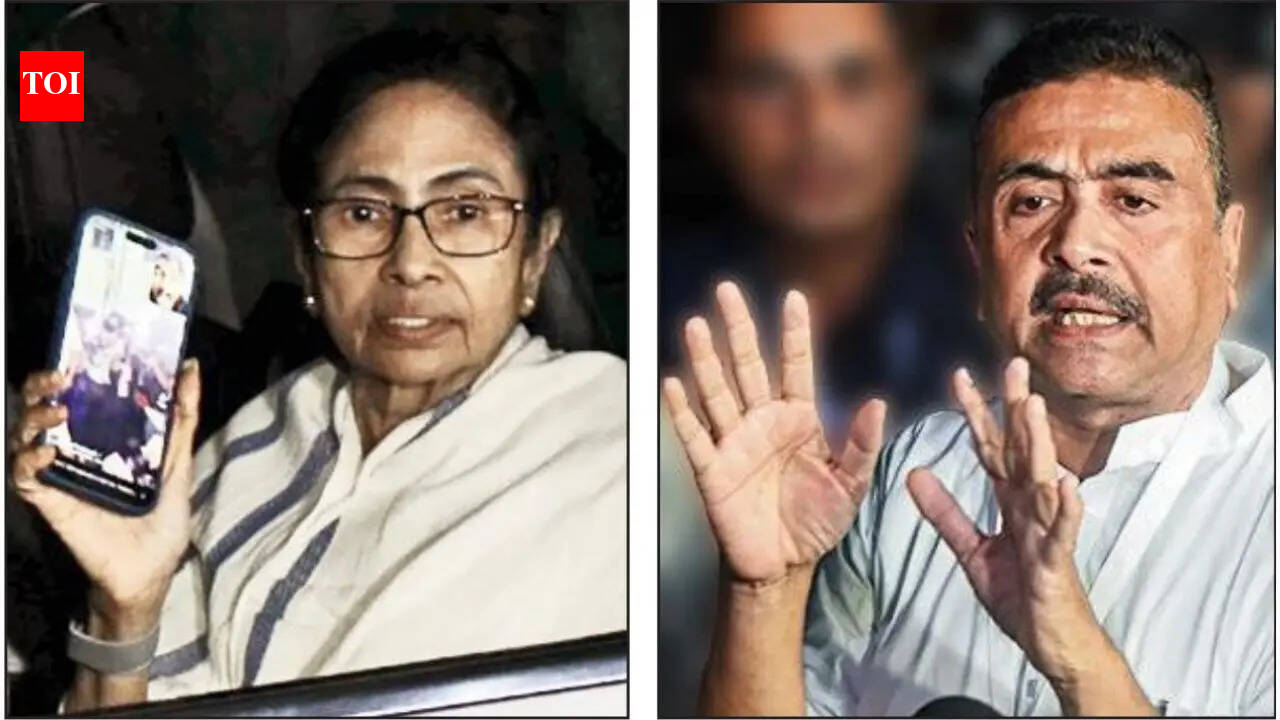
Tensions have escalated in West Bengal as the All India Trinamool Congress (TMC) leveled serious allegations of electoral misconduct against the Bharatiya Janata Party (BJP) and the Election Commission of India (ECI). The ruling party claims that security protocols at Electronic Voting Machine (EVM) strongrooms were compromised, citing unauthorized access and suspicious technical failures ahead of the final vote count.
The controversy centers on the security of polled materials at the Khudiram Anushilan Kendra in Kolkata. TMC representatives allege that individuals were seen inside sealed rooms without the presence of party agents, fueling suspicions of tampering. These claims have sparked a political firestorm, with the TMC describing the situation as a murder of democracy
and calling for immediate intervention to ensure the integrity of the 2026 West Bengal Assembly elections.
The BJP has dismissed these accusations as baseless, characterizing them as a strategic maneuver by a party that anticipates a defeat. Meanwhile, the Election Commission has firmly rejected the claims of irregularities, asserting that all strongrooms remain secure and that no breaches of protocol have occurred.
Strongroom Security and the CCTV Dispute
At the heart of the dispute is the alleged failure of surveillance systems. The Trinamool Congress has raised concerns with the Election Commission regarding reported CCTV blackouts, which they argue created windows of opportunity for unauthorized personnel to access the EVMs. This concern led to a high-profile sit-in protest outside the strongrooms at Khudiram Anushilan Kendra, where candidates including Kunal Ghosh and Shashi Panja joined party workers to guard the facilities.
In response to these allegations, the West Bengal Chief Electoral Officer (CEO), Agarwal, denied that any surveillance had been compromised. In a statement reported by Business Standard, the CEO asserted that no CCTV [was] turned off
and maintained that the counting process would be 100% neat
. Agarwal emphasized that the poll body has nothing to hide
and would not permit any disruptions to the polling procedures.
Further security assurances were provided by local police, who stated that a foolproof CCTV system would be maintained outside the strongrooms, with live feeds made accessible to representatives from all political parties to ensure transparency.
Political Fallout and Party Reactions
The TMC’s strategy has been one of high alert. Chief Minister Mamata Banerjee issued a video message urging party leaders, candidates, and workers to remain vigilant and actively guard the strongrooms housing the EVMs to prevent any potential tampering. The party’s decision to stage sit-ins reflects a deep-seated mistrust of the current security arrangements.
The BJP has countered these moves by accusing the TMC of spreading rumors to create a narrative of victory or to excuse potential losses. BJP leader Tapas Roy specifically accused TMC leaders of colluding with the Election Commission in their claims, suggesting the allegations are merely tactics to distract from the actual electoral trend. According to reporting by The Times of India, the BJP views these protests as an attempt to destabilize the process ahead of the official results.
The 2026 Electoral Context
The 2026 West Bengal Assembly elections have been marked by intense competition and an unprecedented level of civic engagement. Voting was conducted in two phases, on April 23 and April 29, 2026, to elect all 294 members of the state’s Legislative Assembly.
The elections recorded a historic voter turnout of 92.93%, the highest ever documented in the state, surpassing the figures from the 2011 election. With 148 seats required for a majority, the stakes for both the TMC and the BJP are exceptionally high, which has contributed to the volatility and mutual suspicion surrounding the storage and counting of votes.
Key Election Timeline and Details
| Event | Date/Detail |
|---|---|
| Phase I Polling | April 23, 2026 |
| Phase II Polling | April 29, 2026 |
| Voter Turnout | 92.93% |
| Total Seats | 294 |
| Counting Date | May 4, 2026 |
What This Means for Democratic Integrity
The clash between the TMC and the BJP over EVM security is not merely a local political spat but a reflection of a broader global trend where the integrity of electronic voting is frequently contested. When a ruling party alleges a murder of democracy
, it signals a breakdown in trust between the political contenders and the regulatory bodies overseeing the election.
For the global community and observers of South Asian politics, the resolution of these claims will be critical. If the Election Commission can maintain a transparent and verifiable counting process, it may reinforce the legitimacy of the results. However, continued allegations of CCTV blackouts
and unauthorized access could lead to prolonged legal challenges and social unrest in the region.
The use of strongrooms—highly secured facilities where EVMs are stored after polling—is designed to prevent exactly the kind of tampering the TMC fears. These rooms are typically sealed in the presence of party agents, and any entry requires the consent of all stakeholders. The allegation that individuals entered these rooms without agents present is a direct challenge to the ECI’s standard operating procedures.
Next Steps and Official Checkpoints
The focus now shifts to the official counting day. The Election Commission has scheduled the counting of votes and the declaration of results for Monday, May 4, 2026. This will be the definitive checkpoint to determine whether the allegations of strongroom breaches have any impact on the final outcome or if the process remains untainted.
Until then, party agents from both the TMC and BJP are expected to maintain a constant presence outside the strongrooms, and the ECI is under pressure to provide documented proof that the surveillance systems remained operational throughout the interim period.
Do you believe electronic voting systems provide enough transparency in high-stakes elections? Share your thoughts in the comments below and share this report with your network to keep the conversation going.