
In the quiet, snow-dusted landscape straddling the border between France and Switzerland, one of the most ambitious endeavors in human history operates in relative silence. Beneath the surface, the Large Hadron Collider (LHC)—the world’s largest and most powerful particle accelerator—serves as a focal point where the rigorous demands of fundamental particle physics collide with the complexities of international diplomacy, massive public funding, and the enduring human curiosity that transcends borders.
As a sports journalist, I have spent over 13 years observing how competition and collaboration shape human achievement. Yet, few arenas match the scale of the European Organization for Nuclear Research, known globally as CERN. Here, the pursuit of understanding the building blocks of the universe is not merely a scientific exercise; it is a profound demonstration of what occurs when nations set aside geopolitical friction to achieve a common, monumental objective. The LHC, a 27-kilometer ring of superconducting magnets, represents the physical manifestation of this global cooperation.
The Human Fabric of Scientific Discovery
While the headlines often focus on the discovery of the Higgs boson or the search for dark matter, the true story of the LHC lies in the thousands of researchers, engineers, and technicians who define the daily life of the facility. The human stories behind mankind’s biggest experiment in particle physics reveal a culture defined by intense dedication and the pressure of operating machinery that pushes the boundaries of contemporary engineering. According to official CERN documentation, the organization currently involves 23 member states, each contributing to the governance and financial stability of the project.

For those working in the tunnels or the control rooms, the stakes are exceptionally high. A single miscalculation can lead to technical downtime that costs millions of dollars in potential research time. This environment fosters a unique workplace culture where collaboration is not just preferred, but essential. Scientists from vastly different political backgrounds work side-by-side, united by the objective of probing the mysteries of the universe. It is a reminder that when the goal is significant enough, the barriers that often divide our societies can be effectively navigated.
Navigating the Intersection of Science and Politics
The existence of the LHC is a testament to the stability of international scientific treaties. CERN operates under a convention signed in 1953, which established the framework for peaceful scientific collaboration among European nations in the wake of the Second World War. This history provides a crucial context: the accelerator is not just a triumph of physics, but a triumph of post-war diplomacy. Today, the organization balances the interests of its member states while maintaining an open-access policy for data, ensuring that the results of the experiments are available to the global scientific community.
However, the project is not immune to the realities of the modern world. Funding, energy consumption, and the geopolitical shifts affecting international partnerships are constant considerations for the CERN council. As the facility moves toward the High-Luminosity LHC (HL-LHC) upgrade, which aims to increase the number of collisions and the potential for discovery, the logistical challenges are growing. Managing a project of this magnitude requires not only scientific brilliance but also the administrative skill to maintain consensus among diverse stakeholders, ensuring that the experiment continues to function as a beacon of international cooperation.
Why the Search for Matter Matters
To the layperson, the study of subatomic particles might seem disconnected from daily life. Yet, the history of science shows that fundamental research often leads to transformative technological leaps. The development of the World Wide Web, which originated at CERN in 1989 as a solution for information sharing among scientists, is the most prominent example. The current research at the LHC, which includes the ATLAS and CMS experiments, continues to refine our understanding of the Standard Model, the theory that describes the fundamental forces and particles of the universe.
Understanding these processes is essential for grasping the evolution of the cosmos. By recreating conditions similar to those that existed moments after the Big Bang, researchers are able to test theories that were previously confined to mathematical models. This is the ultimate “away game”—traveling back in time to the very beginning of existence. The data generated by these collisions is immense, requiring a distributed computing grid that spans the globe, further highlighting the interconnected nature of modern scientific inquiry.
Key Insights into the LHC Operation
- International Cooperation: CERN currently comprises 23 member states and various associate members, facilitating a global network of thousands of researchers.
- Technological Infrastructure: The LHC uses superconducting magnets cooled to 1.9 Kelvin (-271.3°C), colder than deep space, to guide particle beams.
- Scientific Legacy: Beyond the Higgs boson, the research conducted at CERN has been pivotal in advancing medical imaging, cancer therapy, and data processing technologies.
Looking Toward the Future
The life of a sports journalist is often dictated by the next match, the next tournament, or the next season. In particle physics, the timeline is measured in decades. The current upgrades to the LHC are scheduled to continue well into the 2030s, with plans for the Future Circular Collider (FCC) already in the conceptual design phase. This long-term perspective is perhaps the most striking difference between the high-speed drama of a football pitch and the deliberate, patient work of the laboratory.
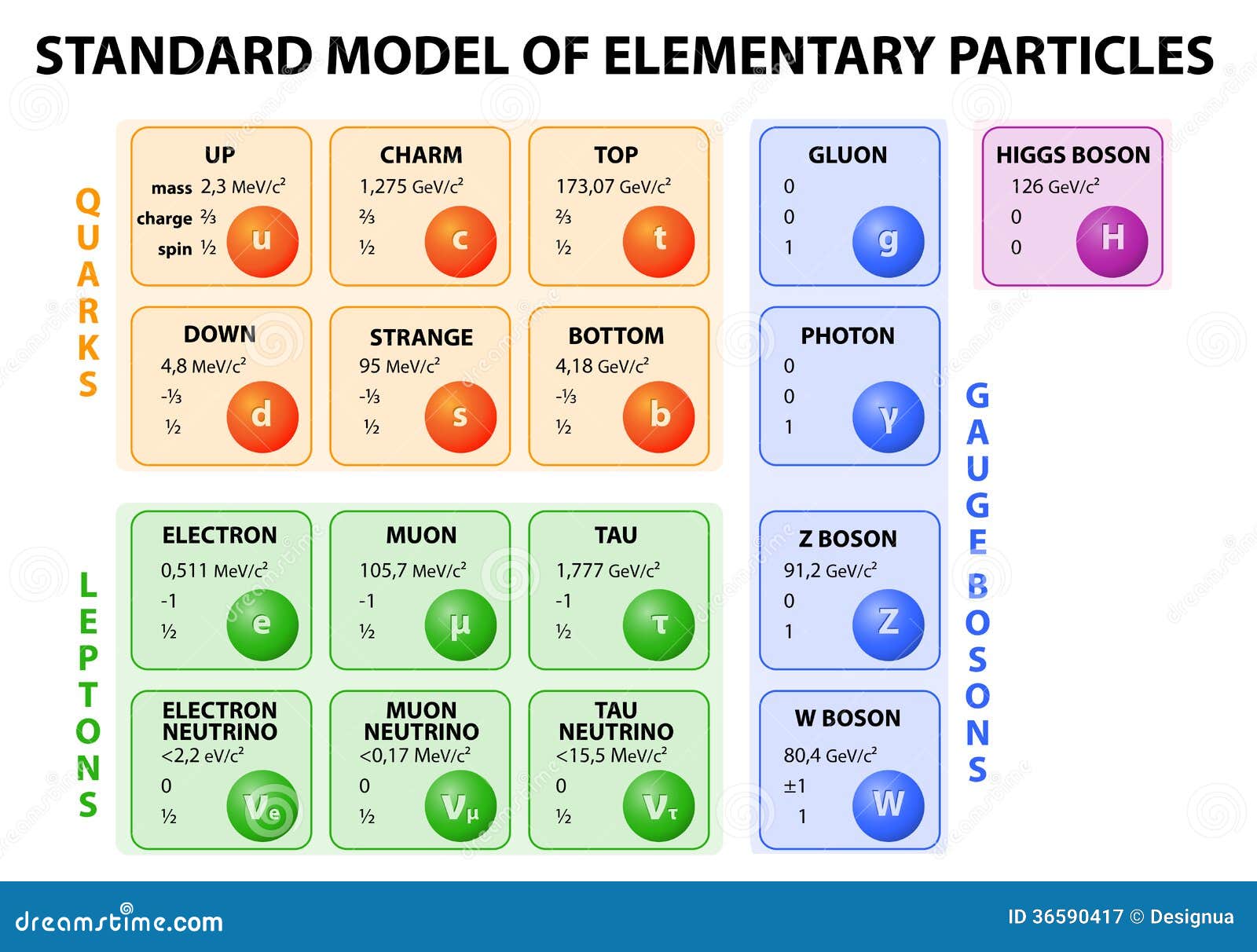
As we look forward, the next major checkpoint for the scientific community involves the ongoing analysis of data from the current run of the LHC, which is expected to provide deeper insights into the properties of the Higgs boson and potential deviations from the Standard Model. These updates will be shared through official CERN publications and peer-reviewed journals, providing the foundation for future discoveries. The collaborative spirit that sustains this experiment remains a vital model for how we might address other global challenges, from climate change to public health, by centering our efforts on shared knowledge and peaceful cooperation.
What are your thoughts on the role of international scientific collaboration in shaping our future? The intersection of pure research and global policy remains one of the most compelling narratives of our time. I invite you to share your perspective in the comments section below, and look forward to hearing how you see the role of science in our collective progress.
Related reading