
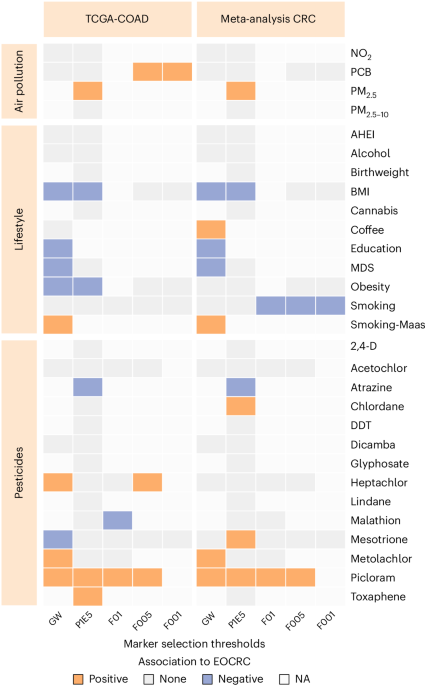
Recent research has identified a potential link between early-onset colorectal cancer and exposure to certain pesticides, revealing distinct epigenetic changes in tumor tissues of younger patients. A study published in Nature Medicine on April 21, 2026, analyzed exposome traits in individuals diagnosed with colorectal cancer before age 50, finding specific DNA methylation patterns associated with agricultural chemical exposure. These findings contribute to growing scientific interest in environmental factors behind the rising incidence of colorectal cancer among millennials and Generation X.
The study, conducted by an international team of researchers, examined tissue samples from patients with early-onset colorectal cancer and compared them to samples from older patients and healthy controls. Using advanced epigenetic profiling techniques, scientists identified a consistent signature of DNA methylation—chemical modifications that regulate gene expression without altering the DNA sequence—in tumors from younger patients. This epigenetic fingerprint was significantly correlated with biomarkers of pesticide exposure, particularly organophosphates and glyphosate-based herbicides, which are widely used in conventional farming.
Epigenetic modifications like DNA methylation can be influenced by environmental factors such as diet, pollution, and chemical exposures, and may persist long after initial contact. Unlike genetic mutations, these changes do not alter the underlying genetic code but can silence or activate genes involved in cell growth, DNA repair, and inflammation—processes central to cancer development. The presence of similar methylation patterns across multiple patients suggests a common environmental influence rather than random genetic variation.
Researchers noted that the epigenetic signature was most pronounced in tumors located in the left side of the colon and rectum, areas increasingly affected in early-onset cases. This anatomical specificity aligns with epidemiological trends showing a disproportionate rise in distal colorectal cancers among adults under 50 in high-income countries. The study did not establish causation but highlighted a strong association warranting further investigation into lifestyle and occupational exposures.
Supporting evidence from environmental health monitoring shows that agricultural workers and individuals living near farmland have higher detectable levels of pesticide metabolites in urine and blood samples. Data from the U.S. Centers for Disease Control and Prevention’s National Biomonitoring Program indicate that over 70% of the U.S. Population has detectable levels of glyphosate, with higher concentrations found in rural communities and farmworker families. Similar findings have been reported in European biomonitoring studies conducted by the European Environment Agency.
The rising incidence of colorectal cancer in younger adults has puzzled oncologists and public health officials for over a decade. Since the mid-1990s, rates of colorectal cancer have declined in older populations due to increased screening, but have risen steadily in those under 50. According to the American Cancer Society, individuals born in 1990 have twice the risk of colon cancer and four times the risk of rectal cancer compared to those born around 1950. This trend has prompted renewed focus on early-life exposures, including diet, antibiotic use, and environmental toxins.
Experts caution that while the epigenetic findings are compelling, they represent one piece of a complex puzzle. Dr. Lena Vogt, an epidemiologist at the German Cancer Research Center (DKFZ) not involved in the study, explained that epigenetic changes alone are unlikely to cause cancer but may increase susceptibility when combined with other risk factors such as obesity, physical inactivity, or diets high in processed meats. “We’re seeing a convergence of factors,” she said in a recent interview with Deutsche Welle. “Epigenetic alterations may be the mechanism through which environmental insults translate into long-term cancer risk.”
Public health advocates have called for stricter regulation of agricultural chemicals and improved monitoring of exposure levels in vulnerable populations. The European Union has already taken steps to restrict certain pesticides, including a phased ban on glyphosate set for completion by the end of 2026, pending final approval from the European Chemicals Agency. In the United States, the Environmental Protection Agency is currently reviewing the registration of several organophosphate compounds, with a decision expected in late 2026.
For individuals concerned about exposure, reducing dietary intake of residues through washing produce, choosing organic options when feasible, and limiting consumption of processed and red meats may support lower overall risk. The World Cancer Research Fund recommends maintaining a healthy weight, engaging in regular physical activity, and following a diet rich in whole grains, vegetables, and fruits as evidence-based strategies for colorectal cancer prevention.
Ongoing research aims to validate these epigenetic markers in larger, more diverse cohorts and to explore whether they could serve as early warning signs detectable in blood or stool samples. Scientists at the Helmholtz Munich research institute are leading a European Union-funded project to develop non-invasive screening tools based on epigenetic signatures, with preliminary results expected in 2027.
As scientists continue to unpack the interplay between genes, environment, and disease, studies like this one underscore the importance of examining exposome factors in cancer etiology. While screening remains critical for early detection, understanding preventive opportunities through environmental and lifestyle modifications may be key to reversing the trend of early-onset colorectal cancer.
Readers seeking updates on pesticide regulation and environmental health policies can refer to official communications from the European Chemicals Agency (European Chemicals Agency) and the U.S. Environmental Protection Agency (U.S. Environmental Protection Agency). The World Health Organization’s International Agency for Research on Cancer (IARC) likewise provides ongoing assessments of carcinogenic risks associated with chemical exposures.
Stay informed about developments in cancer prevention and environmental health by following trusted public health institutions and peer-reviewed scientific journals. Share this article to help raise awareness about the potential links between environmental exposures and early-onset disease.