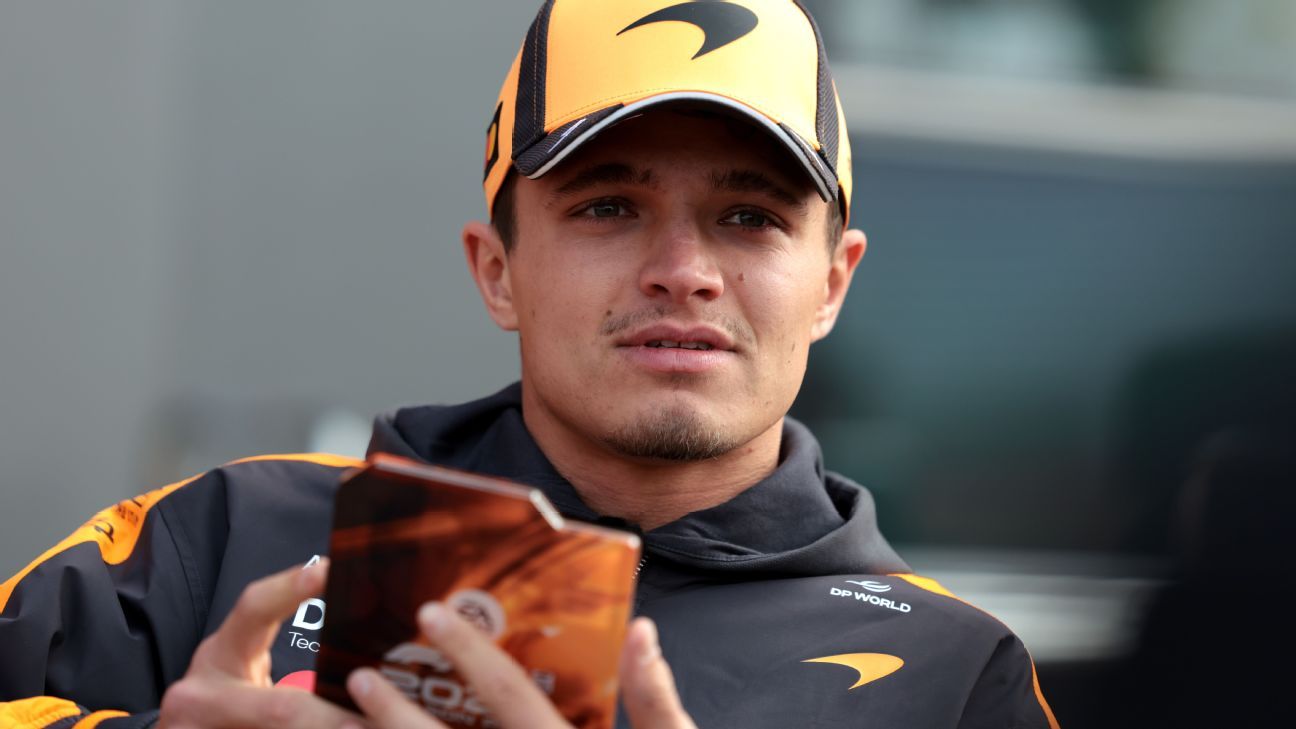
Shanghai, China – The evolving landscape of Formula 1 is drawing criticism from some of its most prominent drivers, with Lando Norris voicing concerns that the current generation of cars are a far cry from the thrilling machines of the past. The McLaren driver, fresh off a successful 2025 season where he clinched the World Drivers’ Championship, argues that the emphasis on energy management and strategic slowing down in corners is fundamentally altering the nature of racing, moving away from the raw courage and skill that once defined the sport. This sentiment is echoed by veterans like Fernando Alonso and reigning champion Max Verstappen, sparking a debate about the direction of Formula 1 and the role of the driver in this new era.
Norris’s comments, made during the Chinese Grand Prix media day, center on the impact of the 2026 regulations, which mandate a 50-50 split between combustion engine power and electrical power. This shift necessitates a driving style focused on harvesting energy through braking and carefully managing battery deployment, a stark contrast to the all-out aggression that characterized previous generations of Formula 1. The 26-year-old Briton, who began competitive karting at the age of eight, suggests that the current approach requires drivers to “forget everything you’ve ever done” and adopt a completely different technique. He believes the focus has shifted from maximizing the car’s potential through driver skill to optimizing the power unit’s efficiency, a change that diminishes the traditional measure of a driver’s bravery and risk-taking ability.
A Shift in Driving Style: From Bravery to Battery Management
The core of the discontent lies in the requirement to lift and coast into corners to maximize energy recovery. This practice, while strategically advantageous, fundamentally alters the driving experience. As Norris explained, iconic corners like Pouhon at Spa-Francorchamps are no longer about pushing the limits and demonstrating courage, but rather about hitting precise braking points to optimize battery charge. This change has prompted some, including Verstappen, to draw comparisons to all-electric series like Formula E, albeit with a more powerful output. Verstappen jokingly remarked that his best practice ahead of the Chinese Grand Prix was playing Mario Kart, highlighting his frustration with the current demands of the sport. The shift isn’t simply about slowing down; it’s about a fundamentally different approach to cornering, one that prioritizes efficiency over outright speed and daring.
Fernando Alonso, a two-time World Champion with a career spanning over two decades, shares Norris’s concerns. He specifically lamented the diminished role of iconic corners like Suzuka’s 130R, a legendary high-speed left-hander. Alonso noted that these corners, once tests of a driver’s courage and skill, are now primarily used for battery charging. He acknowledged that the new challenge is still enjoyable, but expressed a preference for the “risking it in the curves” style of driving that defined his earlier career. This sentiment underscores a broader concern that the new regulations are sacrificing the visceral thrill of Formula 1 for the sake of technological complexity and energy efficiency.
The Driver’s Role: Diminished or Evolved?
Despite the criticisms, Norris insists that the driver’s role hasn’t been entirely diminished, but rather altered. He believes that while the ability to extract every millisecond from the car itself is less crucial, the skill of managing the power unit effectively has become paramount. “You’re driving how you’ve always driven your whole life, which is throttle, brake… and generally more throttle and less brake,” Norris stated. However, he acknowledges that this requires a complete reset of learned driving techniques, demanding a new understanding of how to optimize the interplay between the car and the power unit. George Russell, also a highly-rated driver on the grid, has been praised for his ability to quickly adapt to these new demands, demonstrating that mastery of the power unit is indeed a valuable skill in the current Formula 1 landscape.
The debate extends to the very nature of what constitutes a “ballsy” racer. Traditionally, this term referred to drivers willing to push the limits of adhesion, taking risks and exhibiting unwavering courage in high-speed corners. Norris suggests that this definition is becoming obsolete, as the current regulations prioritize calculated energy management over outright aggression. Instead of witnessing drivers battling for position through daring overtakes and fearless cornering, fans are now seeing a more strategic and nuanced form of racing, where success hinges on precise throttle control and efficient energy harvesting. This shift, while perhaps necessary for the long-term sustainability of the sport, is undeniably changing the perception of what it means to be a top-tier Formula 1 driver.
The Kinetic Energy Recovery System (KERS) and its Impact
A key component of the new regulations is the reliance on the Kinetic Energy Recovery System (KERS) to harvest energy during braking. This system captures the kinetic energy generated during deceleration and converts it into electrical energy, which is then stored in the battery. The stored energy can then be deployed for a power boost, providing a temporary increase in performance. However, maximizing KERS efficiency requires drivers to brake strategically, often lifting and coasting earlier than they would traditionally. This technique, while effective for energy recovery, can feel counterintuitive to drivers accustomed to maximizing braking performance. The challenge lies in finding the optimal balance between braking late for corner speed and lifting early for energy recovery, a delicate compromise that demands a new level of precision and adaptability.
The implementation of this system has led to a noticeable change in driving style, with drivers prioritizing energy management over outright speed in certain sections of the track. This has, in turn, led to concerns about the spectacle of the sport, with some critics arguing that the emphasis on efficiency has made racing less exciting and unpredictable. While the regulations are intended to promote sustainability and technological innovation, they have also sparked a debate about the trade-offs between performance, entertainment, and the traditional values of Formula 1.
Looking Ahead: The Future of Formula 1
The concerns raised by Norris, Alonso, and Verstappen highlight a fundamental tension within Formula 1: the desire to embrace technological advancements while preserving the core elements that develop the sport captivating. The current regulations represent a significant departure from the past, and it remains to be seen whether they will ultimately enhance or detract from the overall racing experience. The teams and drivers will continue to refine their strategies and adapt to the new demands, but the underlying challenge remains: how to balance the pursuit of efficiency with the need for thrilling, unpredictable racing.
The debate extends beyond the driving experience to the very essence of what defines a Formula 1 driver. Is it the ability to push a car to its absolute limit, or the skill of managing a complex power unit and optimizing energy recovery? The answer, it seems, is evolving. The modern Formula 1 driver must now be a master of both, possessing not only exceptional car control but also a deep understanding of engineering and energy management. This new breed of driver will undoubtedly be technically proficient, but the question remains whether they will also possess the same level of raw courage and daring that characterized the legends of the past.
The next major test for these new regulations will come at the upcoming Emilia Romagna Grand Prix at Imola, scheduled for May 17-19, 2026. The official Formula 1 website provides the full race schedule and details. This race will provide further insight into how the teams and drivers are adapting to the new challenges and whether the concerns raised by Norris and others are justified. The ongoing development of these regulations will undoubtedly shape the future of Formula 1, and it is crucial that the sport finds a balance between innovation and tradition to ensure its continued success.
What are your thoughts on the changing landscape of Formula 1? Share your opinions in the comments below, and don’t forget to share this article with fellow racing enthusiasts!
Related reading
- WWE SummerSlam Night Two Recap & Kevin Owens’ Return: Wrestling Observer Radio
- WWE SummerSlam 2026 Night 2: 3 Things We Loved And 3 Things We Hated
- Spokane Wildfires Destroy 700 Structures and Force 60,000 to Evacuate (archyworldys.com)
- Spokane Wildfires Destroy 600+ Buildings and Force 60,000 Evacuations (time.news)