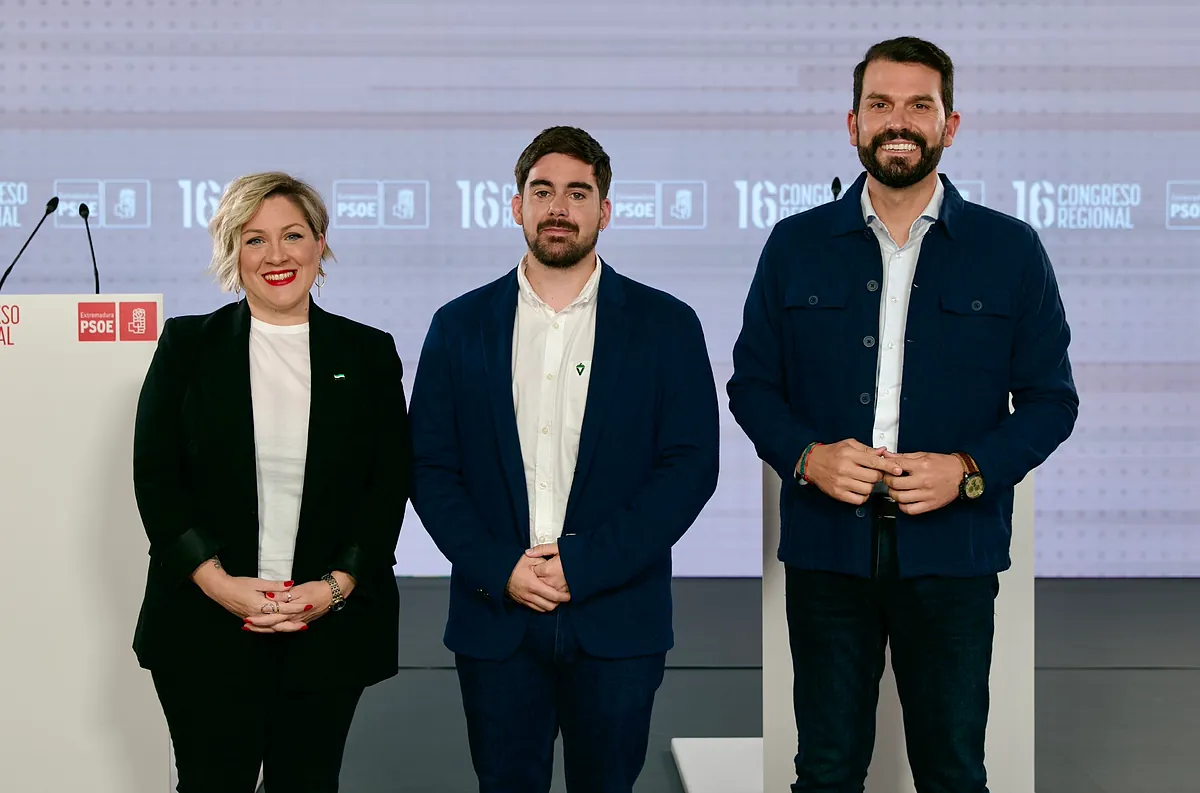
The race to lead the Spanish Socialist Workers’ Party (PSOE) in Extremadura reached a critical juncture this Wednesday, as the two primary contenders engaged in a high-stakes face-off. Soraya Vega and Álvaro Sánchez Cotrina participated in the sole televised debate before the upcoming vote, marking a pivotal moment for the regional party as it seeks to redefine its leadership and reconnect with the electorate.
The encounter, described as a “white-glove” affair due to its lack of aggression, focused heavily on strategic recovery rather than personal conflict. Both candidates emphasized the necessitate to bridge the gap between the party apparatus and the general public to reclaim political ground in the region. This civil tone stands in stark contrast to the volatility seen in other recent internal party processes.
With the primary vote scheduled for Saturday, the debate served as the final opportunity for the candidates to present their visions to the party membership. A total of 9,366 militants in Extremadura are eligible to cast their votes to elect the new secretary general.
A Strategy of Serenity and Project Exposure
The debate between Soraya Vega and Álvaro Sánchez Cotrina was characterized by a serene atmosphere, with observers noting that the exchange was almost complementary at times. Rather than engaging in a series of sharp confrontations, the candidates prioritized the exposition of their respective projects. There were no significant clashes over past organizational responsibilities or previous strategies, suggesting a mutual desire to project an image of a disciplined and cohesive party.

The primary objective for both candidates appears to be the restoration of the PSOE’s connection with the street. This “reconexion” is viewed as essential for the party to recover its standing in Extremadura. The discourse centered on the necessity of delivering clear, recognizable, and transparent messages to both the party membership and the wider society.
Despite the overall lack of tension, a brief moment of friction occurred when Soraya Vega called for “autocrítica” (self-criticism) regarding the party’s recent disconnection from the territory. This observation was implicitly directed at Sánchez Cotrina, given his specific role as the provincial secretary of the party in Cáceres. However, the point was made briefly and did not result in a heated counter-response, maintaining the overall “clean” nature of the campaign.
Defining the Vision for Extremadura’s PSOE
From the outset of the debate, both aspirants framed the current moment as the beginning of a new era for the regional party. Álvaro Sánchez Cotrina specifically addressed the militants, advocating for a party capable of “lifting towns and cities” and striving to “be Extremadura again.” His approach emphasizes a grassroots recovery, focusing on the physical and social fabric of the region’s municipalities.
For the party membership, the choice between Vega and Sánchez Cotrina represents a decision on how to navigate the path back to power. Whereas the candidates’ projects are largely complementary, the subtle differences in their approach—such as Vega’s emphasis on internal self-criticism and Sánchez Cotrina’s focus on territorial revitalization—provide the nuances that the 9,366 eligible voters must weigh.
Key Stakeholders and the Path to Saturday
The outcome of this primary will determine the leadership of the PSOE in Extremadura, affecting not only the internal governance of the party but also its strategic positioning against regional opponents. The stakeholders involved include:
- The Militancy: The 9,366 voters who hold the power to decide the leadership.
- Regional Leadership: The winner will take over the role of secretary general, succeeding the previous leadership.
- The Electorate: The broader society in Extremadura, which the party hopes to attract through a more transparent and connected leadership style.
The focus on a “clean campaign” suggests that the party is keen to avoid the internal fractures that have plagued other political organizations, aiming instead for a transition that emphasizes stability and readiness for general electoral competition.
What Happens Next?
The political focus now shifts entirely to the voting process. With the debate concluded, there are no further scheduled face-offs between the candidates. The final result will be determined this Saturday, when the eligible militants cast their ballots to decide who will lead the PSOE in Extremadura.
The winner will inherit the challenge of implementing the “reconexion” strategy discussed during the debate, tasked with turning the serene rhetoric of the primary into a tangible political recovery in the region’s cities, and towns.
We invite our readers to share their thoughts on the importance of internal party democracy in the comments below.