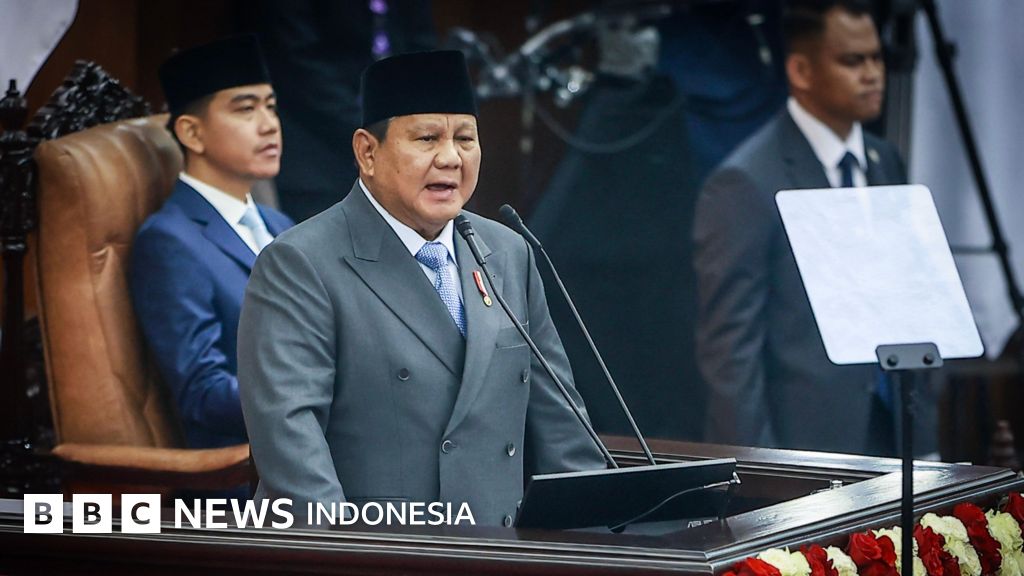
Indonesian President Prabowo Subianto faced intense scrutiny over a sweeping array of governance claims during his national address at the People’s Consultative Assembly (MPR) in Jakarta. Delivering his second state-of-the-nation speech since taking office in 2024, Prabowo defended his administration’s record before high-ranking state officials, former presidents including Joko Widodo and Jusuf Kalla, and international observers. While the government highlighted robust economic growth and rapid agricultural transformations, independent researchers, legal experts, and public policy watchdogs immediately challenged multiple figures regarding food security, poverty alleviation programs, and civil liberties.
The presidential address served as a crucial ledger for a government navigating complex global economic headwinds. However, independent fact-checking initiatives and policy analysts pointed to notable gaps between official statistics and ground-level realities. From questions surrounding food self-sufficiency metrics to rising public safety concerns tied to flagship initiatives, the speech laid bare deep divisions over the country’s current trajectory.
Evaluating Claims on Food Security and Agricultural Self-Sufficiency
One of the most debated segments of the presidential address focused on food self-sufficiency. Prabowo claimed that Indonesia had achieved self-sufficiency across eight essential commodities—including rice, corn, eggs, chicken meat, sugar, shallots, large chillies, and bird’s eye chillies—in just one year, outstripping an original four-year timeline. Constitutional law expert Feri Amsari from Andalas University publicly challenged these assertions, stating that the administration failed to provide verifiable data to support the one-year turnaround.
Amsari specifically questioned the reliance on a 5 million ton rice reserve held by the State Logistics Agency (Bulog) as proof of domestic self-sufficiency. According to economic analysis cited from the data, those reserves closely mirror import volumes from 2023 and 2024, suggesting the stockpile stems from foreign purchases rather than local harvests. Dwi Andreas Santosa, a professor at IPB University, previously cautioned that aggregate stock numbers obscure underlying quality issues, warning that a portion of stored grain may be spoiled.
Market realities on the ground further complicate the administration’s claims. Field data showed corn prices hovering around Rp6,400, well above the National Food Agency’s baseline range of Rp5,000 to Rp5,500. Meanwhile, Statistics Indonesia (BPS) reported surging chicken meat prices across 188 districts and municipalities due to soaring demand driven by school re-openings and the resumption of major nutrition programs. Ayid Said Abdullah of the People’s Coalition for Food Sovereignty argued that the government’s definition of self-sufficiency remains ambiguous, noting persistent import dependencies of up to 70% for industrial sugar alongside continuing reliance on foreign supplies for agricultural inputs like fertilizers and pesticides.
Nutrition Programs, Stunting Metrics, and Regional Disparities
Addressing the continuation of the Free Nutritious Meal (MBG) program, Prabowo emphasized his commitment to eradicating stunting, noting that rates remain as high as 25% in certain parts of the country. “To overcome stunting, which is still experienced by our children, in some places [stunting rates] are as high as 25%… one out of four Indonesian children experience stunting,” Prabowo stated during the assembly.
Despite the administration’s pledge to improve efficiency, public health data highlights stark regional imbalances in program delivery. Papua continues to record some of the highest stunting and acute malnutrition rates nationwide. Yet, operational data shows that out of 27.469 community nutrition kitchen units across Indonesia, only 1% operate in Papua, whereas the island of Java accounts for 53% of all active facilities. Delays in infrastructure development have also drawn public concern; construction on a nutrition kitchen in Mamberamo Raya’s Burmeso village, budgeted at approximately Rp3,5 miliar, remains incomplete after beginning in January 2025.
Compounding these operational hurdles, the Indonesian Education Monitoring Network reported that nationwide cases of food poisoning linked to the MBG program reached 40.759 between 2025 and August 2026. Recent outbreaks hospitalized thousands of students in Berastagi, North Sumatra, and Jayapura Regency following meals distributed through the initiative.
Economic Growth, Investment, and Labor Market Pressures
On the macroeconomic front, Prabowo highlighted that Indonesia’s economy grew by 5,61% in the first quarter of 2026 and 5,45% in the first semester, marking a 13-year high for the period. Mohammad Faisal, executive director of CORE Indonesia, confirmed that these percentages align with official BPS data. However, Faisal cautioned against viewing headline figures in a vacuum, explaining that post-pandemic recoveries and prior commodity booms heavily influenced historical comparisons.
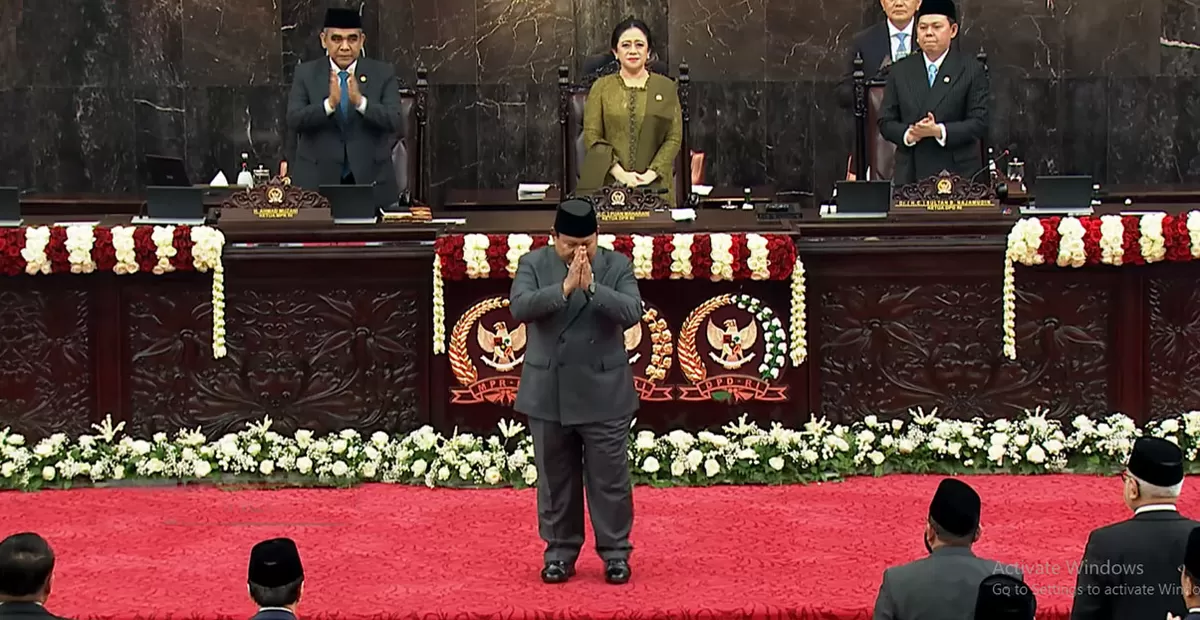
Faisal also noted a troubling divergence within the broader economy. While sectors tied directly to government priorities saw growth, vital labor-intensive sectors like agriculture and manufacturing experienced a significant slowdown. Celios researcher Nailul Huda echoed these concerns, pointing to cooling consumer spending, rising layoffs, and declining consumer confidence indexes as evidence that lower-income households have not shared in the reported growth.
Regarding employment, Prabowo asserted that 2025 investments created numerous jobs. However, critics argue that the quality of job creation is deteriorating. Bhima Yudhistira of CELIOS noted that BPS data reveals a sharp drop in labor absorption efficiency, where a large number of jobs were created previously, but fewer by 2026.
Civil Liberties, Institutional Governance, and Public Transparency
In his speech, Prabowo stressed the importance of listening to the public and maintaining transparent governance, declaring that the state must facilitate citizens rather than hinder them. Human rights advocates and legal scholars quickly contrasted this rhetoric with documented crackdowns on public dissent. Data compiled by the Fact-Finding Commission and the Young Movement Against Criminalization indicates that authorities detained numerous people following widespread demonstrations in August 2025, with several individuals facing criminal prosecution.

Digital freedom organizations have similarly documented a restrictive environment online. According to a February 2026 report by Safenet, online freedom of expression violations surged in 2025, up from the previous year. The Ministry of Digital Communications reportedly issued numerous content removal requests and content blocks targeting citizens and independent media outlets criticizing government policies.
Feri Amsari criticized the disconnect between official statements on transparency and the absence of concrete enforcement mechanisms. “A vital note on anti-corruption, transparency, and public participation is that it is all just on the President’s lips,” Amsari remarked, asserting that the administration has implemented few substantive structural reforms to safeguard civic participation.
State-Owned Enterprises and Energy Policy Adjustments
Prabowo defended sweeping reforms within state-owned enterprises (BUMN), noting that the administration has closed several entities to curb unproductivity. While BUMN dividend contributions rose 67% in 2025 to reach Rp142.3 trillion, analysts raised questions regarding the proposed establishment of an ad hoc court to investigate corporate directors over the past 30 years. Bright Institute research director Muhammad Andri Perdana warned that without clear legal distinctions between poor business judgment and actual malfeasance, corporate leaders might face unwarranted criminalization.
In energy policy, the government highlighted the implementation of the B50 biodiesel mandate—a blend of 50% palm oil-derived biodiesel and 50% fossil diesel—implemented on July 1st. Prabowo claimed the policy stopped foreign diesel imports and saved Rp170 trillion annually in foreign exchange. However, research groups like the NEXT Indonesia Center emphasized that terminating diesel imports does not automatically reduce state energy subsidies, which remain vulnerable to global crude oil price fluctuations and exchange rate volatility.
Public stakeholders and policy observers await formal legislative reviews and upcoming budgetary hearings in the coming weeks for further verification of the administration’s fiscal targets.
- London Bus Drivers Strike Over Lack of Air Conditioning
- US Sends New Aircraft Carrier to Middle East as USS Abraham Lincoln Faces Deployment Crisis
- Why Your Bank Can Hold a Deposited Check for Days (daybreakwire.com)
- Oklahoma State Question 844: Proposed Property Tax Reimbursement Changes (news-usa.today)