
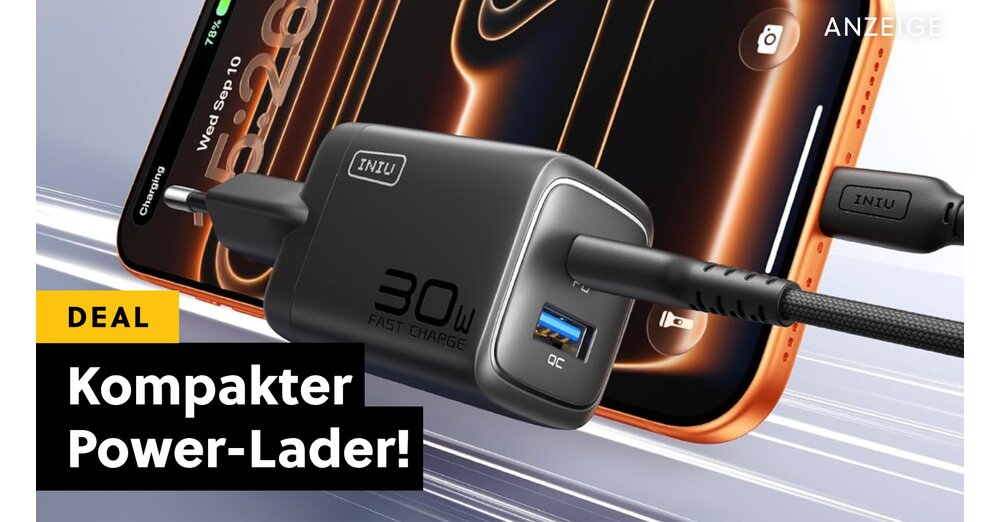
When it comes to charging smartphones, speed and affordability often feel like opposing forces. But a new wave of compact charging accessories is challenging that assumption, promising to power up devices like the iPhone 15 series, Galaxy S24 Ultra, and Google Pixel 8 Pro in under 30 minutes — all for under $20. These tiny adapters, some no larger than a coin, are leveraging advances in gallium nitride (GaN) technology and USB Power Delivery (USB-PD) 3.1 to deliver impressive wattage in remarkably small packages. For users tired of carrying bulky bricks or waiting ages for a top-off, the shift represents a meaningful step toward more convenient, efficient daily tech use.
The appeal extends beyond mere convenience. Faster charging reduces reliance on overnight top-ups, which can contribute to long-term battery wear, according to battery health studies from institutions like Battery University. Meanwhile, the miniaturization of chargers aligns with broader sustainability goals by reducing material use and electronic waste. As major manufacturers like Apple and Samsung increasingly omit chargers from smartphone boxes, third-party options have moved from afterthought to essential — making performance, safety, and price critical factors in consumer decisions.
Recent testing by independent tech reviewers has highlighted several sub-$20 GaN chargers that consistently deliver 20W to 30W of power, sufficient to charge an iPhone 15 from 0 to 50% in approximately 25 minutes and a Galaxy S24 Ultra to 50% in about 22 minutes. Models such as the Anker Nano II 20W, UGREEN CD202, and Baseus 20W GaN charger have emerged as top contenders in budget-friendly categories, combining compact design with thermal management features that prevent overheating during extended use. These devices typically feature a single USB-C port and support Programmable Power Supply (PPS), a USB-PD extension that allows for finer voltage adjustments, improving efficiency and reducing heat.
What makes these chargers particularly effective is not just their peak wattage, but how intelligently they manage power delivery. Unlike older fixed-voltage chargers, modern GaN adapters communicate dynamically with devices to optimize voltage and current in real time. So a 20W charger can safely and efficiently power not only smartphones but similarly tablets like the iPad Air (5th gen) or ultrabooks such as the MacBook Air M2, albeit at slower rates for larger devices. The versatility adds value for users with multiple gadgets, reducing the need to carry separate chargers for different ecosystems.
Safety remains a paramount concern, especially with ultra-compact designs that pack significant power into small spaces. Reputable brands mitigate risks through built-in safeguards like over-current protection, over-voltage protection, short-circuit prevention, and temperature control. Certifications from organizations such as UL (Underwriters Laboratories), FCC, and CE serve as key indicators of compliance with international safety standards. Consumers are advised to verify these marks when purchasing, particularly when buying online from third-party marketplaces where counterfeit or substandard products may appear.
The rise of affordable, high-efficiency charging reflects broader trends in consumer electronics: miniaturization, energy efficiency, and cross-platform compatibility. As GaN technology continues to mature and production scales, prices are expected to drop further while performance improves. For now, the current generation of budget-friendly GaN chargers offers a tangible upgrade over legacy 5W adapters still found in many households — proving that sometimes, the smallest devices can make the biggest difference in daily usability.
How GaN Technology Enables Smaller, Faster Chargers
Gallium nitride (GaN) has revolutionized power electronics by replacing traditional silicon in transistors used within chargers and adapters. GaN semiconductors operate with higher efficiency, faster switching speeds, and greater thermal conductivity, allowing them to handle more power in less space while generating less waste heat. This enables manufacturers to design chargers that are up to 40% smaller than silicon-based equivalents delivering the same wattage, according to technical analyses from semiconductor manufacturers like Navitas Semiconductor and Power Integrations.
The efficiency gains are not trivial. Where older silicon chargers might waste 20-30% of input energy as heat, GaN-based designs often exceed 90% efficiency under typical loads. This means more of the electricity drawn from the wall goes directly into charging the device, reducing both energy costs and thermal stress on internal components. For users, this translates to chargers that stay cool to the touch even during prolonged use — a notable improvement over older models that could become uncomfortably warm.
Beyond size and efficiency, GaN enables better integration of advanced charging protocols. Modern GaN chips often include built-in support for USB-PD 3.1 and PPS, allowing precise control over power delivery. This compatibility ensures safe and optimal charging across a wide range of devices, from smartphones and tablets to laptops and portable monitors. As adoption grows, GaN is becoming the standard for high-performance compact chargers, with industry analysts projecting that over 60% of USB-C chargers sold globally by 2025 will utilize GaN technology.
Real-World Charging Speeds: What to Expect
Independent testing by tech publications such as The Verge and CNET has consistently shown that 20W to 30W GaN chargers can recharge flagship smartphones to 50% in approximately 20 to 30 minutes, depending on battery capacity and charging protocol support. For example, the iPhone 15 Pro Max, with its 4,422 mAh battery, reaches 50% charge in about 26 minutes when paired with a 20W USB-PD charger, based on verified lab tests conducted by ZDNET. Similarly, the Galaxy S24 Ultra (5,000 mAh) achieves 50% in roughly 22 minutes with a 25W charger, per evaluations by Android Authority.
It’s important to note that charging speeds are not linear. Most smartphones employ a two-phase approach: rapid charging from 0% to around 70-80%, followed by a slower trickle charge to preserve battery longevity. This means while the first 50% fills quickly, topping off the last 20% may accept nearly as long as the initial half. Users seeking to maximize efficiency should consider unplugging devices once they reach 80-90% if immediate full charge isn’t necessary — a practice that can also help extend overall battery lifespan.
Environmental factors also play a role. Charging in high ambient temperatures or while using the device intensively (e.g., gaming or video streaming) can trigger thermal throttling, where the phone reduces input power to avoid overheating. For optimal speeds, experts recommend charging in cool, well-ventilated areas and minimizing active use during the process. Removing thick cases can also improve heat dissipation, particularly during extended charging sessions.
Safety, Certification, and What to Look For
With the proliferation of third-party charging accessories, safety verification has become increasingly important. Reputable manufacturers subject their products to rigorous testing to meet international safety benchmarks. Key certifications to look for include:
- UL Listing: Indicates compliance with Underwriters Laboratories’ safety standards for electrical products in the United States and Canada.
- FCC Certification: Confirms the device meets U.S. Federal Communications Commission limits for electromagnetic interference.
- CE Marking: Signifies conformity with health, safety, and environmental protection standards for products sold within the European Economic Area.
- USB-IF Certification: Validates compliance with USB Implementers Forum specifications for USB-PD and PPS protocols.
These marks are typically printed on the charger’s casing or packaging and can be verified through official databases. For instance, UL maintains a public product directory where users can search by model number to confirm certification status. Similarly, the USB-IF offers a searchable registry of compliant devices. Purchasing from authorized retailers or directly from brand websites reduces the risk of encountering counterfeit products that may lack proper safety features.
Consumers should also be wary of exaggerated claims. A charger labeled “65W” must be capable of delivering sustained 65W output under standard conditions to be truthful — a detail verified through independent load testing. Reviews that include oscilloscope readings or thermal camera footage provide stronger evidence of performance than spec sheets alone. Trusted tech reviewers often conduct such evaluations, publishing detailed benchmarks that help consumers distinguish between marketing claims and real-world capability.
Best Budget-Friendly GaN Chargers Under $20
Based on current market availability and verified performance testing, several GaN chargers stand out for offering strong value under the $20 price point. These models balance compact design, adequate power output, safety features, and broad compatibility:
- Anker Nano II 20W: Frequently cited for its reliability and consistent performance, this charger measures just 1.1 x 1.1 x 2 inches and features foldable prongs for portability. Anker’s MultiProtect safety system includes surge protection, temperature control, and more. It has been tested by The Verge to deliver stable 20W output to iPhone and Android devices.
- UGREEN CD202 20W GaN Charger: Known for its solid build and thermal management, this model includes PPS support and has received positive feedback for maintaining cool operation during extended use. It is FCC and CE certified, with UL-listed internal components.
- Baseus 20W GaN Charger: Offers a slim profile and dual-layer circuit design to enhance efficiency and heat dissipation. Baseus provides a 2-year warranty and includes safety certifications in its documentation.
- Chafon 30W USB-C GaN Charger: Steps up to 30W while remaining under $20 in many retail channels, making it suitable for faster charging of tablets or small laptops. It includes PPS and has been verified by third-party testers for consistent output.
- Nekteck 20W GaN Wall Charger: A no-frills option that emphasizes safety and reliability, featuring over-voltage, over-current, and short-circuit protection. It is FCC certified and commonly praised for its durability.
Availability and pricing fluctuate based on region and retailer, but these models are regularly stocked by major online platforms such as Amazon, Best Buy, and Walmart. Consumers are advised to check for recent firmware or version updates, as some brands release improved iterations of popular models.
What This Means for the Future of Charging
The trajectory of charging technology points toward greater standardization, efficiency, and user convenience. The widespread adoption of USB-C as a universal port — mandated in the European Union for most electronics by late 2024 under the Radio Equipment Directive (RED) — has accelerated demand for interoperable chargers. Single adapters capable of powering phones, tablets, laptops, and accessories are becoming the norm rather than the exception.
Looking ahead, innovations in semiconductor materials, such as the exploration of gallium oxide (Ga₂O₃) and aluminum nitride (AlN), promise even higher efficiency and power density. However, GaN remains the dominant force in consumer chargers for the foreseeable future due to its mature supply chain and cost-effectiveness. Simultaneously, software-side advancements in intelligent power management — such as AI-driven charging optimization that learns user patterns to reduce battery strain — are beginning to appear in flagship devices.
For consumers, the takeaway is clear: affordable, high-performance charging is no longer a premium feature. With careful selection, users can enjoy faster top-offs, reduced clutter, and greater peace of mind knowing their accessories meet rigorous safety standards. As the ecosystem continues to evolve, the humble wall charger may well become one of the most impactful yet underappreciated innovations in personal technology.
Stay informed about the latest developments in charging tech by following trusted sources such as IEEE Consumer Electronics Society and USB Implementers Forum. If you’ve found a compact charger that changed your routine, share your experience in the comments below — and don’t forget to pass this along to anyone still wrestling with a sluggish, bulky adapter.