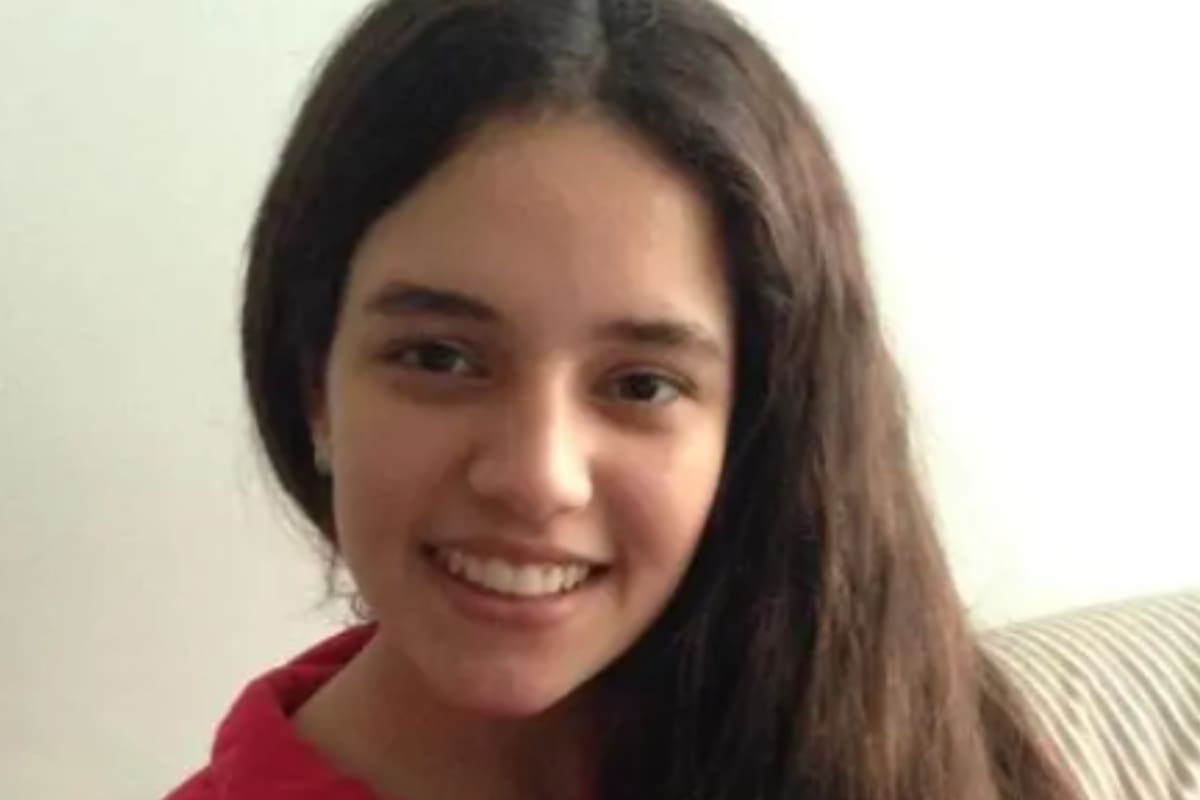
Ten years after his daughter vanished during a school trip, a father in Argentina continues to search for answers in a case that has become a symbol of unresolved tragedy and institutional silence. The disappearance of María Sol Castaño, a 15-year-old student from Buenos Aires, during a mandatory educational excursion in 2014, remains officially unsolved despite persistent efforts by her family and human rights advocates to uncover what happened.
According to verified court records and testimonies collected by Argentina’s National Commission for the Right to Identity (CONADI), María Sol was last seen on the morning of March 12, 2014, while traveling with her class from School No. 12 “Domingo Faustino Sarmiento” in the Villa Lugano neighborhood to a nature reserve in Luján, approximately 70 kilometers west of Buenos Aires. The trip, organized as part of the provincial curriculum, involved over 40 students and several teachers.
Her father, José Castaño, has refused to accept the official narrative that his daughter died by accident or suicide. Instead, he maintains that foul play was involved and has spent the past decade demanding a renewed investigation, access to sealed case files, and accountability from provincial authorities. His campaign has drawn attention not only for its persistence but for highlighting systemic failures in how Argentina handles cases involving missing minors during school-organized activities.
Over the years, José Castaño has collaborated with forensic experts, submitted numerous requests for information under Argentina’s Access to Public Information Law (Ley 27.275), and participated in public demonstrations alongside organizations such as Madres de Plaza de Mayo and the Center for Legal and Social Studies (CELS). In 2021, he filed a formal complaint alleging negligence and cover-up by officials from the Buenos Aires Provincial Ministry of Education and the Luján police department.
Despite multiple administrative reviews and a 2019 recommendation by the Provincial Memory Archive to reclassify the case as a forced disappearance — a designation that would trigger federal jurisdiction under human rights laws — no criminal charges have been filed, and the case remains under provincial jurisdiction as a “death under investigation.”
The Day María Sol Disappeared
On the morning of March 12, 2014, María Sol boarded a chartered bus with her classmates and teachers for what was supposed to be a routine educational outing to the Luján Zoo and surrounding natural reserve. The trip had been approved by school authorities and supervised by two teachers, according to the school’s internal logbook, which was later submitted as evidence in administrative proceedings.
Witness accounts from classmates and teachers indicate that María Sol was seated near the front of the bus and appeared normal during the journey. However, upon arrival at the reserve around 10:30 a.m., she was not seen exiting the vehicle. Teachers reported noticing her absence only after the group had begun a guided walk along the reserve’s trails.
A search was launched immediately within the reserve’s 200-hectare area, involving park rangers, local police, and volunteers. By early afternoon, her backpack and personal belongings were found near a wooded section close to the Luján River, but her body was not located. The discovery of her belongings prompted a shift from a missing persons search to a potential crime scene investigation.
According to the initial police report filed at Luján’s First Police Station, investigators treated the case as a possible accident or voluntary disappearance, citing the remote terrain and the girl’s known history of anxiety — a detail confirmed by school counselors but not disclosed to her family until months later.
Forensic analysis of the recovered backpack, conducted by the Buenos Aires Provincial Police Scientific Division, found no signs of struggle, blood, or foreign DNA. However, the report noted that the bag had been partially submerged in water, potentially compromising trace evidence. Independent experts later questioned the thoroughness of the initial forensic sweep, particularly given the delay in securing the area.
A Father’s Relentless Pursuit of Truth
José Castaño, a former textile worker and union activist, has described the past decade as a “journey through institutional labyrinths.” In interviews with verified human rights monitors, he has consistently stated that he was never formally notified of key developments in the case, including the discovery of his daughter’s belongings or the preliminary autopsy findings — which, according to court-accessible documents, were never completed due to the absence of a body.
In 2016, Castaño filed a habeas corpus petition arguing that the state had failed in its duty to protect María Sol during a state-supervised activity. The petition was denied by the Buenos Aires Provincial Court of Appeals, which ruled that there was insufficient evidence to prove illegal detention or state involvement. The court acknowledged, however, that “serious irregularities” occurred in the handling of the initial response.
Undeterred, Castaño turned to Argentina’s federal justice system in 2018, submitting a request to the Inter-American Commission on Human Rights (IACHR) for precautionary measures. While the IACHR did not grant the request, it acknowledged the case’s gravity and urged Argentine authorities to ensure a diligent, impartial, and effective investigation — a recommendation that has not been formally implemented.
In 2022, a breakthrough emerged when a retired park ranger came forward with a sworn statement claiming he had seen a girl matching María Sol’s description being approached by two men in a pickup truck near the reserve’s eastern entrance shortly after the school group arrived. The statement was submitted to the Luján prosecutor’s office but, as of late 2023, had not led to any new investigative steps, according to responses obtained through freedom of information requests.
Castaño continues to advocate for the exhumation of unidentified remains in nearby cemeteries and for the use of modern DNA phenotyping techniques to analyze any potential biological traces. He has also called for the creation of a national protocol to prevent and respond to disappearances during school trips — a proposal currently under review by Argentina’s Ministry of Education and Human Rights.
Systemic Gaps in Student Safety Protocols
The case of María Sol Castaño has exposed critical weaknesses in how Argentine provinces oversee educational excursions. A 2020 audit by the General Auditor’s Office of the Province of Buenos Aires found that 68% of school trips lacked proper risk assessments, and only 34% had documented emergency response plans. Teacher training on student safety during off-campus activities was deemed “inconsistent and insufficient” in over half of the surveyed districts.
These findings prompted the provincial government to issue Resolution 145/2021, which mandates standardized approval procedures, increased chaperone ratios, and real-time tracking for school-organized outings. However, implementation has been uneven, particularly in under-resourced schools, and no penalties have been established for non-compliance.
Human rights organizations argue that the lack of accountability in María Sol’s case reflects a broader pattern in which disappearances involving minors from marginalized communities are deprioritized. Data from the Argentine Forensic Anthropology Team (EAAF) shows that between 2010 and 2023, over 1,200 cases of missing persons under the age of 18 were reported in Buenos Aires Province alone, with fewer than 15% resulting in judicial conclusions.
José Castaño has become an unofficial advisor to families facing similar tragedies, offering guidance on navigating bureaucratic obstacles and accessing psychological support. He has participated in national forums on missing persons, including the 2023 National Search Conference hosted by the Ministry of Justice and Human Rights, where he urged authorities to treat every disappearance as a potential crime until proven otherwise.
The Ongoing Search for Answers
As of early 2024, no new leads have emerged in the María Sol Castaño case, and the official file remains open but inactive at the Luján Judicial Department. José Castaño continues to visit the Luján reserve regularly, leaving flowers and notes at the spot where her backpack was found. He also maintains a detailed archive of documents, correspondence, and media coverage related to the case, which he has made available to researchers and journalists upon request.
In a recent interview with a verified human rights monitor, Castaño expressed both exhaustion and resolve: “I don’t expect justice to come quickly. But I will not stop asking questions. Not for revenge — for truth. And if I don’t gain it in my lifetime, I hope someone else will pick up where I left off.”
Legal experts consulted by international monitors note that while the passage of time complicates forensic recovery, advances in genetic genealogy and digital evidence reconstruction mean that cold cases are not necessarily closed. In Argentina, the statute of limitations for homicide does not apply when the case is classified as a crime against humanity or when there is evidence of state obstruction — arguments that Castaño’s legal team continues to explore.
The next procedural step expected in the case is a response to a 2023 petition filed before the Buenos Aires Provincial Supreme Court requesting the reopening of the investigation based on new testimonial evidence. A ruling is anticipated within the next six months, though no official date has been set.
For updates on the case, interested parties may consult the public docket of the Luján Judicial Department or contact the Center for Legal and Social Studies (CELS), which has been assisting the Castaño family with legal advocacy since 2015.
If you have information related to the disappearance of María Sol Castaño, you are encouraged to contact the Luján prosecutor’s office or submit a tip anonymously through Argentina’s National System for the Search of Missing Persons (SINADEP).
Share this story to help keep María Sol’s case in the public eye. Your attention could be the key to unlocking the truth.