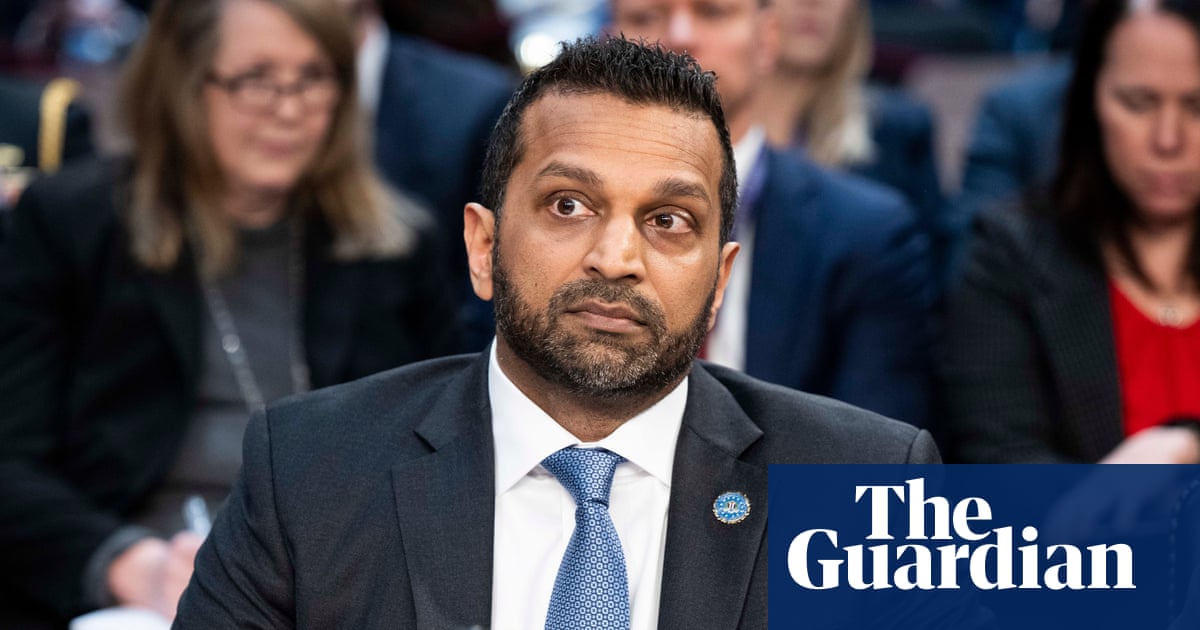
FBI Director Kash Patel has publicly denied allegations of excessive drinking amid growing concerns among U.S. National security officials about his fitness for the role, according to multiple verified reports. The claims, which first surfaced in early April 2025, allege that Patel’s alcohol consumption has raised questions about his judgment and reliability in handling sensitive intelligence matters. Patel, who was confirmed as FBI Director in March 2025 following a contentious Senate vote, has rejected the accusations as baseless and politically motivated, calling them a “hit piece” designed to undermine his leadership.
The controversy emerged after unnamed officials reportedly expressed private concerns to journalists about Patel’s behavior during late-night meetings and secure briefings. While no formal investigation has been launched by the Department of Justice or the White House Counsel’s Office, the allegations have intensified scrutiny of Patel’s background and qualifications, particularly given his lack of prior experience leading a major federal law enforcement agency. Critics have pointed to his previous roles as a congressional aide and senior advisor in the Trump administration as insufficient preparation for overseeing the FBI’s 35,000-person workforce and its critical counterterrorism, cybersecurity, and criminal investigative missions.
Patel addressed the allegations directly in a statement released through his official spokesperson on April 5, 2025, asserting that he maintains full control of his faculties and adheres to all professional standards expected of the nation’s top law enforcement official. “These allegations are false, reckless, and intended to distract from the important work the FBI is doing to protect the American people,” Patel said. “I have never allowed personal habits to interfere with my duties, and I remain fully committed to upholding the Constitution and the rule of law.” His denial was echoed by several Republican lawmakers who have defended his character and loyalty to the president’s agenda.
Despite Patel’s rebuttal, the situation has prompted renewed debate over the vetting process for senior national security appointments and the transparency expected of those holding such high-ranking positions. The FBI, as the premier investigative arm of the U.S. Department of Justice, operates under strict ethical guidelines that prohibit conduct that could impair judgment or create vulnerabilities to coercion. While moderate alcohol consumption is not prohibited for federal employees, any pattern of behavior suggesting impairment during official duties could trigger internal review under the FBI’s Employee Assistance Program and Department of Justice regulations governing employee conduct.
Background on Kash Patel’s Appointment and Controversies
Kash Patel, 44, was nominated by President Donald Trump in February 2025 to succeed Christopher Wray as FBI Director after Wray’s term ended. Patel’s nomination faced immediate scrutiny due to his limited direct experience in federal law enforcement and his history as a staunch Trump loyalist. Prior to his appointment, Patel served as Senior Director for Counterterrorism at the National Security Council and later as Chief of Staff to the Acting Secretary of Defense during the final months of the Trump administration. He also worked as a senior aide to Representative Devin Nunes on the House Intelligence Committee, where he gained prominence for his role in investigating the origins of the Russia probe.
His Senate confirmation vote on March 12, 2025, ended in a 52-47 tally, with all Democrats and two Republicans voting against him. Supporters praised his commitment to reforming what they describe as a politicized and bureaucratic FBI, while critics warned that his lack of independence and perceived partisanship could compromise the bureau’s credibility. The vote came after extensive hearings in which Patel faced sharp questioning about his involvement in efforts to declassify sensitive intelligence materials and his public statements questioning the integrity of the 2020 election.
Since taking office, Patel has initiated several internal reviews focused on reducing what he describes as “bureaucratic waste” and refocusing the FBI’s priorities on violent crime, immigration enforcement, and threats posed by foreign adversaries. He has also reiterated his commitment to protecting civil liberties while enhancing national security capabilities—a balance that has long been central to the FBI’s mission. However, his leadership style, described by some insiders as centralized and decisive, has drawn both praise and concern within the bureau’s ranks.
Understanding the Allegations and Official Response
The specific claims about Patel’s drinking habits have not been substantiated with verifiable evidence such as medical records, witness testimony under oath, or official complaints filed through proper channels. According to reporting by Reuters, which consulted three current and former U.S. Officials familiar with the matter, the concerns were raised informally and have not led to any formal inquiry by the FBI’s Office of Professional Responsibility or the Department of Justice’s Office of the Inspector General.
Reuters further noted that none of the sources who raised concerns had directly observed Patel consuming alcohol during work hours or in secure facilities. Instead, the apprehensions stemmed from secondhand accounts and observations of his behavior during extended evening briefings and social gatherings associated with official duties. One official told Reuters that while Patel appeared “fatigued and less sharp than usual” on certain occasions, there was no definitive link established between those observations and alcohol consumption.
In response to the Reuters report, Patel’s spokesperson reiterated that the director “has never been counseled, disciplined, or referred for evaluation related to alcohol use” during his federal service. The spokesperson also emphasized that Patel undergoes regular background checks and security clearance renewals, the most recent of which was completed in January 2025 as part of his nomination process. Those reviews, which include assessments of financial stability, foreign contacts, and personal conduct, did not flag any issues related to substance use.
The FBI’s Employee Assistance Program (EAP), which provides confidential counseling and referral services for employees struggling with personal challenges including substance use, is available to all staff, including senior leadership. Participation in EAP services is voluntary and strictly confidential unless there is an imminent risk of harm to self or others. No public record indicates that Patel has accessed these services, nor has the FBI confirmed any mandatory referrals.
National Security Implications and Institutional Concerns
The FBI Director holds one of the most sensitive positions in the U.S. Government, overseeing investigations into terrorism, espionage, cybercrime, public corruption, and civil rights violations. The role requires access to the nation’s most classified information and demands the highest standards of reliability, discretion, and emotional stability. Any perceived impairment—whether real or alleged—can have serious consequences for intelligence sharing, interagency coordination, and public trust in the bureau’s impartiality.
Former FBI officials and national security experts have warned that even unsubstantiated rumors about a director’s personal conduct can erode morale within the ranks and embolden adversaries seeking to exploit perceived weaknesses. As BBC News reported in a March 2025 analysis of FBI leadership challenges, the bureau’s effectiveness depends not only on its technical capabilities but also on the credibility of its leadership in the eyes of both employees and external partners.
That said, experts also caution against conflating lifestyle choices with professional incapacity without clear evidence. Dr. James Jay Carafano, a vice president at the Heritage Foundation and former Army officer, told BBC News that while leaders must be held to high standards, “we must be careful not to weaponize personal habits as a substitute for legitimate policy disagreements.” He added that the focus should remain on measurable outcomes: crime statistics, counterterrorism effectiveness, and adherence to constitutional guidelines.
The current debate reflects broader tensions about the politicization of U.S. Intelligence and law enforcement institutions. Patel’s appointment has been viewed by many as part of a larger effort to reshape the FBI’s culture and priorities in alignment with the administration’s agenda. Supporters argue that such change is necessary to counter what they see as years of institutional bias; opponents warn that it risks undermining the FBI’s traditional role as an independent arbiter of justice.
What Happens Next: Oversight and Accountability
As of April 2025, Notice no scheduled hearings or formal investigations into the allegations against Patel. However, the Senate Judiciary Committee, which oversees FBI nominations and conducts periodic oversight of the bureau, has indicated it may review the matter if additional credible evidence emerges. Committee Chairman Senator Dick Durbin (D-IL) has not called for a special session but noted in a recent press briefing that the panel remains vigilant about any issues affecting the FBI’s leadership integrity.
The Department of Justice’s Office of the Inspector General (OIG) has the authority to initiate inspections or investigations into employee misconduct, including those involving senior officials, but typically requires a formal complaint or credible allegation of wrongdoing. To date, no such referral has been made public regarding Patel’s conduct. The OIG’s semiannual report to Congress, released in March 2025, did not mention any ongoing inquiries into the FBI Director’s office.
Patel continues to fulfill his duties, having presided over several high-profile operations in recent weeks, including the coordination of a multi-agency raid targeting a suspected cybercrime syndicate operating across Eastern Europe and the United States. He also delivered the keynote address at the National Police Week memorial service in Washington, D.C., on May 12, 2025, where he honored fallen officers and reaffirmed the FBI’s commitment to supporting state and local law enforcement.
For members of the public seeking official updates on FBI operations, leadership statements, or oversight activities, the bureau maintains a publicly accessible newsroom at fbi.gov/news, where press releases, speeches, and reports are regularly posted. The Senate Judiciary Committee’s oversight schedule and hearing archives are available at judiciary.senate.gov/oversight.
While the current controversy remains unresolved in the court of public opinion, no verifiable evidence has emerged to substantiate the original claims about Patel’s drinking habits. Until such evidence is presented through official channels or credible, on-the-record testimony, the allegations remain unproven. The FBI Director, like all federal officials, is entitled to the presumption of innocence and the right to defend his reputation against unfounded accusations.
As this story develops, World Today Journal will continue to monitor official sources, oversight bodies, and verified reporting for any updates. We encourage readers to share thoughtful comments and facilitate spread accurate information by sharing this article with others who may be following these developments.
- Guatemala’s Fuego Volcano Erupts: Residents Evacuated as Ash and Lava Threaten Homes
- Renowned Taiwan Attorney Chang Chun-lun Passes Away at 62: Legal Community Mourns
- Cris Collinsworth Praises Larry Fitzgerald And Discusses The Arizona Cardinals (news-usa.today)
- Samantha Morton Discusses Ageism and Career Struggles After The Odyssey (archyde.com)