
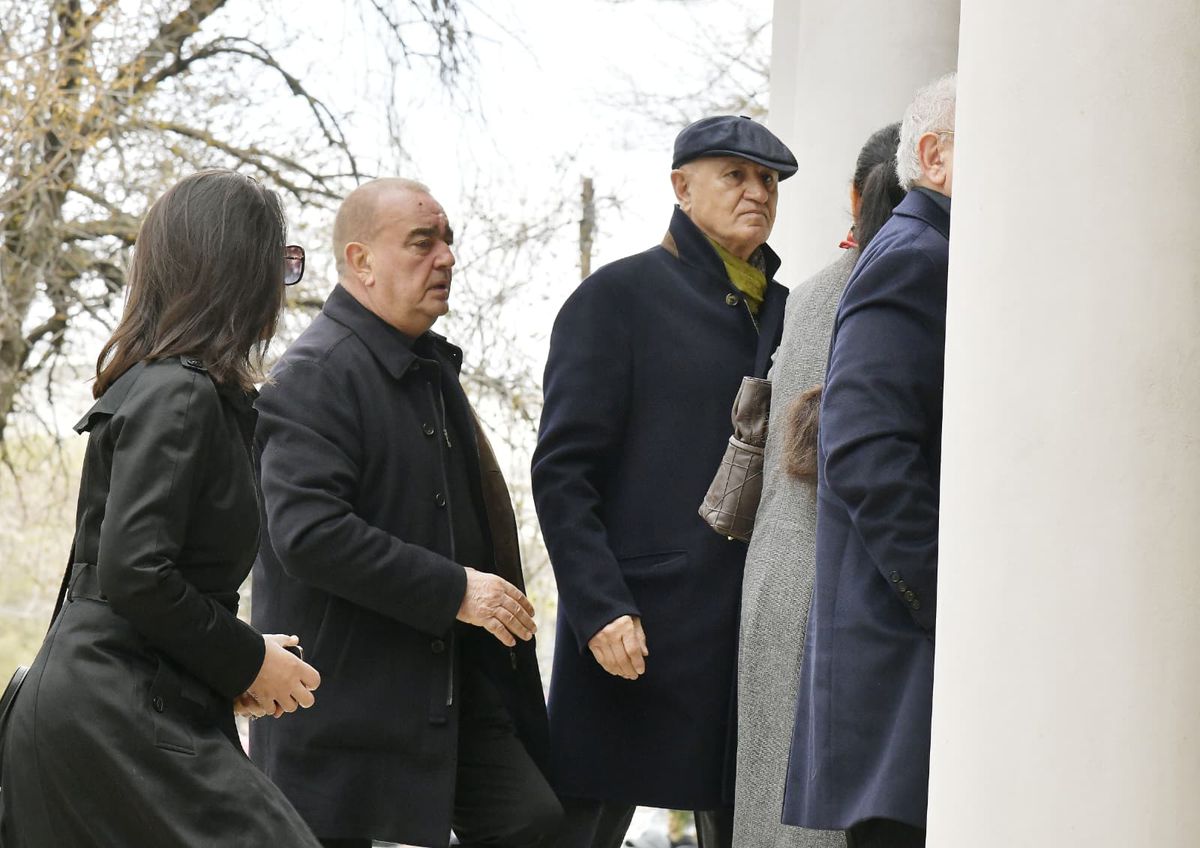
The leadership of FC Voluntari has come under intense scrutiny following a series of accusations claiming that the club’s administrative decisions have directly compromised its competitive standing. At the center of the controversy is President Bogdan Bălănescu, who faces allegations that his management style and interference in technical matters have effectively “relegated” the team’s quality and prospects, regardless of their official league position.
These claims, emerging from within the club’s orbit, suggest a disconnect between the boardroom and the pitch. The accusations point to a pattern of instability that has left the squad vulnerable and the technical staff undermined, raising questions about the long-term viability of the current governance model at one of Romania’s more volatile top-flight clubs.
For FC Voluntari, a club that has navigated the highs and lows of the Romanian Football Federation (FRF) sanctioned leagues, these allegations are not merely about a few poor results. They represent a deeper crisis of confidence in the club’s ownership, with critics arguing that the president’s approach to squad building and coaching appointments has hindered the team’s growth.
Allegations of Technical Interference and Mismanagement
The core of the current dispute lies in the alleged overreach of President Bogdan Bălănescu into the technical operations of the club. In professional football, the boundary between ownership and coaching is often a point of friction, but the accusations against the Voluntari leadership suggest this boundary has been entirely erased.
Reports indicate that decisions regarding player selection, tactical directions, and the hiring and firing of coaching staff have been heavily influenced, if not dictated, by Bălănescu. This perceived interference is cited as a primary reason for the “retrogradare” (relegation) of the team’s spirit and performance. When a president overrides the technical director or head coach, it often leads to a loss of authority in the dressing room, a phenomenon that has reportedly plagued the Voluntari camp.
The impact of such management is rarely immediate but becomes evident over several transfer windows. Critics argue that the club has failed to build a cohesive project, instead opting for a revolving door of players and managers who struggle to implement a consistent philosophy under the shadow of administrative pressure.
Squad Instability and the Cost of Volatility
The human cost of this leadership crisis is most evident in the squad’s instability. Frequent changes in leadership and shifting priorities from the president’s office have reportedly created an environment of uncertainty for the players. In the high-stakes environment of the Romanian SuperLiga, such instability can be the difference between a mid-table finish and a genuine battle for survival.
Former associates and internal sources suggest that the lack of a clear, autonomous technical project has led to a decline in the club’s ability to attract and retain top-tier talent. When players perceive that the sporting project is subject to the whims of a single individual rather than a professional sporting plan, the club’s prestige diminishes.
This volatility is not unique to FC Voluntari, but it is amplified by the specific accusations that Bălănescu’s actions were not just errors in judgment, but a systemic failure of leadership. The claim that the president “relegated the team” serves as a metaphor for the erosion of the club’s competitive edge and professional standards.
The Broader Context of Romanian Club Ownership
To understand the situation at FC Voluntari, one must look at the broader landscape of football governance in Romania. The region has a long history of “patron-led” clubs, where a single wealthy benefactor provides the financial lifeline but also exerts absolute control over every aspect of the organization.
While this model can lead to rapid ascent—as seen in Voluntari’s rise to the top flight—it often lacks the institutional safeguards found in member-owned or corporate-governed clubs. When the patron’s vision clashes with sporting reality, the club often suffers. The current accusations against Bălănescu are a textbook example of the risks inherent in this ownership structure.
As an editor who has covered sports across Europe for over a decade, I have seen this pattern in various leagues. The transition from a “passion project” to a professional sporting institution requires a willingness from the owner to delegate power to experts. The turmoil at FC Voluntari suggests that this transition has stalled, leaving the club trapped in a cycle of instability.
What Happens Next for FC Voluntari?
The immediate future of the club depends on whether the leadership is willing to implement structural reforms. For the accusations to be neutralized, the club would need to demonstrate a commitment to technical autonomy, perhaps by appointing a high-profile sporting director with the authority to shield the coaching staff from administrative interference.
the club must address the morale of the current squad. If the players continue to feel that their efforts are undermined by boardroom decisions, the risk of a literal relegation becomes a exceptionally real possibility. The stability of the club’s financial backing remains a strength, but money alone cannot buy the tactical cohesion or the trust of a dressing room.
The Romanian football community will be watching closely to see if Bogdan Bălănescu responds to these criticisms with a change in strategy or a doubling down on the current approach. In the short term, the focus remains on the upcoming fixtures and the club’s ability to stabilize its results on the pitch.
The next confirmed checkpoint for the club’s administration will be the official end-of-season review and the subsequent registration window, where the club’s approach to new signings and coaching stability will reveal whether the leadership has taken these accusations to heart.
Do you believe that owner interference is the primary cause of instability in Eastern European football, or is it a necessary part of the funding model? Share your thoughts in the comments below.