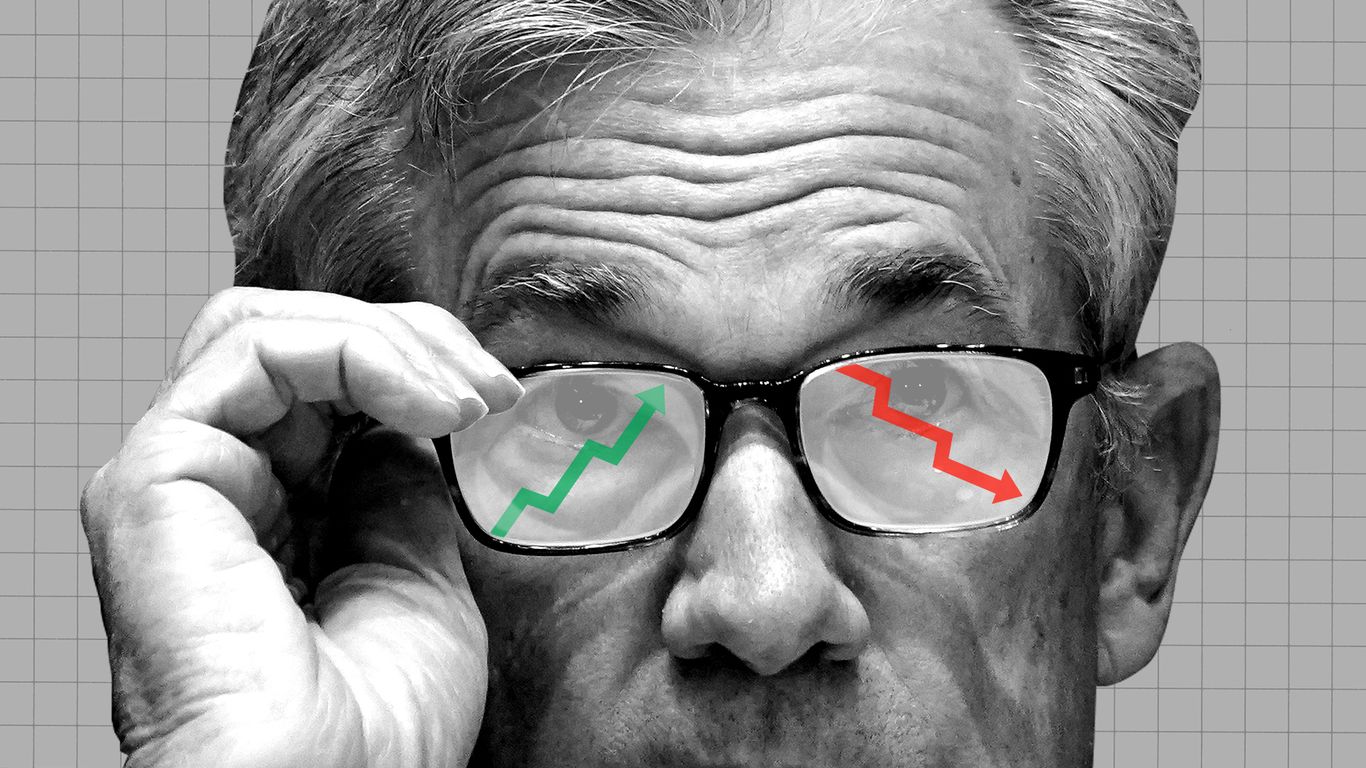
The Shifting Sands of Monetary Policy: Decoding the Fed’s December Rate Cut Uncertainty
The Federal Reserve‘s November 1st policy meeting delivered a stark message to markets: a December interest rate cut is far from guaranteed. While expectations had largely priced in another easing of monetary policy, Chair Jerome Powell‘s purposeful tempering of those expectations revealed a deepening rift within the Federal Open Market Committee (FOMC) – a division fueled by persistent concerns over inflation and a growing contingent of monetary policy hawks. This shift signals a possibly more cautious approach to rate adjustments in the coming months, demanding a reassessment of economic forecasts and market strategies.
The Core of the Debate: Inflation vs. Economic Slowdown
For months, the narrative surrounding the Fed has centered on the potential for rate cuts to stimulate a slowing economy. This trajectory was initially championed by appointees of the previous administration and later adopted, to a degree, by Chair Powell. However, a meaningful faction within the FOMC remains deeply apprehensive about the risk of prematurely loosening monetary policy in the face of stubbornly elevated inflation.
The central question facing policymakers is which poses the greater threat: a weakening labor market or a resurgence of inflationary pressures. While recent data has shown some cooling in certain sectors, overall inflation remains above the Fed’s 2% target. Furthermore, looming factors like potential tariff impacts add another layer of complexity, threatening to reignite price increases.
This internal debate isn’t new, but its visibility has increased dramatically. powell’s unusually direct attempt to recalibrate market expectations – essentially cautioning traders against overconfidence in a December cut – underscores the intensity of the disagreement. It suggests that future rate decisions will hinge heavily on incoming economic data and the ability of the committee to reach a consensus on the dominant economic risk.
Decoding the Numbers: Market Reaction and Fed Projections
The market’s response to Powell’s commentary was swift and significant. Prior to the meeting, the CME FedWatch tool indicated an 88% probability of a December rate cut. Following the press conference, those odds plummeted to 71%, demonstrating the power of the Fed Chair’s “jawboning” to influence market sentiment.
However, it’s crucial to understand that the consensus around three rate cuts for 2025 was always tenuous.The Fed’s own projections, released in September, revealed a surprisingly narrow margin of agreement. While the median policymaker anticipated three cuts, only 10 of 19 projected three or more. The remaining nine foresaw fewer cuts, highlighting the underlying divergence in views.
This divergence is further illustrated by the recent rhetoric of several regional Federal Reserve presidents. Beth Hammack (Cleveland), Jeffrey Schmid (Kansas City), Alberto Musalem (St. Louis), and Lorie Logan (Dallas) have consistently emphasized the importance of remaining vigilant against inflationary risks, particularly given the current rate of price increases – hovering near 3% even before factoring in the potential impact of new tariffs.
The Dynamics of Dissent: hawks, Doves, and Voting Power
The composition of the FOMC and its rotating voting structure add another layer of nuance to this situation. While the hawkish contingent – those favoring tighter monetary policy – may represent a ample portion of the committee, their voting power is not always commensurate with their numbers.
This year, only Schmid and Musalem, of the four aforementioned presidents, hold voting seats. This means that, in pure vote-counting terms, the hawks’ influence is somewhat diluted.
The November 1st meeting itself showcased this internal friction. Jeffrey Schmid dissented, advocating for maintaining current interest rates, while Governor Stephen Miran dissented in the opposite direction, pushing for a more aggressive rate cut. This marked only the third instance this century of opposing dissents at the same FOMC meeting, underscoring the extraordinary level of disagreement.
Looking Ahead: Implications for Investors and the Economy
The Fed’s shift in tone has significant implications for investors and the broader economy. The era of predictably easing monetary policy may be coming to an end. Here’s what to expect:
* Increased Volatility: Markets are likely to experience heightened volatility as they grapple with the uncertainty surrounding future rate decisions.
* Data Dependency: The Fed will be laser-focused on incoming economic data, particularly reports on inflation, employment, and economic growth.
* Cautious Approach: powell and his successor are likely to adopt a more cautious approach to rate cuts, prioritizing the need to maintain price stability.
* Sectoral Impacts: Interest-rate sensitive sectors, such as housing and automobiles, may experience slower growth if rates remain elevated for longer.
Evergreen Section: the Enduring Principles of Monetary Policy
The
Worth a look