
The Federal Reserve reduced its benchmark interest rate by 25 basis points on Wednesday, setting the target range for the federal funds rate between 4.50% and 4.75%, according to the central bank’s official policy statement. While the decision marks a continuation of the current easing cycle, the Federal Open Market Committee (FOMC) adjusted the language in its official statement to adopt a more neutral tone, removing previous phrasing that suggested a more aggressive bias toward future interest rate cuts.
This shift in communication suggests that while the central bank remains committed to its dual mandate of price stability and maximum employment, it is moving toward a more cautious, data-dependent approach. Analysts noted that the revised statement lacks the explicit dovish lean found in earlier communications, reflecting a growing confidence that inflation is approaching the Fed’s 2% target while the labor market remains stable.
The Federal Reserve’s Rate Decision and Statement Shift
The Federal Reserve’s decision to lower rates by 0.25 percentage points follows a series of adjustments aimed at normalizing monetary policy after a period of aggressive tightening to combat post-pandemic inflation. According to the Federal Reserve Board, the committee’s decision was based on an assessment of recent economic developments and incoming data regarding both consumer prices and employment levels.
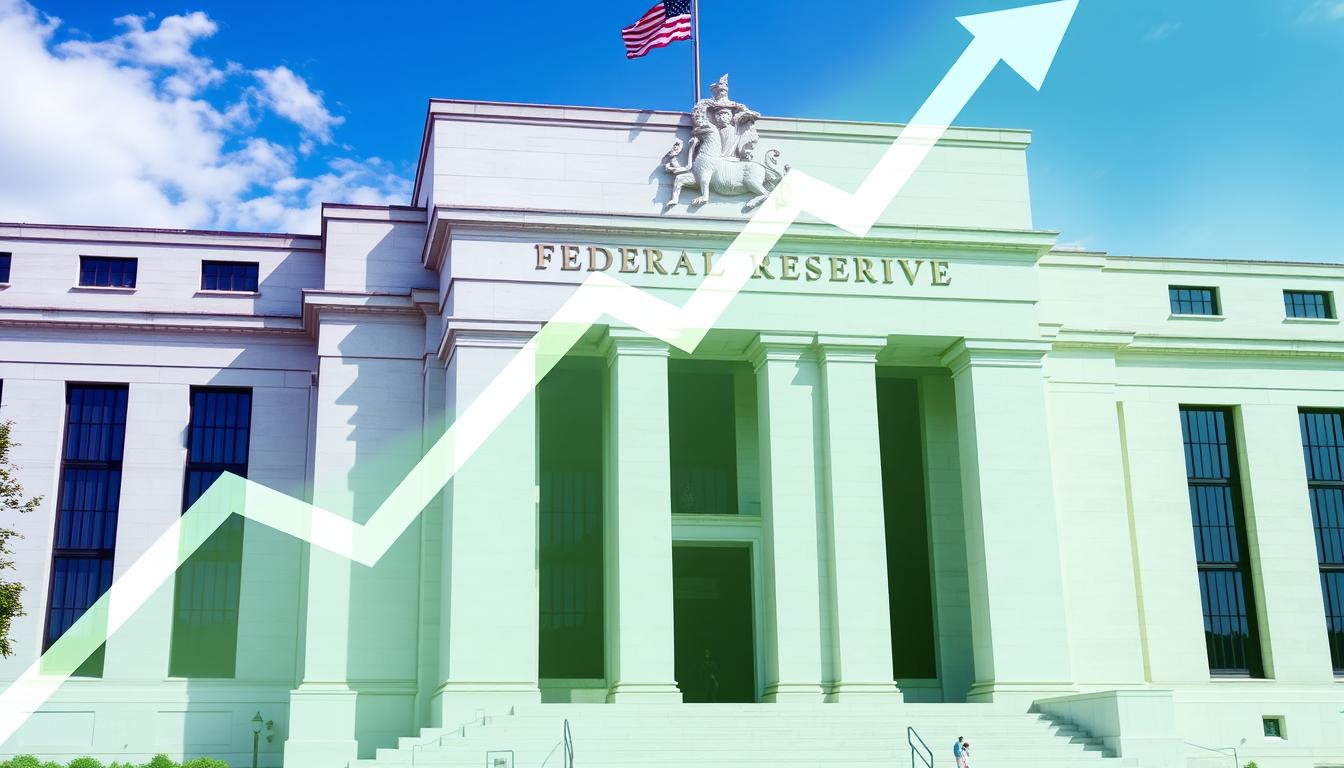
A key aspect of this Wednesday’s announcement was not just the numerical change to the federal funds rate, but the subtle “paring down” of the FOMC’s policy statement. In previous meetings, the statement included language that signaled a strong inclination toward further reductions. The updated text, however, focuses more heavily on the “balance of risks” between inflation and employment, a phrasing that central bankers use to signal a more neutral, or “hawkish” neutral, stance.
Jerome Powell, Chair of the Federal Reserve, addressed the change during a subsequent press conference, stating that the committee would continue to make decisions meeting by meeting. He emphasized that the Fed does not have a predetermined path for future cuts and will remain responsive to economic indicators. This approach aims to prevent market volatility that can occur when investors assume a specific sequence of rate changes.
Economic Drivers: Inflation and the Labor Market
The Federal Reserve’s recent policy trajectory is heavily influenced by two primary economic metrics: the Personal Consumption Expenditures (PCE) price index and the national unemployment rate. For much of 2023 and early 2024, the Fed’s primary focus was the rapid deceleration of inflation, which had reached peaks not seen in four decades.
Recent data indicates that inflation has shown signs of sustained cooling. According to reports from the Reuters news agency, recent inflation readings have moved closer to the Fed’s long-term 2% objective, providing the committee with the “policy space” to begin lowering rates without risking a resurgence of price volatility. However, the central bank remains wary of premature easing that could allow inflation to become entrenched.
Simultaneously, the labor market has transitioned from the extreme tightness seen in 2022 to a more balanced state. While job growth has moderated, unemployment remains historically low by long-term standards. The Fed’s current strategy seeks to achieve a “soft landing”—a scenario where inflation returns to target without triggering a significant spike in unemployment or a broad economic recession.
Key Economic Indicators Influencing the FOMC
- Consumer Price Index (CPI): Measures the change in prices paid by consumers for a basket of goods and services.
- Personal Consumption Expenditures (PCE): The Fed’s preferred inflation metric, which accounts for changes in consumer behavior.
- Non-Farm Payrolls: A key indicator of the strength and health of the U.S. labor market.
- Unemployment Rate: The percentage of the labor force that is jobless and actively seeking employment.
Impact on Consumers and Global Markets
The Federal Reserve’s interest rate decisions have a direct impact on the cost of borrowing for households and businesses. A reduction in the federal funds rate typically leads to lower interest rates on various financial products, though the speed at which these changes reach consumers can vary.
For homeowners, the downward pressure on rates can lead to lower mortgage costs, though 30-year fixed-rate mortgages are more closely tied to the yield on the 10-year Treasury note than the federal funds rate. For consumers carrying debt, such as credit cards and auto loans, a lower federal funds rate generally results in reduced interest expenses over time as banks adjust their prime lending rates.
Global markets reacted to the announcement with measured volatility. Following the announcement, U.S. Treasury yields saw slight adjustments as investors recalibrated their expectations for the remainder of the year. The shift toward a more neutral statement has led some market participants to temper their expectations for aggressive rate cuts in the coming months, as the “cutting bias” that previously drove market optimism has been formally moderated by the Fed.
Comparing Recent FOMC Actions
To understand the current policy environment, it is necessary to compare the recent sequence of interest rate decisions, which shows a transition from aggressive tightening to a more measured easing phase.
| Meeting Period | Action Taken | Policy Stance/Tone |
|---|---|---|
| Late 2023 | Hold (Steady) | Restrictive/Hawkish |
| September 2024 | 50 Basis Point Cut | Dovish (Aggressive Easing) |
| November 2024 | 25 Basis Point Cut | Neutral (Data-Dependent) |
Frequently Asked Questions
What is the current federal funds rate?
Following the most recent decision, the target range for the federal funds rate is 4.50% to 4.75%.
Why did the Federal Reserve change its statement?
The Fed updated its statement to reflect a more neutral stance, removing language that suggested a strong bias toward continuous rate cuts. This is intended to emphasize that future decisions will depend entirely on incoming economic data.
How does a Fed rate cut affect my personal finances?
A rate cut can lower the interest rates on variable-rate debts, such as credit cards and certain types of personal loans. It may also lead to lower interest rates for new mortgages and auto loans, though the impact depends on broader market conditions.
What does “data-dependent” mean in this context?
It means the Federal Reserve will not commit to a specific schedule of rate changes. Instead, they will look at monthly reports on inflation (like the PCE) and employment (like non-farm payrolls) before deciding whether to raise, lower, or hold rates at the next meeting.
The next scheduled meeting of the Federal Open Market Committee is set for December 17–18, where officials will review updated economic data to determine the next step in their monetary policy path.
What are your thoughts on the Fed’s shift toward a more neutral stance? Do you believe this will stabilize the economy or impact borrowing costs more than expected? Let us know in the comments below and share this article with your network.
Worth a look