
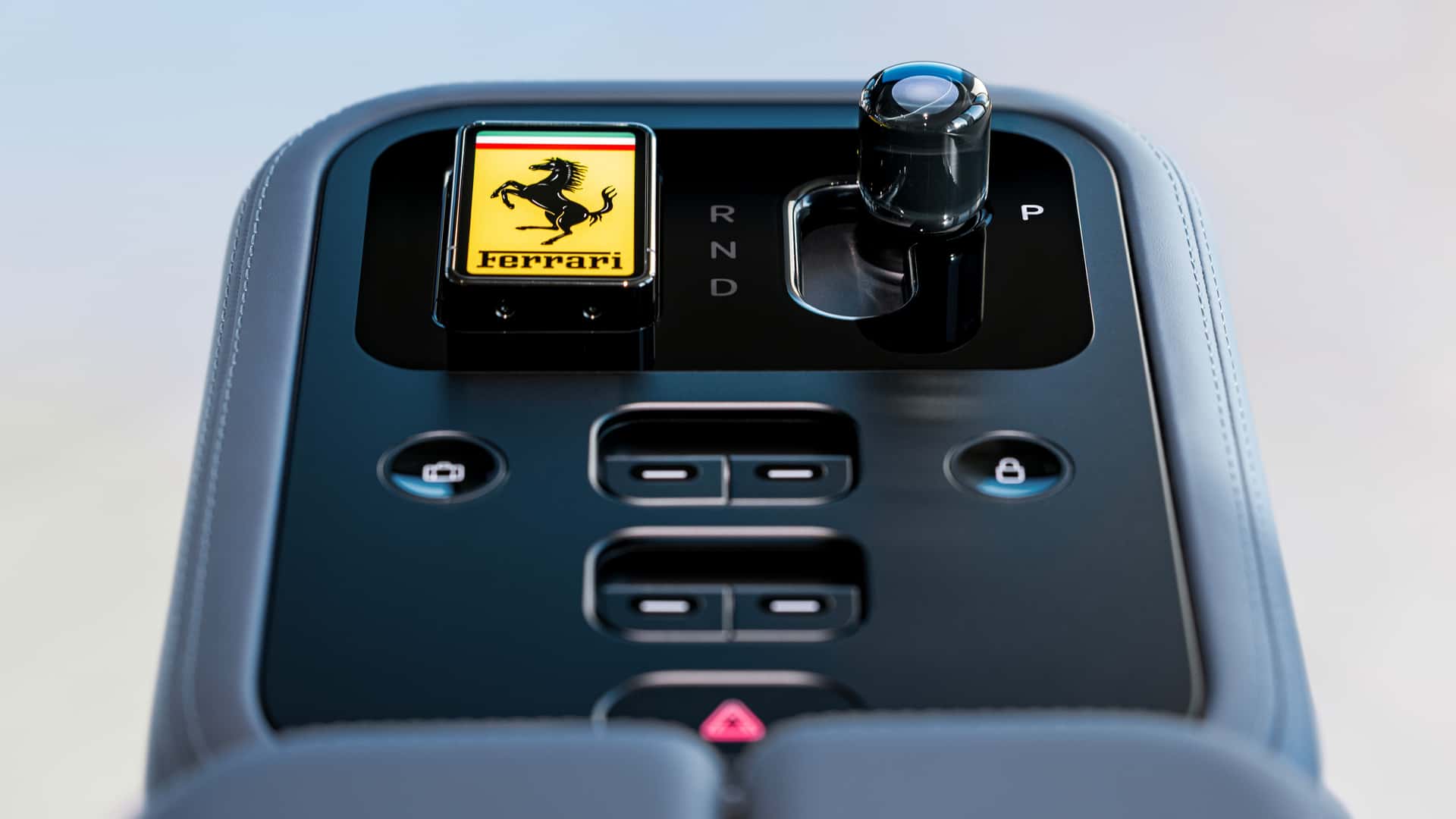
When we think of the intersection between aerospace engineering, Silicon Valley minimalism, and Italian automotive passion, we usually imagine a futuristic concept car that exists only in a rendering. Though, Ferrari is currently turning that intersection into a reality with the development of the Ferrari Luce EV, a vehicle that is redefining how we perceive the relationship between raw power and human comfort.
The project is not merely a transition from internal combustion to electricity. it is a study in human-centric technology. By collaborating with some of the most influential minds in design and science—including Sir Jony Ive’s creative collective, LoveFrom, and the experts at NASA—Ferrari is attempting to solve a problem that most electric vehicle (EV) manufacturers simply ignore: the psychological and physiological impact of extreme acceleration on the human brain.
As a technology editor who has spent years tracking the trend of “screen-ification” in consumer electronics, I identify the Ferrari Luce EV particularly fascinating. While the rest of the industry is racing to install larger tablets on dashboards, Ferrari is moving in the opposite direction, prioritizing tactile interaction and biological limits over digital spectacle.
The Return of the Tactile: Jony Ive and the Rejection of the Touchscreen
For the past decade, the automotive industry has followed a predictable path toward minimalism, which often translates to replacing physical buttons with oversized touchscreens. From a software perspective, this is efficient for manufacturers; from a user experience perspective, it is often a nightmare for drivers who must navigate menus while traveling at high speeds.
Ferrari has taken a different approach for the Luce. The automaker collaborated with LoveFrom, the design firm founded by Sir Jony Ive—the former Apple design chief credited with the aesthetic of the iPhone and iMac—to craft the cabin. Rather than embracing the “glass cockpit” trend, the Jony Ive-designed interior is specifically meant to put emphasis on physical controls.
This design philosophy recognizes a fundamental truth about high-performance driving: tactile feedback is essential. In a vehicle capable of extreme speeds, the ability to adjust a setting by feel, without taking one’s eyes off the road to hunt for a digital slider, is not just a luxury—it is a safety and performance requirement. By integrating physical controls, Ferrari and LoveFrom are treating the car’s interface as a piece of high-end hardware rather than a mobile device on wheels.
NASA and the Science of ‘Disturbing’ Acceleration
While the interior focuses on the sense of touch, the powertrain focuses on the limits of the human vestibular system. Electric motors provide instantaneous peak torque, creating a linear surge of power that differs significantly from the build-up of a combustion engine. According to Ferrari CEO Benedetto Vigna, this level of acceleration can sometimes be “disturbing our brain.”
To address this, Ferrari did something unprecedented for a production road car: they reached out to NASA and various medical experts. The goal was to determine the precise level of accelerative force that becomes disturbing or uncomfortable for occupants. Vigna explained in an interview with Autocar India that the company wanted to understand the threshold where acceleration stops being exhilarating and starts becoming a distraction that makes the driver simply wait for the force to stop.
This research into longitudinal acceleration—the force felt when moving forward in a straight line—highlights a shift in the luxury EV market. While competitors often chase the fastest possible 0-60 mph times as a marketing trophy, Ferrari is focusing on how that performance is perceived by the human being. By applying aerospace lessons to the Ferrari Luce EV, the company aims to deliver speed that feels emotional and exciting rather than clinical or jarring .
Performance by the Numbers: Power and Precision
Despite the focus on comfort and “perceived” performance, the Ferrari Luce EV is not sacrificing raw capability. The preliminary specifications indicate a vehicle designed to compete with the most aggressive hyper-EVs currently on the market. The car will be powered by four electric motors and a 122.0-kilowatt-hour battery.

The technical benchmarks for the Luce are staggering:
- Horsepower: The vehicle is claimed to produce over 986 horsepower.
- Acceleration: It will sprint from 0 to 62 miles per hour in 2.5 seconds.
- Top Speed: The Luce is expected to reach a maximum speed of 192 mph.
- Range: The vehicle is set to offer approximately 329 miles of range.
Beyond straight-line speed, Ferrari is likewise tackling the inherent challenges of EV weight. Because battery packs are famously heavy, they significantly impact transversal acceleration—the force felt during cornering. The company’s engineering focus is not just on the numbers, but on managing that mass to ensure the car handles with the agility expected of the prancing horse brand.
Why This Matters for the Future of Tech and Transport
The development of the Luce represents a broader trend in high-end technology: the move toward “calm technology.” For years, the industry has equated “innovation” with adding more screens and more automation. However, we are reaching a saturation point where the digital interface becomes a barrier between the user and the experience.
By bringing in a designer like Jony Ive to prioritize physical controls and NASA to study the biological impact of speed, Ferrari is arguing that true luxury is the ability to control your environment without being overwhelmed by it. This is a sophisticated approach to the “user interface” of a car, treating the driver’s physical and mental state as the primary metric of success, rather than just the software’s capabilities.
For the global tech community, the Luce is a reminder that the most advanced solutions are not always the most digital ones. Sometimes, the most innovative move is to step back from the screen and look toward the physics of human perception.
| Feature | Specification |
|---|---|
| Powertrain | Four Electric Motors |
| Acceleration (0-62 mph) | 2.5 Seconds |
| Maximum Power | Over 986 Horsepower |
| Top Speed | 192 mph |
| Battery Capacity | 122.0 kWh |
| Estimated Range | 329 Miles |
| Body Style | Four-Door |
The automotive world is now waiting for the official debut of the Ferrari Luce, which is expected to happen later this year. This reveal will finally confirm how Ferrari has integrated NASA’s aerospace data into the driving experience and how the LoveFrom interior translates into a production-ready cabin.
What do you think about the move away from touchscreens in high-performance cars? Is the industry over-relying on screens, or is the return to physical buttons a nostalgic step backward? Let us know in the comments below.