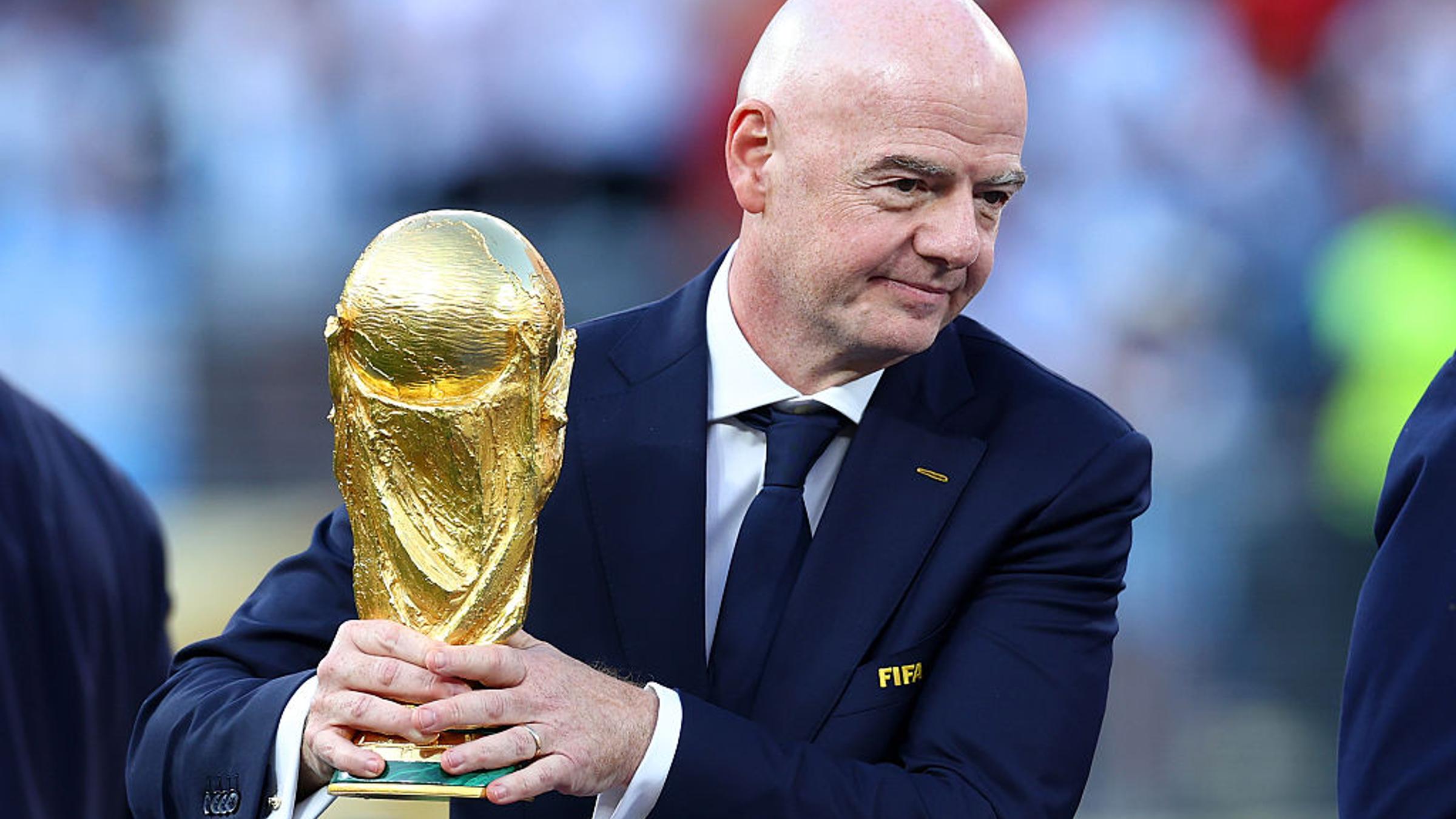
FIFA President Gianni Infantino announced that the international football governing body is scrapping controversial plans to sell private equity stakes in a commercial venture tied to the World Cup. The abrupt reversal on Friday follows intense backlash from top soccer organizations, including unified opposition from all 55 member associations of the Union of European Football Associations (UEFA), which threatened to boycott future tournaments if the proposal proceeded.
The abandoned initiative, centered on a reported $20 billion private equity plan, triggered swift political fallout within the global sports administration. The controversy culminated in the resignation of Carlos Cordeiro, a top FIFA advisor who stepped down on Friday after declaring that he could not support selling an ownership stake in the tournament. Despite the policy reversal, regional confederations have made it clear that dissatisfaction with current leadership runs deep, setting the stage for a turbulent lead-up to the 2027 presidential election.
“Having listened carefully to all the views, it has become clear that the project has created divisions of a nature that, regardless of the level of support, are no longer in the interest of the objective set out in the first place,” Infantino said in an official statement released by FIFA. He added that the organization’s purpose has always been to unite and improve, concluding that the proposal would not move forward.
Opposition Mounts Despite the Policy Reversal
Although Infantino dropped the commercial proposal, major regional governing bodies argue that the damage to institutional trust has already been done. UEFA issued a sharp statement on Saturday declaring that European leadership had lost confidence in FIFA’s executive branch, criticizing what it termed opaque and rushed decision-making processes. The English Football Association publicly backed UEFA’s stance, echoing demands for a comprehensive review of global football governance.
Similarly, the Confederation of North, Central America and Caribbean Association Football (CONCACAF), representing 41 member nations, asserted that the mere creation of the investment plan demonstrated a leadership failure. According to CONCACAF officials, the episode revealed an administration that had strayed from putting the sport first, prompting calls for a deeper reckoning within the Zurich-based headquarters. These objections reflect widespread unease regarding how major financial strategies are formulated without broader consultation across national associations.
Not all regional bodies share this adversarial stance. The Qatar Football Association voiced public support for Infantino, backing his ongoing efforts to expand and strengthen the game globally. However, that localized endorsement does little to neutralize the coordinated pressure coming from Europe and parts of the Americas, where administrators are weighing structural reforms to prevent similar proposals from surfacing in the future.
Political Fallout and the 2027 Presidential Election
The private equity controversy arrives at a politically delicate moment for Infantino, who faces an upcoming presidential election in March 2027. Prior to the recent disputes, the Swiss administrator was widely anticipated to run unopposed for another four-year term. Analysts note that the intense friction between FIFA and powerhouse federations has transformed what once looked like a secured mandate into a competitive contest.
Potential challengers are beginning to emerge as national associations evaluate their options ahead of the mid-November candidacy filing deadline. Sheikh Salman bin Ebrahim Al Khalifa, president of the Asian Football Confederation (AFC), publicly criticized the investment scheme and the lack of consultation with Asian football leaders, placing him at odds with the current administration. While Paris Saint-Germain President Nasser Al-Khelaifi has been mentioned by European officials as a prospective candidate, representatives for Al-Khelaifi stated that he holds no interest in pursuing the FIFA presidency.
Legal and political experts suggest that while Infantino remains a formidable incumbent backed by a sprawling patronage network across global federations, his political vulnerability is unprecedented. Scholars of sports governance emphasize that the underlying structural mechanisms allowing such financial initiatives to advance unchecked remain a primary concern for member states, regardless of who occupies the presidency.
Next Steps and Official Schedule
National associations must formally submit their presidential candidacies by November 18, setting the official field for the March 2027 election. Meanwhile, regional confederations like UEFA and CONCACAF have pledged to draft governance protocols to monitor executive actions closely. Readers can track official updates, regulatory filings, and upcoming administrative meetings directly through the official FIFA portal.
What are your thoughts on FIFA’s governance and the future of the World Cup? Share this article and leave a comment below.