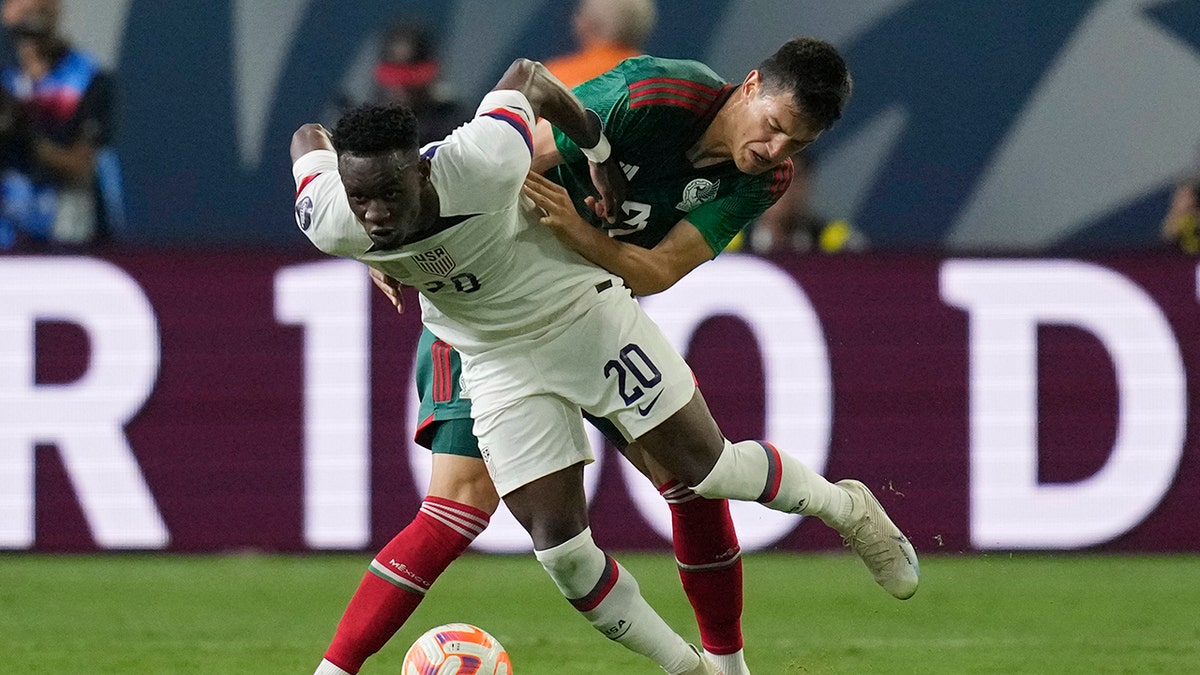
The disciplinary proceedings surrounding Folarin Balogun’s red card during the recent international match between the United States and the Belgium national team have sparked significant debate regarding the governance of the 2026 World Cup qualification cycle. Reports indicate that the decision to rescind the dismissal of the American striker was finalized by a single member of the FIFA disciplinary committee, rather than a full panel, raising questions about the transparency and consistency of officiating review processes in high-stakes matches.
As the international football community looks toward the expanded 2026 tournament, the administrative handling of on-field discipline has come under increased scrutiny. The incident involving Balogun, which occurred during a heated exchange, has evolved from a routine match-day controversy into a broader discussion about the autonomy and decision-making structures within FIFA’s regulatory bodies.
The Disciplinary Review Process
The controversy centers on the procedural path taken to overturn the red card issued to Folarin Balogun. According to reporting from L’Équipe, the reversal of the initial on-field decision was not the result of a plenary session of the disciplinary committee. Instead, authority was exercised by a lone representative, a practice that has drawn criticism from observers who argue that such significant calls should require a broader consensus to ensure institutional legitimacy.
The lack of a multi-member review has left fans and analysts questioning whether the decision-making process aligns with the expectations of fairness required for a tournament of the World Cup’s magnitude.
Governance and FIFA Oversight
The fallout from the Balogun affair is occurring against a backdrop of broader dissatisfaction with FIFA’s current leadership. Recent reports from La Croix highlight growing friction between Gianni Infantino and various European football stakeholders. This internal tension is frequently tied to concerns over the centralization of power within the organization, with critics arguing that the independence of regulatory and disciplinary arms is being undermined by executive influence.
The perception of a “bafouée” (flouted) independence within FIFA has become a recurring theme in international sports journalism. As noted by La Tribune, the integrity of the game relies heavily on the perceived impartiality of its governing bodies. When disciplinary actions—such as the overturning of a red card—are handled by a single individual, it creates a vacuum of accountability that critics argue can be exploited, or at the very least, misunderstood by the public.
Broader Implications for the 2026 World Cup
While the team’s performance remains the primary focus for fans, the administrative hurdles encountered during the qualification process have served as a reminder of the complex environment in which FIFA operates.

Some media outlets, including Orange Sports, have explored the narrative surrounding the team’s tournament prospects and the external pressures that often accompany high-profile international squads. However, the technical focus remains on whether the current disciplinary framework is robust enough to handle the increased volume and intensity of games expected in 2026. With the tournament expansion, the pressure on FIFA to standardize its review procedures—and to ensure those reviews are conducted with transparent, multi-member oversight—will likely increase.
As the situation develops, we welcome your thoughts on how disciplinary review processes should be managed to better serve the integrity of international football. Share your perspective in the comments section below.