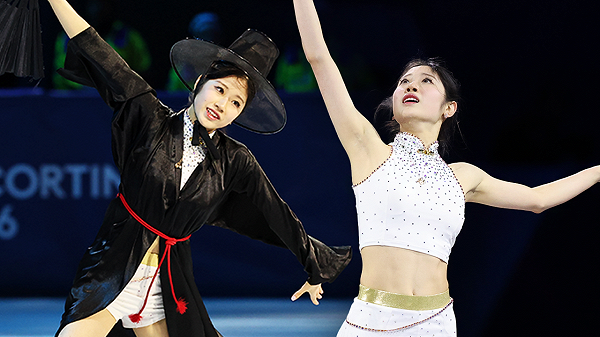
Milano, Italy – The 2026 Winter Olympics in Milan and Cortina d’Ampezzo are drawing to a close, and the figure skating gala served as a vibrant finale, showcasing not only athletic prowess but also a captivating blend of cultural expression. South Korea’s representatives, Cha Jun-hwan and Lee Hae-in, delivered performances that resonated with the audience, seamlessly integrating traditional Korean elements with contemporary K-pop aesthetics. This marked a significant moment for Korean figure skating, as it was the nation’s first invitation to the gala in eight years, a testament to the rising prominence of Korean skaters on the world stage.
The gala, a celebratory event following the competitive portion of the Olympics, featured a diverse lineup of skaters, including Olympic medalists and rising stars. Italian figure skating legend Carolina Kostner opened the show, setting a tone of elegance and artistry. The event was structured around four distinct themes, providing a platform for skaters to explore different creative avenues. Within the “Dreamlike Journey” segment, skaters like Japan’s Amami Nakai (women’s singles bronze medalist) and Sato Shun (men’s singles bronze medalist), along with Italy’s Daniel Grassl and the Spanish ice dance duo Olivia Smart and Dim Di-K, captivated the audience. Notably, Smart and Di-K injected a playful element into their routine, incorporating a soccer ball into their performance, a moment that drew cheers from the crowd.
Though, it was the performances of Cha Jun-hwan and Lee Hae-in that particularly stood out, embodying a unique fusion of Korean heritage and modern pop culture. Cha Jun-hwan, a seasoned competitor, chose to interpret his performance to a piece featuring traditional Korean music, performed by musician Song So-hee, who has roots in Korean traditional music. This choice highlighted Cha’s versatility and his commitment to showcasing Korean culture on an international platform. Lee Hae-in, embraced the energy of K-pop, transforming into a “K-pop idol” for her routine, complete with a striking costume inspired by the traditional Korean figure of a grim reaper, known as ‘Jeoseung Saja.’
A Cultural Showcase on Olympic Ice
The decision to incorporate Korean cultural elements into their performances was a deliberate one, aimed at presenting a fresh and engaging perspective to the global audience. The performances were widely praised for their originality and artistic merit, demonstrating the growing influence of Korean culture worldwide. The gala provided a unique opportunity for Cha Jun-hwan and Lee Hae-in to connect with the audience on a deeper level, sharing not just their athletic skills but also their cultural identity. The choice of music and costumes was carefully considered to create a cohesive and impactful narrative, reflecting the richness and diversity of Korean traditions.
Cha Jun-hwan’s performance, set to the evocative sounds of traditional Korean music, was a poignant display of artistry and athleticism. The combination of his technical skill and the emotional depth of the music created a mesmerizing experience for the audience. Lee Hae-in’s transformation into a K-pop idol, complete with her distinctive costume, was a bold and innovative move that resonated with a younger demographic. Her performance was energetic and dynamic, showcasing her ability to seamlessly blend athleticism with performance artistry. The contrast between the two performances – one rooted in tradition, the other embracing modernity – highlighted the multifaceted nature of Korean culture.
Lee Hae-in’s Journey and Triumphant Return
Lee Hae-in’s performance carried particular weight, given her well-documented journey in the world of figure skating. Whereas details of her past challenges weren’t explicitly outlined in the available sources, the performance was described as encapsulating her “turbulent figure skating life,” suggesting a narrative of resilience and determination. Her choice to embody the K-pop aesthetic, a genre known for its vibrant energy and dedicated fanbase, signaled a new chapter in her career. The enthusiastic reception to her performance underscored her connection with the audience and her ability to inspire through her artistry.
The gala also featured a performance by the Italian figure skating team, who secured a bronze medal in the team event. Their routine served as a celebration of their achievement and a tribute to their home country. The event concluded with a sense of camaraderie and sportsmanship, as skaters from around the world came together to celebrate the spirit of the Olympics. The 2026 Winter Olympics in Milan and Cortina d’Ampezzo have left a lasting impression, not only through the athletic achievements of the competitors but also through the cultural exchange and artistic expression that were on full display.
The Significance of Korea’s Return to the Gala
Korea’s participation in the Olympic gala after an eight-year absence is a significant milestone for the nation’s figure skating program. It reflects the growing investment in the sport and the increasing success of Korean skaters on the international stage. The performances of Cha Jun-hwan and Lee Hae-in have undoubtedly inspired a new generation of skaters in Korea and have further elevated the profile of the sport within the country. The gala provided a platform for Korean skaters to showcase their talent and cultural identity to a global audience, fostering a greater appreciation for Korean artistry and athleticism.
The success of the Korean skaters at the 2026 Winter Olympics extends beyond their individual performances. It represents a broader trend of Asian nations making significant strides in figure skating, challenging the traditional dominance of European and North American countries. The dedication, discipline, and innovative training methods employed by Korean skaters have contributed to their success, and their achievements serve as a testament to the power of perseverance and cultural pride. The gala performances, in particular, demonstrated the ability of Korean skaters to seamlessly blend athletic skill with artistic expression, creating a unique and captivating experience for the audience.
As the 2026 Winter Olympics conclude, the legacy of the event will undoubtedly extend far beyond the medal counts and athletic achievements. The cultural exchange, artistic expression, and moments of sportsmanship will continue to inspire and resonate with audiences around the world. The performances of Cha Jun-hwan and Lee Hae-in, in particular, will be remembered as a shining example of Korea’s growing influence on the global stage and its commitment to showcasing its rich cultural heritage.
Looking ahead, the International Skating Union (ISU) will continue to oversee the development of figure skating worldwide, with the next major event being the 2028 Winter Youth Olympic Games in Gangwon Province, South Korea. The ISU website provides detailed information on upcoming events, rules, and regulations. Fans and aspiring skaters can stay updated on the latest news and developments in the world of figure skating through official ISU channels and reputable sports news outlets.
The performances in Milan have undoubtedly left a lasting impression, and the future of Korean figure skating appears bright. The dedication and artistry of skaters like Cha Jun-hwan and Lee Hae-in will continue to inspire and captivate audiences for years to come. We encourage readers to share their thoughts and reactions to the 2026 Winter Olympics and the remarkable performances of the Korean skaters in the comments section below.