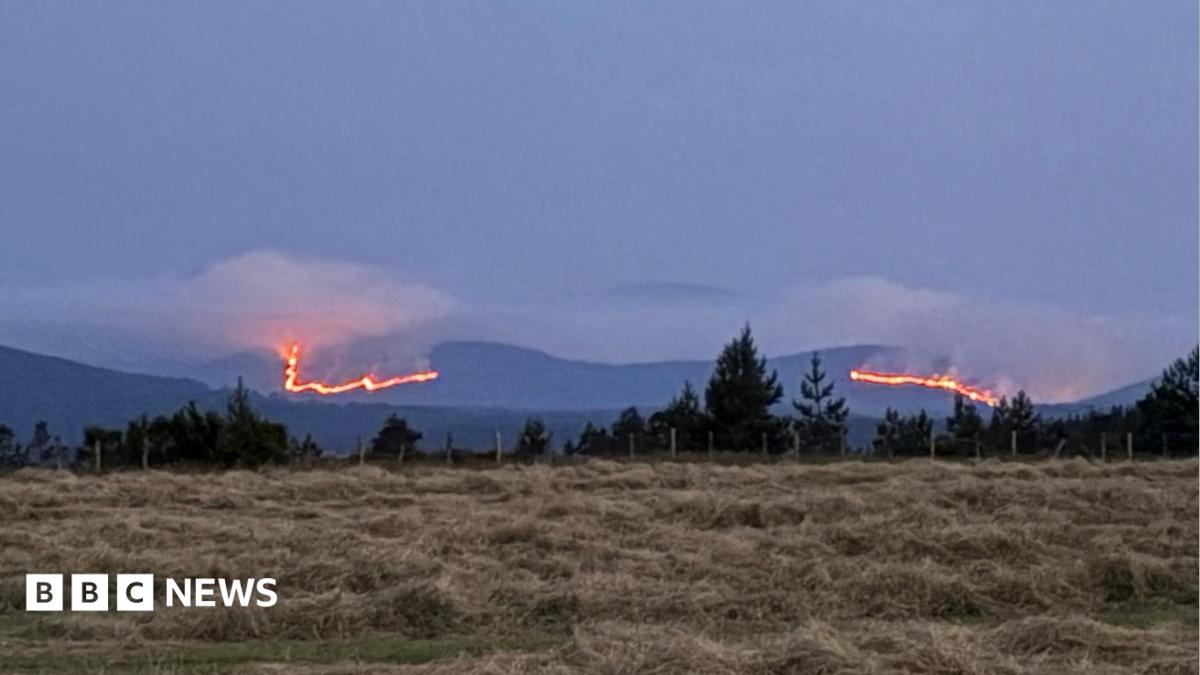
Emergency crews are currently battling a large-scale wildfire spanning approximately four miles across the Cairngorms National Park, with aerial support deployed to contain the blaze. Scottish Fire and Rescue Service (SFRS) personnel remain on the scene, utilizing helicopter water-bombing techniques to suppress the fire in the rugged, high-altitude terrain of the Scottish Highlands.
According to the Scottish Fire and Rescue Service, the incident has necessitated a significant multi-agency response to protect the local environment and prevent the fire from spreading further into the park’s protected landscapes. An area commander for the service stated that there are “adequate resources” currently allocated to manage the blaze and mitigate the risk to the surrounding area, which is known for its diverse habitats and peatland ecosystems.
Operational Challenges in the Cairngorms
The Cairngorms, the largest national park in the United Kingdom, presents unique challenges for firefighting operations. The remote, mountainous topography often restricts ground access for traditional fire engines, forcing crews to rely on specialist equipment and aerial support to reach the seat of the fire. The use of helicopters to drop water is a primary tactic in these instances, particularly when the fire moves through heather and dry scrubland, which can ignite rapidly under certain weather conditions.
The Scottish Fire and Rescue Service maintains specific operational protocols for wildfires in the Highlands, focusing on containment and the protection of biodiversity. For residents and visitors, the service regularly updates its official safety guidance regarding wildfire risks and the impact of controlled burns or accidental ignitions. The current operation highlights the logistical complexity of managing emergencies in areas designated for their natural heritage and conservation value.
Environmental and Safety Considerations
Wildfires in the Cairngorms often involve the combustion of peat, which can smolder underground for extended periods, making full extinguishment difficult even after the visible flames are suppressed. The presence of smoke can also impact air quality in the immediate vicinity, and the public is generally advised by local authorities to avoid travel through areas where active firefighting is underway.
The Cairngorms National Park Authority works alongside land managers and emergency services to monitor fire risk levels, which are influenced by seasonal changes, vegetation moisture, and wind patterns. While the immediate threat is being managed by the SFRS, the recovery of the affected moorland and forest areas often requires long-term environmental monitoring to assess the impact on local flora and fauna.
Next Steps for Incident Management
The Scottish Fire and Rescue Service continues to monitor the site to ensure that no hotspots remain that could reignite as weather conditions fluctuate. As of the latest assessment, the area command has confirmed that the current deployment of personnel and equipment is sufficient to maintain control of the perimeter.

Official updates regarding the containment status and any potential access restrictions for the public will be provided through the Scottish Fire and Rescue Service news portal. Further information on wildfire prevention and the impact of the current incident will be made available as the situation develops. We encourage readers to share this update to ensure those planning travel in the region remain informed of current safety advisories.
Keep reading