
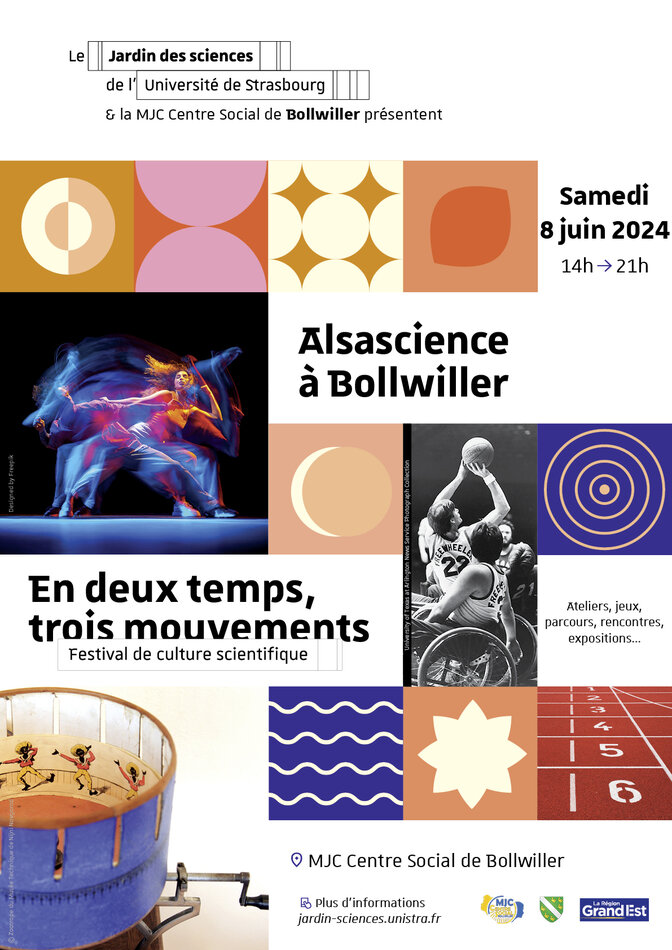
The Alsascience festival, a regional initiative dedicated to the promotion of scientific culture, recently concluded a successful inaugural event in the commune of Rosheim, France. Organized by the Jardin des Sciences of the University of Strasbourg, the festival aimed to bridge the gap between academic research and the general public through a series of interactive workshops, exhibitions, and lectures. According to the Jardin des Sciences, the program focuses on making scientific knowledge accessible to all ages, fostering a deeper understanding of regional heritage and modern innovation.
Rosheim, located in the Bas-Rhin department of the Grand Est region, served as the primary venue for this pilot effort to decentralize science communication. By moving events outside of major urban centers like Strasbourg, organizers sought to engage rural and semi-rural populations directly. This strategy aligns with the broader mission of the University of Strasbourg to facilitate “science in the city,” ensuring that residents have direct access to researchers and scientific discourse, as outlined in the university’s public engagement policy.
Expanding Scientific Literacy in the Grand Est Region
The Alsascience festival functions as a mobile, thematic exploration of science that changes its focus and location annually. In Rosheim, the event highlighted the intersection of geology, local history, and environmental science. By utilizing the town’s historical landmarks as a backdrop for scientific displays, the festival organizers emphasized the relevance of Earth sciences in everyday life. The initiative is supported by the Grand Est Regional Council, which provides funding to promote regional scientific culture and education.

Public engagement in science remains a priority for the French Ministry of Higher Education and Research, which frequently partners with institutions like the University of Strasbourg to host events such as the Fête de la Science. The Alsascience model serves as a localized, year-round extension of these efforts. By focusing on specific municipalities, the program allows for a more personalized interaction between the public and scientific professionals, moving beyond the traditional lecture format toward hands-on experimentation and field-based learning.
Why Decentralized Science Outreach Matters
The success of the Rosheim event underscores a growing trend in European science communication: the shift toward hyper-local engagement. For many residents in smaller communes, accessing specialized scientific facilities or museums requires travel to larger metropolitan areas. Decentralization addresses this “knowledge gap” by bringing the expertise directly to the community. This approach is particularly effective in regions like Alsace, where the interplay between industrial history and natural landscapes offers a unique opportunity for educational programming.
According to the Réseau des Centres de Culture Scientifique, Technique et Industrielle (CCSTI), which coordinates similar efforts across France, such festivals are essential for maintaining public trust in research and innovation. By demystifying the scientific process, organizers hope to inspire younger generations to pursue STEM (Science, Technology, Engineering, and Mathematics) careers. Furthermore, these events provide a platform for researchers to communicate the societal impact of their work, moving from abstract theory to tangible community benefits.
What Happens Next for Alsascience
Following the positive reception in Rosheim, the Jardin des Sciences is expected to continue its rotation of Alsascience events across different municipalities in the region. These events are typically announced through the official university calendar and the regional cultural portal. Residents interested in future programming can monitor the Jardin des Sciences event portal for upcoming dates and thematic focuses.
The sustainability of such festivals relies on ongoing collaboration between academic institutions, local municipal governments, and regional policy bodies. As the program evolves, organizers are likely to assess participant feedback to refine the balance between academic depth and public accessibility. For those who attended the Rosheim event, local authorities often publish post-event summaries and photo galleries on municipal websites to maintain the community’s engagement with the topics discussed during the festival.
We invite our readers to share their experiences with local science initiatives in the comments section below. How do you feel about the integration of scientific outreach into small-town cultural events? Your feedback helps us track the impact of these vital public education efforts.
Worth a look