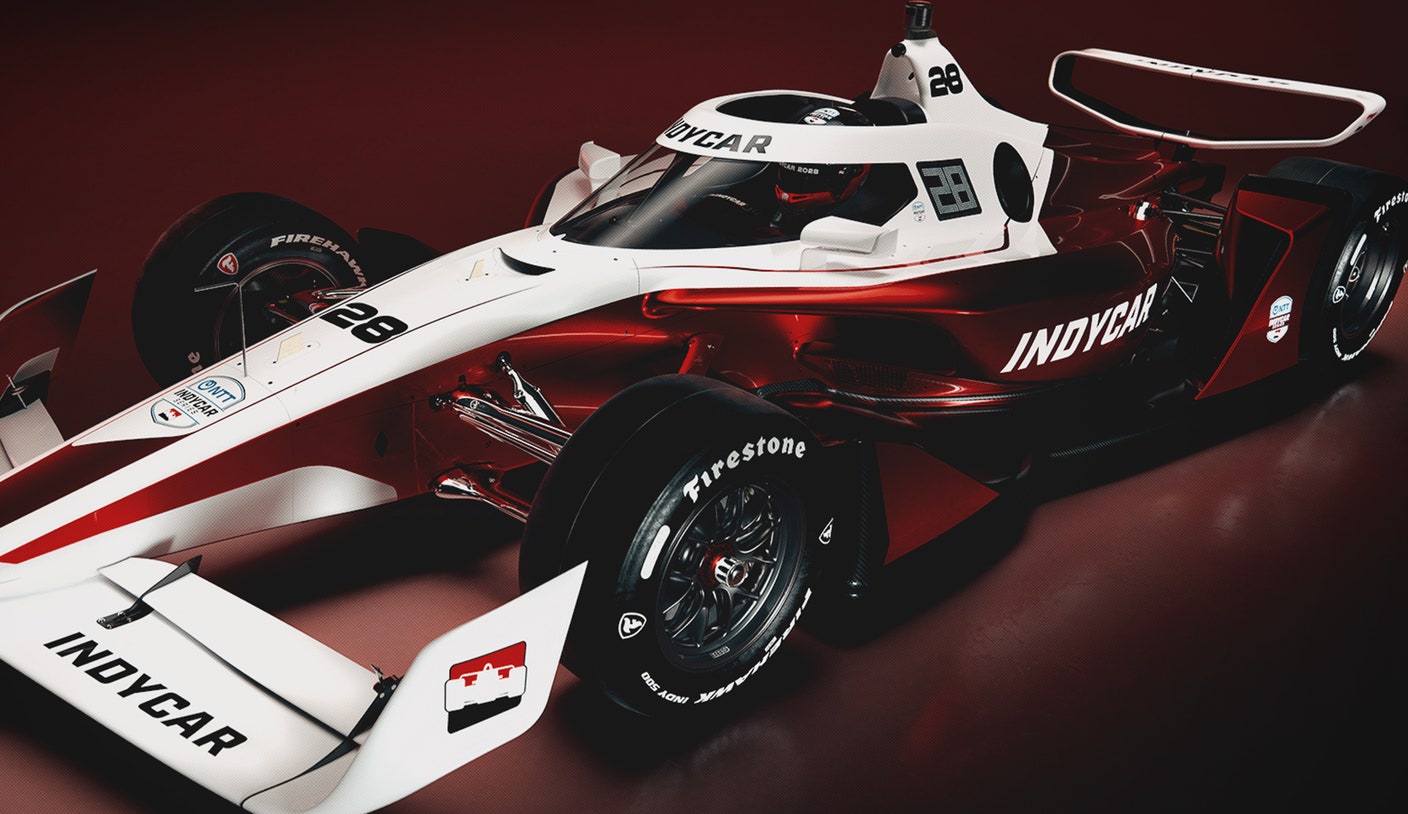
The 2028 INDYCAR prototype represents a structural and ergonomic rethinking of the racing machine. Debuting a sleeker physique that is about 100 pounds lighter than the current car, the new development car rolled out for its initial evaluation phase at Indianapolis. According to INDYCAR officials, the weekend track shakedown focuses on foundational systems rather than raw speed as engineers begin a critical 19-month timeline ahead of competitive racing.
Behind the wheel for the test laps are Alexander Rossi on Saturday and Alex Palou on Sunday. While the car utilizes a transitional 2.4-liter V-6 engine and runs without its intended hybrid system operational—due to ongoing power plant development by Chevrolet and Honda—the engineering group is using the weekend to validate basic mechanical integrity. Teams are scheduled to receive cars in about June of next year, with one car per team starting once the 2027 INDYCAR season finishes.
“This weekend … is just some very basic metrics that we need to get off the car,” INDYCAR VP of Competition and Race Engineering Mike O’Gara told reporters. “Lap time is not even on our radar just yet. For a brand-new car, you really need to make sure it starts, it steers, and it stops. And then you start looking at more and more data and measuring more things.”
Aerodynamic Evolution and a Sleeker Silhouette
The visual identity of the 2028 car departs from the existing chassis that debuted in 2012. Engineers have eliminated the bolt-on appendages, tire ramp flaps, under-tray flaps, and spines that accumulated for safety and aerodynamic reasons. Instead, those aerodynamic effects have been integrated into the actual shape of the body of the car.
“There’s been a conscious effort to look at the nose-up attitude of the car in different yaw situations and to reduce lift,” O’Gara said. “The current car we’ve sort of piled all these things on… This car has none of that. Because all of the learnings from what those have all helped the cars from blowing over. From trying to make them more stable when you’re sideways or sliding backwards—we’ve seen those aero effects, and they’ve been integrated into the actual shape of the body of the car.”
The front wing and big curved sidepods are engineered to help with air flow at the Indianapolis Motor Speedway. According to series leadership, the design helps drivers running third, fourth, or fifth in line have an easier time making passes.
Fighter-Pilot Cockpit and Advanced Driver Cooling
Driver comfort and cockpit ergonomics received an overhaul. The integrated aeroscreen and halo assembly features a profile that mimics a fighter-pilot look, reducing the bulk of earlier iterations. INDYCAR reports that the bigger cockpit incorporates more padding to accommodate a wider range of driver sizes safely.
Thermal management inside the cockpit has also been redesigned. The car routes airflow through radiator ducts, top-mounted shock covers, and a boat-shaped tub floor featuring a screen beneath the steering column.
“The helmet cooling will be through the radiator ducts,” O’Gara said. “There’s cooling up top on the shock cover where we currently have cooling, and then underneath the car, there’s an area where … the bottom of the tub is sort of boat shaped, and at the very tip of that is a screen that comes right in under the steering column, blows air right on the driver.”
Streamlined Controls and Fan-Facing Technology
In the cockpit, physical clutter has been reduced. INDYCAR transitioned anti-roll bars to electronic electric actuators managed via steering wheel thumb wheels, allowing drivers to make adjustments without removing their hands from the wheel or hitting knobs and levers in the cockpit.
Fans will also notice the return of integrated LED display panels on the car’s bodywork. Previously attempted a handful of years ago, older versions struggled with overheating and vibrations. Working alongside Dallara, engineers built robust carbon panels with built-in anti-vibration to display a car’s place during a race and potentially the time of the pit stop.
“Anti-vibration is built into it, everything in terms of the way that that carbon was built, so that it fits perfectly in there,” INDYCAR Senior VP of Competition and Operations Mark Silba explained to the media. “There’s also been technical advances that have happened, and we worked with Dallara on that to build a panel that would be more robust. … That’s something we absolutely wanted to bring back for the fans.”
Additional visibility features include a transparent rear engine cover panel that showcases engine manufacturer branding, alongside small transparent cutouts that allow spectators on the grid to view the underlying suspension components.
Next Checkpoint and Testing Schedule
Following the weekend shakedown with Rossi and Palou, INDYCAR will analyze incoming data regarding the braking, steering, and new damper systems. Mass production of parts will be informed by tests over the next few months. Teams will receive cars in about June of next year, with full-field testing anticipated after the completion of the 2027 racing season.
Worth a look