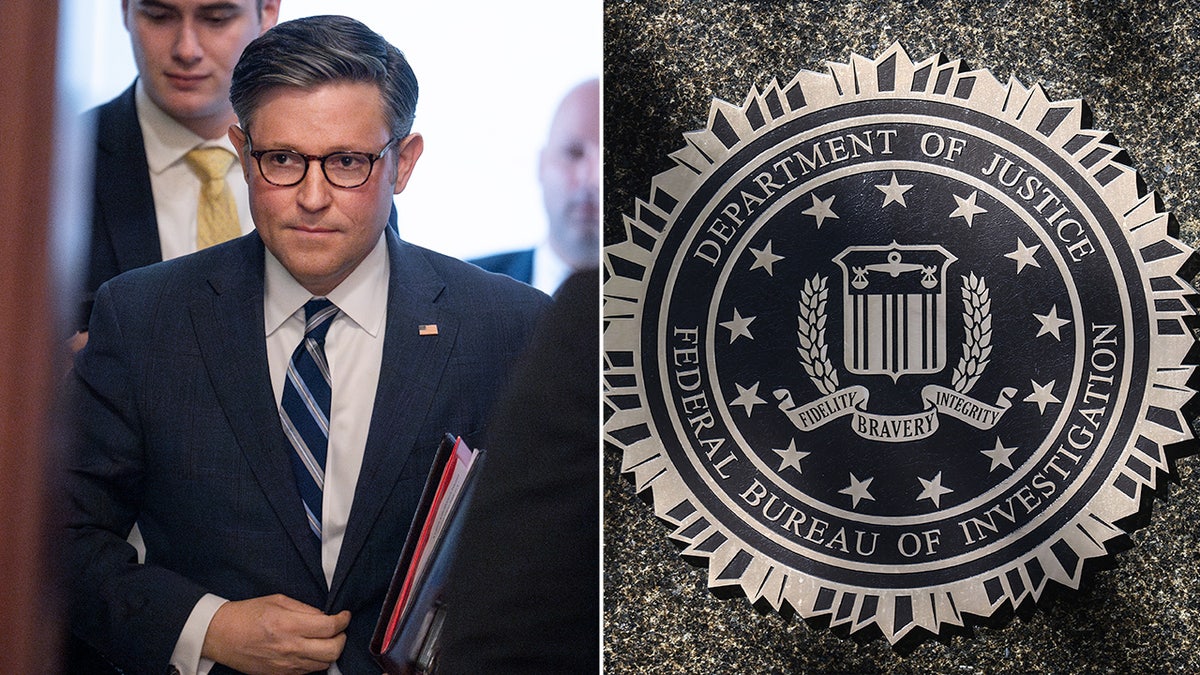
House Republicans have intensified their criticism of the White House, blaming the administration for the ongoing stalemate over the reauthorization of a key surveillance authority set to expire this month. The dispute centers on Section 702 of the Foreign Intelligence Surveillance Act (FISA), which permits U.S. Intelligence agencies to collect foreign communications without a warrant. With the current authorization scheduled to lapse on April 19, 2026, GOP leaders argue that delays in reaching a consensus stem from the administration’s shifting position and internal disagreements within the Republican caucus.
The controversy has escalated as House Speaker Mike Johnson canceled a planned vote on a clean extension of the surveillance powers, citing insufficient support among rank-and-file Republicans. This move followed a closed-door meeting of the House Rules Committee, which had previously advanced the measure. Republican lawmakers maintain that the White House has failed to provide clear guidance, leaving legislators uncertain about the administration’s priorities amid competing demands from privacy advocates and national security hardliners.
Former President Donald Trump has entered the fray, publicly urging House Republicans to unify behind a straightforward reauthorization without modifications. In a post on his Truth Social platform, Trump described Section 702 as an “effective tool to retain Americans safe” and emphasized its importance to military operations, particularly in the context of ongoing regional tensions. His intervention has added pressure on GOP leaders to deliver a renewal that aligns with his longstanding support for expansive surveillance authorities.
However, a coalition of progressive Democrats and libertarian-leaning Republicans continues to push for reforms that would impose greater oversight on warrantless searches, including requirements for judicial approval in certain circumstances. These lawmakers argue that the current framework risks enabling abuses of power and infringing on civil liberties, especially as concerns grow over the potential misuse of collected data. Despite their efforts, the reform bloc lacks the votes to override the preference of leadership in both parties for a clean extension.
The legislative impasse has unfolded against a backdrop of heightened scrutiny over government surveillance practices. Recent disclosures about the scope of data collection under Section 702 have fueled public debate, with civil liberties groups warning that the program sweeps up vast amounts of information involving Americans, even when they are not the target of investigations. Intelligence officials counter that the authority is indispensable for tracking terrorist threats, cyber intrusions, and foreign espionage, asserting that robust internal safeguards prevent misuse.
As the April 19 deadline approaches, House GOP leaders indicate they may revisit the proposal later in the week, though no new vote has been scheduled. The White House has not issued an official statement detailing its preferred outcome, though officials have previously signaled openness to a short-term extension to allow more time for negotiations. With the nation’s surveillance framework hanging in the balance, the coming days will determine whether Congress can resolve its differences before the authority lapses.
What is Section 702 of FISA and why does it matter?
Section 702 of the Foreign Intelligence Surveillance Act allows U.S. Intelligence agencies to target non-Americans located outside the United States for surveillance without obtaining a warrant. Enacted in 2008 and renewed several times since, the provision enables the collection of electronic communications, such as emails and phone calls, when they involve foreign intelligence targets. Whereas the law explicitly prohibits targeting U.S. Citizens or anyone within the United States, critics argue that incidental collection of Americans’ data occurs frequently and can be accessed later under certain conditions.
The authority has been described by successive administrations as vital to national security, particularly in counterterrorism efforts. Officials cite its role in identifying plots against the United States and tracking the activities of hostile foreign governments. Nevertheless, the program has faced repeated scrutiny from courts and oversight bodies, which have raised concerns about compliance with minimization procedures designed to limit the retention and dissemination of information about U.S. Persons.
In 2023, the Foreign Intelligence Surveillance Court found that the FBI had violated querying restrictions thousands of times when accessing Section 702 data for purposes unrelated to national security, including investigations into domestic protests and political figures. Although the court concluded that most errors were unintentional, the findings intensified calls for reform. Supporters of the current system maintain that the incidents were isolated and that corrective measures have since been implemented.
As the debate unfolds, lawmakers weigh competing priorities: ensuring that intelligence agencies retain tools deemed essential for protecting the country while addressing legitimate concerns about privacy and governmental overreach. The outcome of the FISA reauthorization effort will shape the legal boundaries of U.S. Surveillance capabilities for the next several years.
Who are the key players in the FISA debate?
The current standoff involves several prominent figures across the political spectrum. House Speaker Mike Johnson, a Republican from Louisiana, has taken a leading role in managing the legislative process, though he faced pushback from members of his own party when attempting to advance a clean extension. His decision to delay the vote reflected unease among conservatives who distrust the administration’s motives and fear that the proposal lacks sufficient safeguards.
On the other side, former President Donald Trump has used his platform to advocate for an unconditional renewal, framing the issue as a matter of national security. His influence remains significant among Republican voters and elected officials, many of whom view his endorsement as a decisive factor in their positioning. Trump’s involvement marks a rare instance of a former president directly intervening in a pending surveillance renewal.
Among Democrats, progressive lawmakers such as Senator Ron Wyden of Oregon and Representative Zoe Lofgren of California have long criticized Section 702, advocating for reforms that would require a warrant to access the contents of communications involving U.S. Persons. They argue that the current system creates a loophole that undermines Fourth Amendment protections. While these voices have gained traction in recent years, they lack the numerical strength to dictate the outcome without bipartisan support.
Within the Republican caucus, a smaller group of libertarian-leaning members, including Representative Thomas Massie of Kentucky and Senator Rand Paul of Kentucky, have joined forces with Democrats to push for oversight enhancements. Their alliance underscores the unusual cross-ideological cooperation that has emerged on surveillance issues, though it remains insufficient to alter the leadership’s preferred course.
The intelligence community, represented by officials from the Office of the Director of National Intelligence and the National Security Agency, has consistently defended the program’s effectiveness and legality. Agency leaders have testified before Congress that Section 702 provides unique insights into foreign threats that cannot be obtained through other means, warning that its loss would create dangerous blind spots.
What happens if Section 702 expires?
If Congress fails to reauthorize Section 702 before its current expiration date, the authority to conduct warrantless surveillance under the provision would cease immediately. Intelligence agencies would no longer be permitted to initiate new collections under the statute, though any data already gathered could potentially be retained and analyzed for a limited period, depending on existing minimization rules and court orders.
National security officials have warned that such a lapse would impair the United States’ ability to monitor terrorist networks, track weapons proliferation, and counter foreign espionage efforts. They argue that adversaries would quickly adapt to exploit the gap, knowing that certain communications would no longer be subject to U.S. Monitoring. The military, in particular, relies on Section 702-derived intelligence to inform operations overseas, especially in regions where direct surveillance is challenging.

Conversely, privacy advocates contend that a temporary lapse could create an opportunity to impose stricter oversight before reinstating the authority. They suggest that even a brief interruption would signal congressional dissatisfaction with the status quo and encourage the adoption of meaningful reforms. However, most lawmakers appear unwilling to risk a lapse, given the perceived consequences for national security.
Historically, Congress has acted to renew surveillance authorities shortly before their expiration, often employing short-term extensions to buy time for negotiations. In 2017, for example, lawmakers passed a six-month reauthorization after failing to reach agreement on a longer-term deal. Similar tactics may be employed again if consensus remains elusive as the deadline nears.
Where can the public find official updates on the FISA reauthorization?
Those seeking to follow the legislative process can consult several official sources for timely and accurate information. The House of Representatives website provides access to the text of proposed measures, voting schedules, and committee actions related to the FISA reauthorization. The Congressional Record publishes transcripts of floor debates and remarks, offering insight into lawmakers’ reasoning and objections.
The Office of the Director of National Intelligence periodically releases unclassified reports and fact sheets detailing the apply and effectiveness of Section 702, including statistics on the number of targets and types of information collected. These documents are intended to enhance transparency while protecting sensitive sources and methods. Similarly, the Privacy and Civil Liberties Oversight Board, an independent agency within the executive branch, has conducted reviews of the program and made its findings publicly available.
For real-time updates, reputable news outlets such as the Associated Press, Reuters, and BBC News continue to monitor developments in Washington, D.C., providing context and analysis as events unfold. Congressional hearings on surveillance policy, when scheduled, are typically streamed live on the websites of the relevant committees, allowing the public to observe testimony from intelligence officials, legal experts, and civil society representatives.
As the April 19 deadline approaches, attention will remain focused on whether House leadership can secure the votes necessary to prevent a lapse in authority. Until then, the debate over the balance between security and liberty will continue to define one of the most consequential policy discussions facing the nation.
Worth a look