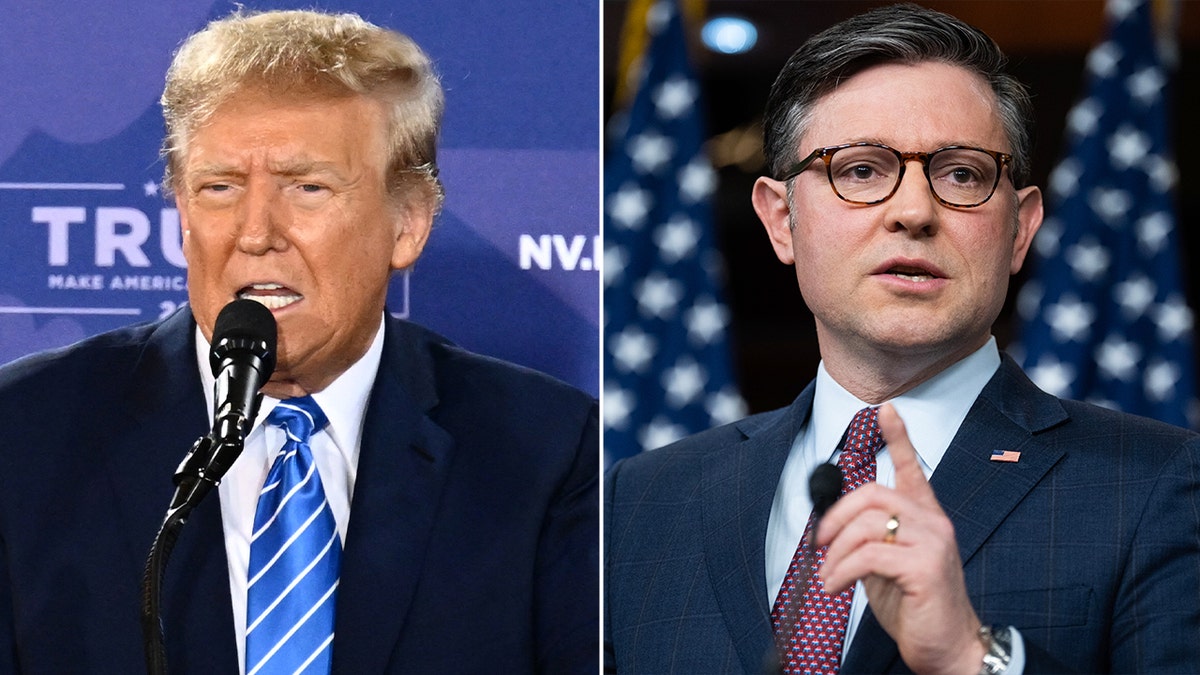
House Speaker Mike Johnson has postponed a critical vote on the reauthorization of the Foreign Intelligence Surveillance Act (FISA), as a growing rebellion among conservative lawmakers threatens to derail the measure. The delay comes after the House Rules Committee recessed amid an internal GOP clash over the scope of the government’s spying powers, leaving the future of a key national security tool in limbo.
The standoff centers on Section 702 of FISA, which allows federal authorities to conduct warrantless surveillance of foreign nationals located outside the United States, even when those targets are communicating with American citizens. While Speaker Johnson and President Donald Trump have advocated for a clean 18-month extension of these powers, a bloc of conservative “privacy hawks” is demanding the implementation of stricter reform guardrails before they will grant their support Fox News.
The tension reached a breaking point on Wednesday, when GOP leaders were forced to delay the initial vote. The move follows warnings from key conservative figures that the measure would fail without significant changes. This internal fracture puts the House GOP leadership under intense pressure as they race toward a looming April 20 deadline to renew the authority.
For the global community and intelligence agencies, the outcome of this GOP rebellion is significant. Section 702 is widely regarded as a cornerstone of U.S. Counterterrorism and foreign intelligence gathering. A failure to reauthorize the program by the deadline could result in a lapse of surveillance capabilities, potentially impacting how the U.S. Tracks foreign threats and manages international security risks.
The Core of the Conservative Revolt
The primary point of contention for the dissenting Republicans is the lack of warrants required to search for information regarding U.S. Citizens that is incidentally collected during the surveillance of foreign targets. This “backdoor search” capability is what conservative lawmakers describe as a violation of privacy and constitutional protections.

Rep. Lauren Boebert, R-Colo., signaled her opposition on Tuesday, stating she would oppose a test vote scheduled for Wednesday afternoon intended to advance the renewal measure toward final passage Fox News. Her stance is echoed by other members of the House Freedom Caucus, who argue that the government has historically abused these powers.
Rep. Andy Harris, R-Md., the Chair of the House Freedom Caucus, predicted that the test vote would fail unless leadership agreed to tack on additional reforms. Harris and his colleagues are pushing for mandates that would require the government to obtain a warrant before querying the Section 702 database for the communications of U.S. Persons Fox News.
Why the FISA Renewal Matters
To understand the stakes of this legislative battle, it is necessary to define what Section 702 actually does. Unlike traditional FISA warrants, which target specific individuals based on probable cause of espionage or foreign agency, Section 702 allows for the broad collection of communications (such as emails and texts) from non-U.S. Persons located abroad. This data is often stored in databases that can then be searched by the FBI and other intelligence agencies.

Proponents of a “clean” extension, including the White House and Speaker Johnson, argue that these powers are essential for:
- Detecting and disrupting foreign cyberattacks.
- Tracking the movements of terrorists and foreign adversaries.
- Gathering intelligence on foreign governments to inform diplomatic and security strategies.
But, critics argue that the “incidental collection” of American data creates a loophole that allows the government to bypass the Fourth Amendment. By searching for American citizens’ data within a foreign-targeted database, critics claim the government is conducting warrantless domestic surveillance.
The Role of the House Rules Committee
The legislative process hit a visible snag when the House Rules Committee—which determines the terms and rules under which a bill is debated and voted upon—recessed. This pause was a direct result of the “FISA mayhem,” as GOP members within the committee could not reach a consensus on how to handle the reauthorization Politico.
The Rules Committee is often the “bottleneck” of the House; if a bill cannot pass through this committee with a GOP majority, it is unlikely to survive a full House vote without significant modifications. The current deadlock suggests that Speaker Johnson may be forced to choose between a heavily amended bill that satisfies the Freedom Caucus or risking a failed vote that could leave the U.S. Without these surveillance powers after April 20.
Broader Political Context and Stakeholders
This conflict is not happening in a vacuum. Speaker Johnson is currently managing a thin GOP majority, making him highly susceptible to the demands of his most conservative wing. The FISA fight is one of several high-stakes battles over government spending and authority currently playing out in the Capitol.
While the FISA debate rages, Johnson has also been engaged in public disputes with Democrats over other funding priorities. For instance, he has criticized Democrats for their refusal to fund the Department of Homeland Security, claiming that such a stalemate has left 98,000 workers unpaid and contributed to delays at airports Fox News.
the Speaker has attempted to pivot toward popular legislative wins, such as the “No Tax on Tips” legislation, to maintain momentum and support among working Americans Fox News. However, the ability to pass “feel-good” legislation does not resolve the fundamental ideological divide over surveillance and civil liberties.
Key Takeaways: The FISA Standoff
- The Deadline: The government must renew Section 702 of FISA by April 20 to avoid a lapse in surveillance powers.
- The Conflict: Speaker Mike Johnson and President Trump support a clean 18-month extension; conservative lawmakers demand warrant requirements for U.S. Person queries.
- Current Status: The initial vote has been delayed and the House Rules Committee has recessed due to internal GOP disagreement.
- The Risk: A failure to reach a compromise could lead to the expiration of a primary tool used for foreign intelligence, and counterterrorism.
What Happens Next?
The immediate future of the FISA renewal depends on whether Speaker Johnson can negotiate a compromise that includes enough “guardrails” to satisfy Rep. Boebert, Rep. Harris, and the House Freedom Caucus without alienating the intelligence community or the White House.
If a compromise is reached, the bill will likely return to the Rules Committee for a vote to set the terms of the floor debate. If the GOP cannot unite, the bill may face a “test vote” that could fail, forcing the leadership to either rewrite the legislation entirely or seek a shorter, emergency extension to prevent a total blackout of surveillance capabilities.
The next confirmed checkpoint is the April 20 deadline, by which time the reauthorization must be finalized to maintain continuity of operations for the federal government’s warrantless surveillance of foreign nationals abroad.
World Today Journal encourages readers to share this report and leave their comments below regarding the balance between national security and digital privacy.
Keep reading