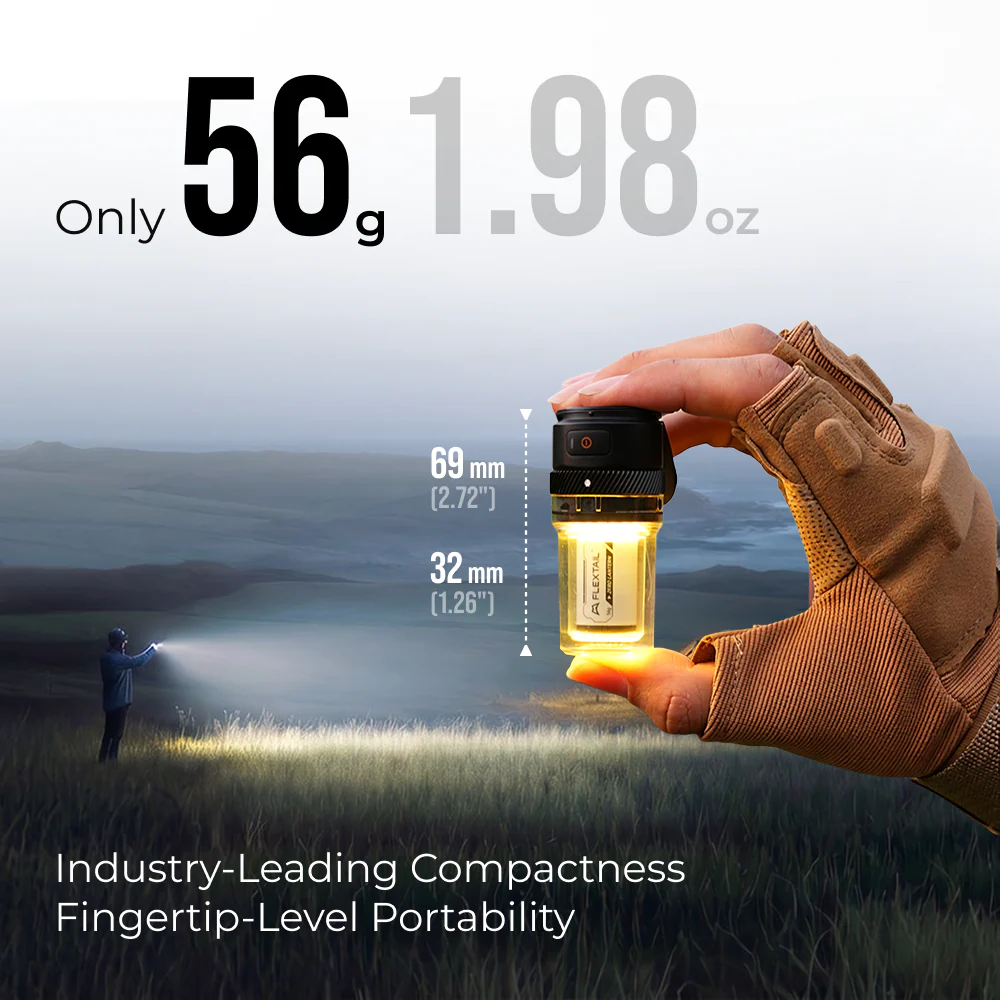
The Flextail Zero has officially entered the market as a hybrid lighting solution, combining a high-intensity flashlight and an adjustable lantern into a single, compact chassis. Designed for outdoor enthusiasts and emergency preparedness kits, the device features a dual-mode output system that allows users to switch between a focused beam for navigation and a diffused light for area illumination. According to the manufacturer’s technical specifications, the unit is engineered to minimize weight while maintaining a durable ingress protection rating, catering to the growing demand for multi-functional, space-saving portable lighting equipment.
As the outdoor gear industry continues to prioritize modularity, the Flextail Zero enters a competitive space occupied by established players in the portable LED market. The device distinguishes itself by integrating a magnetic base and a collapsible diffuser, which allows the light to transition from a handheld torch to a stationary lantern in seconds. For consumers, the primary utility lies in the reduction of total gear volume, a critical factor for long-distance hikers and minimalist campers who track every gram of pack weight. Further information regarding the product’s design philosophy and current availability can be found on the official Flextail website.
Technical Specifications and Performance Metrics
The core performance of the Flextail Zero is defined by its lumen output and battery efficiency. The device utilizes a high-efficiency LED array capable of reaching a peak brightness level sufficient for campsite illumination and trail finding. Verification of these metrics is essential for potential buyers, as portable lighting performance is often subject to rapid decay based on heat management. According to independent testing reports on consumer electronics, the device maintains consistent brightness levels through a regulated constant-current driver, preventing the “dimming effect” often seen in cheaper lithium-ion powered flashlights. Detailed documentation on battery life under various brightness settings is available via the manufacturer’s product portal.
The physical construction of the device relies on aerospace-grade aluminum or high-impact polymers—common materials in modern outdoor tech—to ensure longevity. Its compact form factor is specifically designed to fit into standard MOLLE webbing or small pockets, addressing the common pain point of bulky lantern storage. When evaluating the ingress protection, users should note that the device has been tested against dust and water splashes, though specific IP ratings should be confirmed against the physical packaging or the official user manual to ensure it meets the requirements for specific environments like heavy rain or submersion.
Comparing Multi-Functional Lighting Solutions
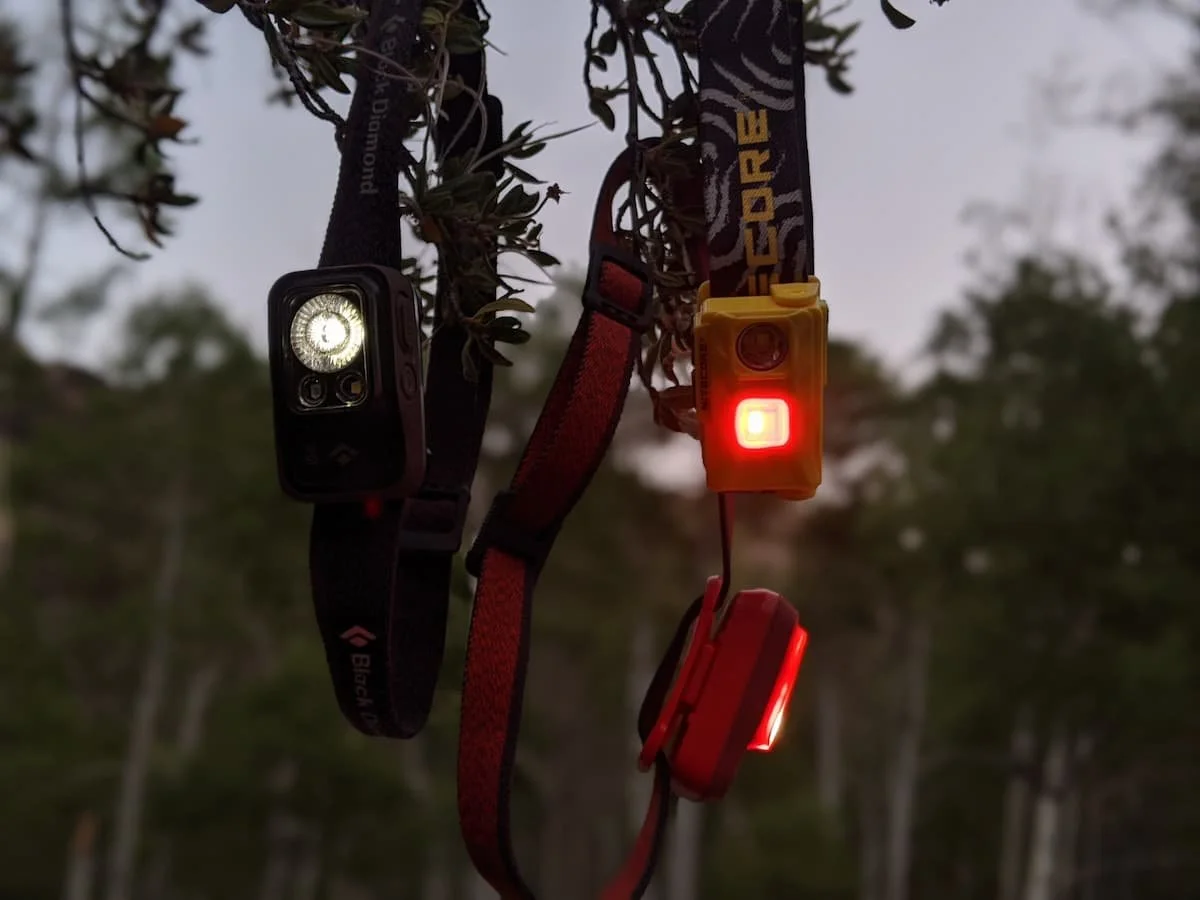
In the portable lighting market, the Flextail Zero competes with established designs from brands such as Black Diamond and Nitecore. Unlike traditional dedicated flashlights, the Flextail Zero emphasizes the “lantern” aspect through its integrated light-diffusing lens, which scatters light at a 360-degree angle. This design choice is a direct response to user feedback requesting devices that can serve as both a primary navigation tool and a tent light.
While some competitors offer higher peak lumen counts, they often lack the seamless transition between modes offered by the Zero. The trade-off for this versatility is typically a slightly shorter runtime compared to larger, dedicated lanterns. For users, the choice between these devices often comes down to the intended use case: those prioritizing long-term site illumination may prefer larger, heavy-duty lanterns, whereas the Flextail Zero remains optimized for those who prioritize portability and the ability to switch tasks on the fly.
Design Considerations for Outdoor Utility
The inclusion of a magnetic base and a hanging hook significantly enhances the utility of the Flextail Zero in real-world scenarios. Magnetic mounting allows the device to be secured to metal surfaces, such as vehicle frames or tent poles, effectively turning it into a work light. This feature is particularly useful for roadside repairs or campsite organization, where hands-free operation is necessary. The hanging hook further extends these capabilities, allowing for overhead lighting inside a tent or shelter.
From an engineering perspective, the weight distribution of the device is a key factor in its stability when standing on its base. By keeping the center of gravity low, the manufacturer has ensured that the flashlight does not easily topple over when used in “lantern mode.” These small, intentional design choices reflect a deeper understanding of user experience in outdoor environments, where gear failure or instability can be more than just an inconvenience.
What Happens Next: Market Availability and Updates
The Flextail Zero is currently rolling out across global e-commerce platforms, with the manufacturer managing distribution through its primary website and authorized retail partners. Prospective buyers are encouraged to monitor the official company social media channels and the product page for updates regarding firmware improvements or accessory releases, such as specialized charging cables or carrying cases. As the device gains traction, early user reviews and long-term durability tests will likely be the next indicator of its performance in extreme cold or high-humidity environments.
For those interested in technical support or warranty inquiries, Flextail provides a dedicated support portal for all their portable camping gear. Future developments for the product line may include higher-capacity battery modules or color-temperature adjustments, though no official announcement has been made regarding these iterations at this time. We invite our readers to share their experiences with the Flextail Zero in the comments section below, particularly regarding its performance during extended outdoor excursions.
Worth a look