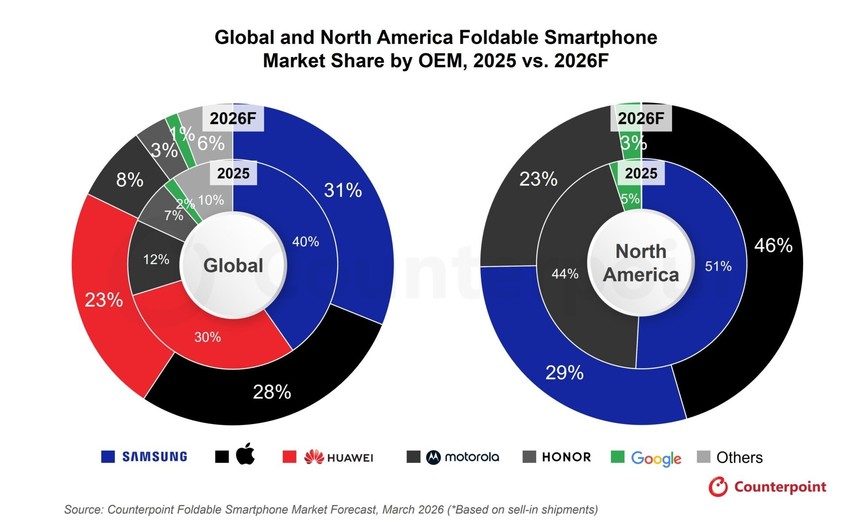
San Francisco, CA – Apple is poised to significantly disrupt the foldable smartphone market, potentially capturing a substantial share within its first year of entry, according to recent analysis. Although the exact timing of Apple’s foray into this emerging category remains under wraps, industry experts anticipate a launch sometime in the latter half of 2026, and the impact could be transformative.
The foldable smartphone segment, though still niche, has demonstrated consistent growth. Global smartphone shipments grew by 2% year-over-year in 2025, with Apple emerging as the overall market leader, according to Counterpoint Research. This success builds on a strong 2025 for the company, with the iPhone 16 being named the world’s best-selling smartphone, as reported by the same firm. The iPhone 16’s success, along with overall market gains, positions Apple favorably for expansion into new form factors like foldables.
Apple’s Potential Foldable Strategy
The anticipation surrounding Apple’s foldable device stems from the company’s ability to command premium pricing and cultivate strong brand loyalty. Counterpoint Research notes that Apple tightened its grip on various consumer segments in the fourth quarter of 2025, with the iPhone 16e playing a key role in this expansion. This suggests Apple has the marketing and product development capabilities to successfully introduce a new, potentially expensive, device category.
While specific details about Apple’s foldable iPhone remain scarce, analysts predict a focus on durability and software optimization. Foldable phones have historically faced challenges related to screen crease visibility and hinge reliability. Apple’s engineering prowess could address these concerns, potentially setting a new standard for foldable device quality. Apple’s ecosystem integration – seamlessly connecting its hardware and software – could be a significant differentiator. The company’s control over both aspects allows for a uniquely optimized user experience, something competitors relying on Android may struggle to match.
The Competitive Landscape
Currently, Samsung dominates the foldable smartphone market. The South Korean tech giant has been a pioneer in the space, releasing multiple generations of foldable devices, including the Galaxy Z Fold and Galaxy Z Flip series. Other manufacturers, such as Motorola and Oppo, have also entered the market, but with smaller market shares. Apple’s entry is expected to intensify competition, potentially driving down prices and accelerating innovation across the board.
The foldable market is segmented into two primary categories: clamshell-style foldables (like the Samsung Galaxy Z Flip) and book-style foldables (like the Samsung Galaxy Z Fold). It remains unclear which form factor Apple will initially pursue. A book-style foldable could appeal to users seeking a larger screen for multitasking and productivity, while a clamshell design might prioritize portability, and fashion. The choice will likely depend on Apple’s assessment of consumer preferences and its ability to overcome the technical challenges associated with each design.
Challenges and Opportunities
Despite the potential, Apple faces several hurdles in the foldable market. The high cost of foldable displays and complex manufacturing processes contribute to the premium price tags of existing devices. Apple will need to identify ways to reduce production costs without compromising quality to appeal to a broader audience. Software optimization is also crucial. Apps need to be designed to capture full advantage of the larger, foldable screens, and the user interface must be intuitive and seamless.
Yet, the opportunities are substantial. The foldable market is still relatively modest, representing a significant growth potential. Apple’s brand recognition and loyal customer base could grant it a considerable advantage. The company’s focus on user experience and ecosystem integration could attract consumers seeking a premium, seamless foldable experience. The potential for innovation in areas like augmented reality and virtual reality applications on a foldable screen also presents exciting possibilities.
Impact on the Broader Smartphone Market
Apple’s entry into the foldable market is expected to have ripple effects throughout the smartphone industry. Increased competition could lead to lower prices and faster innovation, benefiting consumers. Other manufacturers may be forced to accelerate their own foldable development efforts to remain competitive. The success of Apple’s foldable device could also encourage more developers to create apps optimized for foldable screens, further enhancing the user experience.
The foldable market represents a shift in smartphone design, moving beyond the traditional slab-like form factor. This trend could pave the way for even more innovative designs in the future, such as rollable or stretchable displays. Apple’s involvement is likely to legitimize the foldable category and accelerate its adoption by mainstream consumers. The company’s track record of successfully introducing new product categories – such as the Apple Watch and AirPods – suggests it has the ability to shape the future of the smartphone market.
Expert Insights
Harshit Rastogi, a Research Analyst at Counterpoint Research, highlighted Apple’s strong presence in the top 10 smartphone rankings, noting the iPhone 16’s contribution to this success. This demonstrates Apple’s ability to consistently deliver popular and well-received devices. Varun Mishra, a Senior Analyst at Counterpoint, emphasized Apple’s performance in tracking mobile devices and the ecosystem, with a particular focus on Apple. These insights suggest that Apple’s expertise in both hardware and software will be critical to its success in the foldable market.
The launch of a foldable iPhone is not merely a product release; it’s a potential paradigm shift in how we interact with mobile technology. Apple’s influence on the industry is undeniable, and its entry into the foldable space is poised to reshape the competitive landscape and drive innovation for years to come.
Key Takeaways:
- Apple is expected to launch a foldable iPhone in the second half of 2026.
- The company could capture a significant share of the foldable market within its first year.
- Competition in the foldable market is expected to intensify with Apple’s entry.
- Software optimization and durability will be key factors in Apple’s success.
- Apple’s entry could accelerate the adoption of foldable technology by mainstream consumers.
The next major checkpoint will be Apple’s annual Worldwide Developers Conference (WWDC) in June 2026, where the company may offer a first glimpse of the software features designed for its foldable device. Stay tuned to World Today Journal for continued coverage of this developing story. We encourage you to share your thoughts and predictions in the comments below.
- How Sirens Work: The Physics and History Behind the World’s Most Urgent Sound
- Stephen Hawking’s Warning: Why Humanity Must Colonize Space to Survive
- August 2026 Streaming Guide: Ted Lasso Returns to Apple TV and More (time.news)
- LG Smartphone Production Ends and Smart TV Features Explained (newsdirectory3.com)