For decades, the standard response to chronic illness has been a prescription pad and a pharmacy visit. However, a systemic shift is occurring in the intersection of healthcare and agriculture, moving the focus from treating symptoms with pharmaceuticals to addressing the root causes of disease through nutrition. This transition, often referred to as “food-as-medicine,” is evolving from a niche wellness trend into a scalable public health strategy with the potential to reshape both patient outcomes and regional economies.
The growing legitimacy of this approach was recently highlighted in Food & Wine, which featured an exploration of what happens when clinicians begin prescribing nutrient-dense foods instead of traditional pills. This movement is not merely about individual dietary choices; It’s about integrating nutrition into the formal healthcare delivery system. When doctors prescribe produce, the pharmacy is replaced by the farm, and the patient’s diet becomes a primary clinical intervention.
At the heart of this evolution is the recognition that nutrition is a fundamental pillar of internal medicine. As a physician, I have seen how diet-related chronic conditions—such as type 2 diabetes, hypertension, and cardiovascular disease—dominate our clinical burden. In the United States, approximately one-half of the population lives with a diet-related chronic condition, leading to immense downstream expenditures on acute care and long-term disease management according to research indexed by the National Center for Biotechnology Information (NCBI).
The Economic Engine of Food-as-Medicine Programs
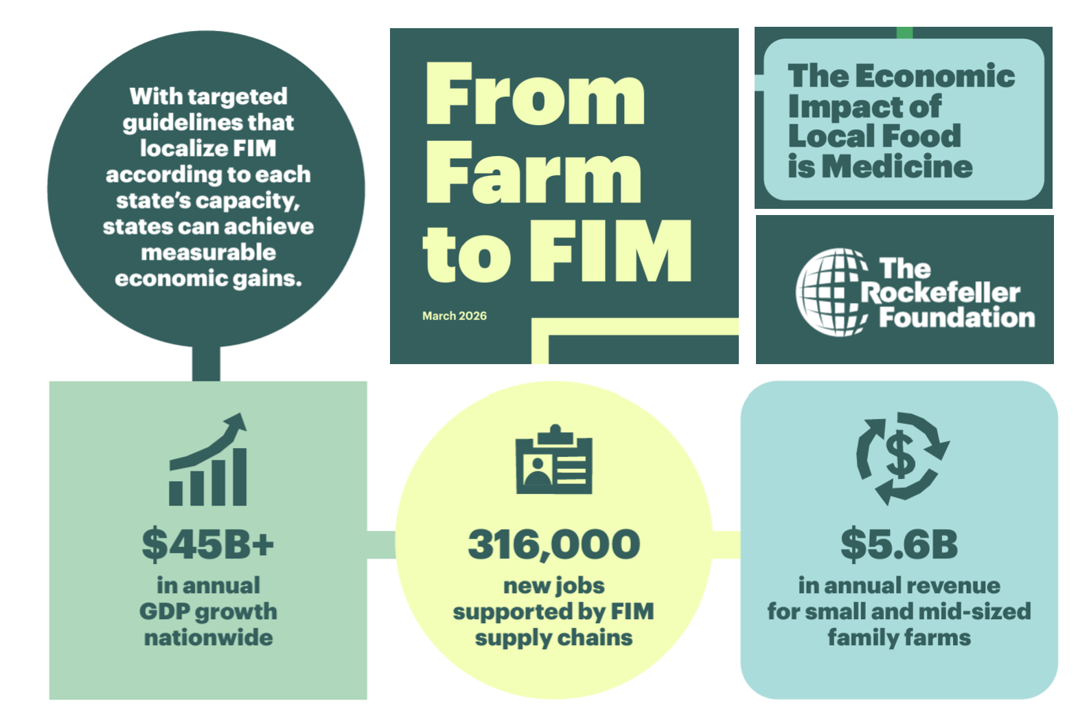
While the clinical benefits of nutrition are well-documented, the economic implications of scaling these programs are only now being quantified. A comprehensive report by the Rockefeller Foundation, titled From Farm to FIM: The Economic Impact of Local Food is Medicine, provides a data-driven look at how these initiatives function across diverse demographics, specifically studying programs in California, Massachusetts, and Oklahoma.
The findings suggest that Food-as-Medicine (FIM) programs can act as a powerful macroeconomic catalyst. The Rockefeller Foundation calculates that scaling FIM programs nationally could add over $45 billion to the U.S. GDP every year and support the creation of 316,000 new jobs within FIM supply chains per the foundation’s economic impact report.

Beyond the macro-level GDP growth, there is a significant micro-economic benefit for the agricultural sector. The report estimates that the expansion of FIM could generate $5.6 billion in annual revenue for small and mid-sized family farms according to Rockefeller Foundation data. This creates a stabilizing effect for local farmers whose incomes have historically been volatile due to fluctuating oil costs and trade tariffs.
Creating a Virtuous Cycle: Local Sourcing and Community Health
The efficacy of FIM programs depends heavily on the “local” component of the supply chain. By sourcing food from regional family farms, healthcare systems can create a virtuous cycle of co-dependence where the physical health of the community and the fiscal health of the local farm are intertwined. This strategy transforms the local farmer into an essential member of the healthcare team.
In Oklahoma, this model is being put into practice through organizations like FreshRx, where the philosophy is that local farmers effectively “provide the medicine” required for patient recovery and maintenance. This approach ensures that the food provided is not only fresh and nutrient-dense but as well tailored to local tastes and preferences, which increases patient adherence to prescribed nutritional plans.

Scaling these programs nationally is expected to yield three primary benefits:
- Income Stabilization: Providing a consistent revenue stream for small-scale farmers, mitigating the risks associated with global market volatility.
- Industry Growth: Stimulating job creation and business expansion across the entire food value chain, from harvesting to distribution.
- Environmental Stewardship: Strengthening community resilience and promoting sustainable land employ through localized production and distribution.

Policy Momentum and Public Demand
The transition toward FIM is not starting from zero. There is significant evidence of both bipartisan political support and strong public demand. The Rockefeller Foundation estimates that more than half of all U.S. States are currently pursuing some form of public policy change to integrate food-as-medicine into their healthcare frameworks per the foundation’s analysis.

This political movement is mirrored by a clear desire from the public. Polling data reveals that 4 in 5 U.S. Adults believe that food-as-medicine programs should be covered by health insurance according to Rockefeller Foundation polling. This suggests a widespread recognition that nutrition is not a luxury or a lifestyle choice, but a medical necessity that deserves the same insurance coverage as pharmaceutical interventions.
Since the COVID-19 pandemic, consumer behavior has shifted. There is a heightened awareness of how food impacts energy levels, sleep, brain health, and the management of chronic diseases. This cultural shift has created a fertile environment for FIM programs to move from pilot projects to standardized care protocols.
Key Implications for the Healthcare Ecosystem
| Feature | Traditional Chronic Care | Food-as-Medicine (FIM) |
|---|---|---|
| Primary Tool | Pharmaceuticals (Pills) | Medically Tailored Nutrition |
| Supply Chain | Global Pharma Manufacturers | Local and Regional Family Farms |
| Economic Impact | Concentrated in Pharmaceutical Sector | Distributed across Local Agriculture/GDP |
| Patient Focus | Symptom Management | Root Cause/Preventative Health |
| Insurance Status | Standard Coverage | Emerging Policy Support/High Public Demand |
For those of us in the medical and financing sectors, the call to action is clear. The infrastructure for these programs—the farmers, the local distribution networks, and the patient demand—is already in place. The remaining challenge is the formalization of reimbursement models and the integration of nutritionists and farmers into the primary care team.
As we look forward, the next critical checkpoint will be the continued rollout of state-level policy changes and the potential for federal insurance mandates to recognize medically tailored meals as a covered benefit. Moving the needle on these policies will determine whether FIM remains a series of successful local experiments or becomes a national standard of care.
Do you believe nutrition should be covered by health insurance in the same way as prescription medication? We invite you to share your thoughts in the comments below and share this article with your healthcare providers.
Keep reading
- Legionnaires’ Disease Outbreak in New York: Museum Traces Spark US Health Alert
- Managing Asthma and Allergic Rhinitis During Rainy Season: Tips to Prevent Mold and Dust Mites
- Medical Care Deployments Expand Health Access in Aragua, Venezuela (archynewsy.com)
- Interior Ministry Orders Nationwide Inspection of Public Venues (world-today-news.com)