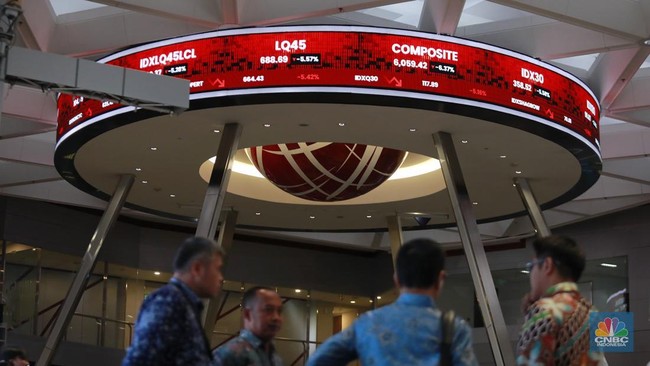
Indonesia’s benchmark stock index, the Jakarta Composite Index (IHSG), continued its downward trajectory on Thursday, April 24, 2026, closing at 7,378 after a 2.16 percent decline amid sustained foreign capital outflows and a weakening rupiah. Foreign investors net sold shares worth Rp1.36 trillion during the session, according to market data, reflecting growing caution over Indonesia’s economic outlook and currency volatility.
The sell-off was broad-based, with foreign offloading concentrated in large-cap stocks across banking, telecommunications, and consumer sectors, while some investors shifted toward commodity-linked and energy-related equities perceived as more resilient to currency pressure. Market analysts noted that the rupiah’s breach of the Rp17,321 per US dollar level earlier in the week exacerbated concerns about imported inflation and corporate debt servicing costs for companies with dollar-denominated liabilities.
Despite the broad decline, certain sectors showed relative resilience. Shares in basic materials and energy companies attracted selective buying interest, particularly among domestic investors seeking exposure to commodities benefiting from stronger global demand. However, the overall market sentiment remained weighed down by persistent foreign capital withdrawal, which has turn into a defining feature of Indonesia’s equity market dynamics in recent sessions.
The latest data from the Indonesia Stock Exchange (IDX) confirmed that foreign investors have been net sellers for multiple consecutive trading days, with cumulative outflows exceeding Rp5 trillion over the past week. This trend has coincided with heightened volatility in regional markets, as investors reassess risk exposure across emerging economies amid shifting global monetary policy expectations and commodity price fluctuations.
Market observers highlighted that the current pressure on the IHSG reflects a confluence of domestic and external factors, including narrowing interest rate differentials between Indonesia and major economies, which reduces the relative attractiveness of Indonesian assets for yield-seeking foreign capital. Concerns about Indonesia’s fiscal trajectory and external debt sustainability have contributed to a more cautious stance among international institutional investors.
Technical analysis of the IHSG indicated that the index had broken below key support levels around the 7,500 mark, with momentum indicators suggesting further downside risk in the near term if foreign selling pressure persists. However, some analysts noted that oversold conditions could eventually attract value-driven buying, particularly if the rupiah stabilizes or shows signs of recovery from its recent lows.
Domestic market participants, including pension funds and insurance companies, have been observed as net buyers during the recent sell-off, providing some counterbalance to foreign outflows. Their activity suggests a degree of confidence in long-term fundamentals despite short-term headwinds, although their purchasing power remains limited compared to the scale of foreign institutional flows.
The Bank of Indonesia has not intervened directly in the equity market but has maintained its policy stance focused on currency stability, having raised interest rates multiple times in recent months to counteract inflationary pressures and support the rupiah. These monetary policy decisions continue to influence capital flows, as higher domestic yields aim to make Indonesian assets more competitive relative to global alternatives.
Looking ahead, market attention will focus on upcoming economic data releases, including Indonesia’s monthly trade balance and manufacturing purchasing managers’ index (PMI), which could provide further insight into the resilience of the domestic economy amid external pressures. Any shifts in global risk sentiment—particularly regarding US monetary policy trajectory and commodity markets—will likely influence foreign investor behavior toward Indonesian equities.
For investors navigating the current volatility, financial advisors emphasize the importance of diversification across asset classes and currencies, as well as maintaining a long-term perspective aligned with individual risk tolerance and investment goals. While short-term fluctuations can be unsettling, historical patterns suggest that emerging markets like Indonesia often experience periods of correction followed by recovery as macroeconomic conditions evolve.
As of the close of trading on April 24, 2026, the IHSG remains below the 7,500 psychological threshold, with market participants closely monitoring both domestic developments and international market signals for clues about the next phase of Indonesia’s equity market trajectory.
Share your thoughts on Indonesia’s market outlook in the comments below, and consider sharing this article with others interested in emerging market dynamics.
Related reading