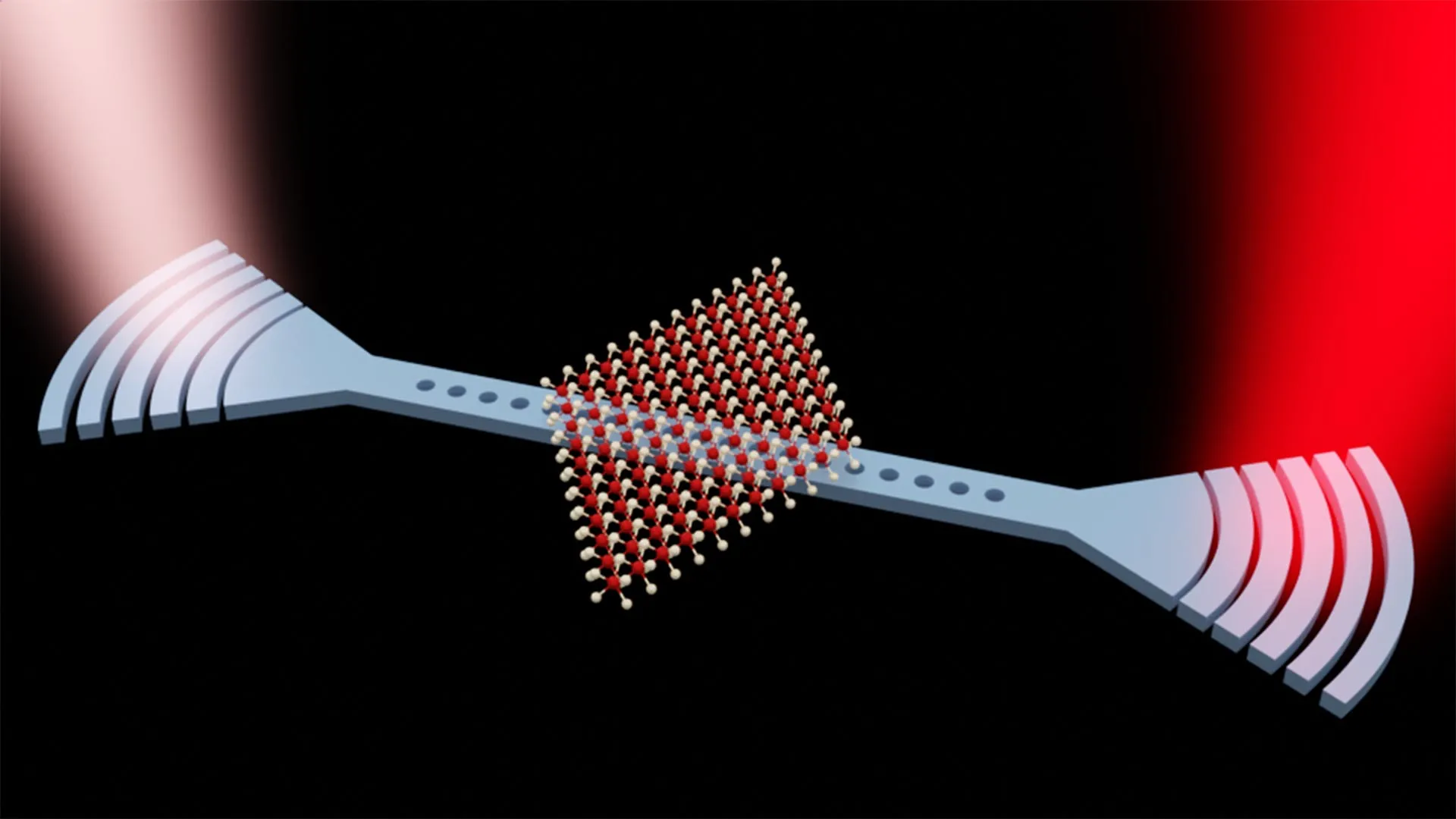
By integrating light-based processing into hardware, this technology aims to overcome the physical limitations of traditional electronic transistors, potentially enabling faster AI model training while significantly reducing energy consumption.
The study, published in Nature Photonics, details how the research team utilized nanophotonic structures to merge light and matter at the nanoscale. This approach allows for the manipulation of information through photons rather than relying exclusively on the movement of electrons, which often generates heat and creates bottlenecks in conventional silicon-based chips.
The Physics Behind Light-Matter Computing
At the heart of this development is the concept of strong coupling. When light is confined within a nanostructure and interacts with a material’s excitons, the two entities become inextricably linked. This creates a polariton, which possesses the high speed of light and the strong interaction properties of matter. Unlike traditional computing, which requires electrons to travel through resistive materials, this system uses the propagation of light to perform mathematical operations essential for neural networks.

The research team, led by faculty within the School of Engineering and Applied Science, focused on creating an architecture that can perform matrix multiplication—the fundamental mathematical operation underpinning modern AI—using these light-matter hybrids. By utilizing the optical properties of the materials, the team demonstrated that these systems could theoretically execute these operations in parallel, providing a substantial jump in throughput compared to current GPU-based systems. Detailed findings regarding the optical constraints and structural design are available in the official publication in Nature Photonics.
Implications for AI Energy Efficiency
Energy efficiency remains one of the most significant challenges in the scaling of large-scale AI models. Training modern large language models requires massive amounts of power, much of which is dissipated as heat within electronic processing units. Because light-based particles do not experience the same resistive heating as electrons in copper or silicon wires, the transition to photonics could offer a path toward more sustainable computing.
The Penn researchers suggest that by replacing specific electronic data-transfer and computation layers with these light-matter components, data centers could potentially lower their power requirements. This is particularly relevant as the industry faces increasing pressure to reduce the carbon footprint of AI infrastructure. According to a report by the International Energy Agency (IEA), electricity consumption from data centers and AI is projected to see significant growth, underscoring the necessity for hardware innovations that decouple computing power from linear energy scaling.
Challenges and the Path to Commercialization
While the laboratory results are promising, moving from a controlled nanophotonic experiment to a commercialized processor involves significant engineering hurdles. Scaling the production of these hybrid-particle chips requires compatibility with existing complementary metal-oxide-semiconductor (CMOS) manufacturing processes used by major semiconductor foundries. Integrating optical components directly onto silicon wafers at scale remains a primary focus for the field of silicon photonics.
Researchers are currently working on optimizing the stability of these polaritons at room temperature, a requirement for practical, real-world application. As the technology matures, the next checkpoint for the team involves refining the light-matter coupling efficiency to ensure that the system can be integrated into existing computing stacks without requiring exotic cooling or specialized environments.
The integration of these light-matter particles into high-performance computing represents a shift in how engineers approach the physical limits of Moore’s Law. By leveraging the unique properties of light, the researchers are aiming to provide a scalable alternative to the electronic bottleneck that currently limits the speed and efficiency of modern machine learning workloads.
Readers interested in the ongoing development of this technology can monitor future research updates via the Nature Photonics journal. For those following advancements in sustainable tech, further information on energy-efficient computing initiatives is available through the U.S. Department of Energy’s Office of Science website. We encourage you to share your thoughts on the future of optical computing in the comments below.