
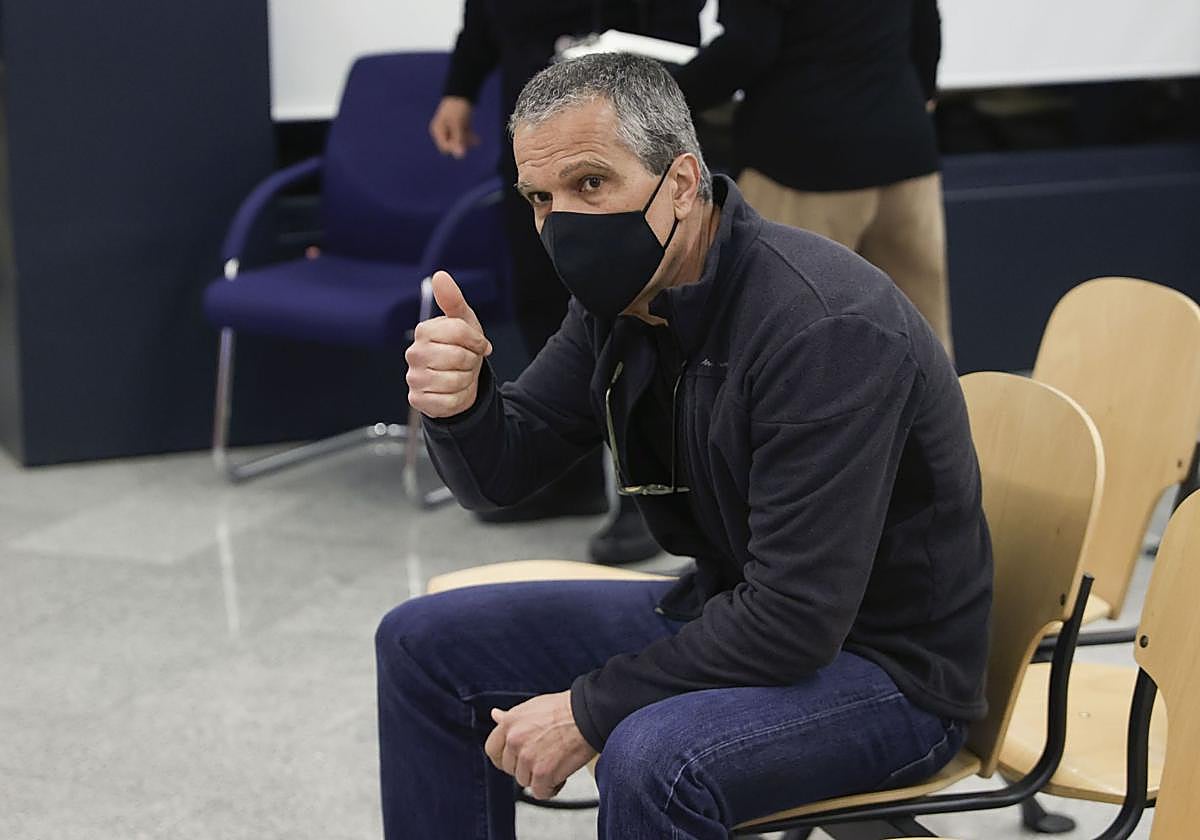
The tension between the pursuit of social reintegration and the demand for absolute justice has resurfaced in the Basque Country, sparking a fierce legal and political confrontation. The Basque Government has come under intense scrutiny following its decision to grant “third-degree” semi-liberty status to two former members of the terrorist organization ETA, including one of the group’s most notorious operatives.
The Colectivo de Víctimas del Terrorismo (Covite), a prominent advocacy group for victims of ETA’s decades-long campaign of violence, has denounced these moves as “fraudulent.” The organization argues that the grants constitute a “hidden amnesty,” facilitating the release of high-profile convicts without requiring the public, verifiable repentance that victims believe is essential for true reconciliation.
At the center of the controversy is the case of Juan Carlos Iglesias Chouzas, known by the alias “Gadafi,” and Eneko Gogeaskoetxea. The decision by the regional executive, led by a coalition of the Basque Nationalist Party (PNV) and the Socialist Party (PSE), has reignited a long-standing debate over how the Spanish state and the Basque administration handle the progression of ETA prisoners through the penal system.
For the international community, this development highlights the fragile nature of the peace process in Northern Spain. Whereas ETA officially ceased operations and dissolved, the legal mechanisms governing the release of its members remain a flashpoint for political instability and emotional trauma for the families of the deceased.
The Case of ‘Gadafi’ and the Fabio Moreno Tragedy
The grant of semi-liberty to Juan Carlos Iglesias Chouzas, alias “Gadafi,” is viewed by victims’ rights groups as particularly egregious due to the nature of his crimes. Chouzas was convicted of numerous attacks, most notably the assassination of Fabio Moreno, the two-year-old son of a Civil Guard officer in Erandio. The child was killed by a “bomba lapa”—a sticky bomb attached to the family’s vehicle—a tactic frequently used by ETA to target security forces and their families.
The legal trajectory of Chouzas’s release has been fraught with conflict. According to reports, the Basque Government had previously approved his progression to the third degree in October 2025. However, that decision was challenged by the Fiscalía de la Audiencia Nacional (the National Court Prosecutor’s Office) and subsequently revoked by the Judge of Penitentiary Surveillance. Despite this judicial reversal, the Basque Government has once again granted the benefit, a move Covite describes as a “deliberate policy” to empty prisons regardless of judicial warnings.
The Basque Government has defended the decision by stating that the prisoner has served three-quarters of his sentence. Officials maintain that the progression is a standard administrative procedure based on the time elapsed and the fulfillment of legal requirements, asserting that the board presents the case for review simply because the necessary time has passed.
Understanding the ‘Third Degree’ in the Spanish Prison System
To a global audience, the term “third degree” (tercer grado) may be unfamiliar. In the Spanish penitentiary system, prison progression is divided into degrees that reflect a prisoner’s transition toward full freedom:

- First Degree: Closed regime, with limited access to activities outside the cell.
- Second Degree: Ordinary regime, allowing for more interaction within the prison and participation in educational or vocational programs.
- Third Degree: Semi-liberty regime. This allows prisoners to leave the facility during the day for work, study, or family visits, provided they return to the prison or a designated center at night.
The transition to the third degree is often the final step before parole or full release. Under Spanish Organic Law 1/1979 on Penitentiary Treatment, these progressions are intended to facilitate the prisoner’s reintegration into society. However, in the context of terrorism, the “objective” requirements of the law often clash with the “moral” requirements demanded by victims.
Key Takeaways: The Covite Allegations
- Lack of Repentance: Covite, led by president Consuelo Ordóñez, asserts that semi-liberty is being granted without “real, public, and verifiable” repentance.
- Hidden Amnesty: The organization claims the Basque Government is utilizing administrative loopholes to implement a “hidden amnesty” for ETA members.
- Political Alignment: Covite alleges the current prison management reflects the demands of the izquierda abertzale (nationalist left), aiming for a “progressive emptying of the prisons.”
- Questionable Evidence: The association has questioned the validity of private letters of repentance used by the PNV-PSE government to justify legal requirements.
Political Fallout and the ‘Hidden Amnesty’ Debate
The decision has sparked a political firestorm within the Basque Country. Javier de Andrés, the leader of the People’s Party (PP) in the region, has condemned the actions of the PNV-PSE government, describing the eagerness to release ETA members as “impudent.” De Andrés has called for the urgent release of all information regarding these grants, arguing that the government is ignoring the repeated objections of the National Court Prosecutor.

The phrase “hidden amnesty” is central to this debate. While a formal amnesty would require legislative action and would be subject to intense national scrutiny, “administrative progression” happens behind the scenes through prison boards. Critics argue that by lowering the bar for what constitutes “reintegration” or “repentance,” the government is achieving the same result as an amnesty—releasing killers without a public admission of guilt or reparations to the victims.
This tension is part of a broader struggle over the memory of the conflict. For the PNV and PSE, the focus is often on the stability of the current peace and the normalization of the Basque region. For groups like Covite, peace without justice is a betrayal of the victims. They argue that the “negotiated end” of ETA in 2011 should not have come at the cost of legal accountability.
The Impact on Victims and the Path Forward
For the families of victims, such as those affected by the death of Fabio Moreno, the news of a “third degree” grant is not a legal technicality but a profound psychological blow. The perception that the state is prioritizing the comfort of the perpetrator over the grief of the victim can lead to a sense of institutional abandonment.

The legal battle is likely to continue in the courts. Given the previous revocation of Juan Carlos Iglesias Chouzas’s status, it is highly probable that the Fiscalía de la Audiencia Nacional will once again appeal the current decision. The outcome will depend on whether the court views the “passage of time” and the fulfillment of sentence percentages as sufficient, or whether it upholds a stricter standard of repentance for terrorism convicts.
As the Basque Government continues to navigate the complexities of post-terrorism governance, the case of ‘Gadafi’ and Eneko Gogeaskoetxea serves as a stark reminder that while the bombs have stopped, the war over memory and justice is far from over.
Next Checkpoint: Legal observers are awaiting the formal response and potential appeal from the Fiscalía de la Audiencia Nacional regarding the recent grants of semi-liberty. Further updates are expected as the case moves back through the Judge of Penitentiary Surveillance.
Do you believe the legal requirements for prison progression should differ for those convicted of terrorism? Share your thoughts in the comments below or share this article to join the global conversation on justice and reconciliation.