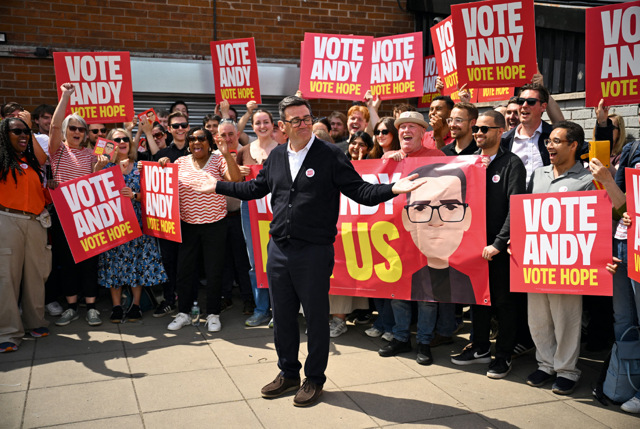
Andy Burnham, the current Mayor of Greater Manchester, has emerged as a central figure in discussions regarding the future leadership of the Labour Party, following intense speculation surrounding the tenure of Prime Minister Keir Starmer. While Starmer remains in office, political analysts and internal party factions are increasingly assessing Burnham’s viability as a potential successor, citing his significant electoral mandate in the North of England and his long-standing profile within the British political establishment.
The discourse surrounding a leadership transition remains speculative, as there has been no formal resignation from Prime Minister Keir Starmer. According to the official Labour Party communications, the current leadership continues to focus on its legislative agenda and domestic policy priorities. Despite this, Burnham’s name frequently appears in parliamentary corridors as a candidate who could bridge the gap between traditional Labour values and the party’s modern electoral coalition.
The Political Profile of Andy Burnham
Andy Burnham has served as the Mayor of Greater Manchester since 2017, securing multiple re-elections with substantial majorities. His tenure has been marked by a focus on regional devolution, public transport reform, and social housing. As noted by the Greater Manchester Combined Authority, Burnham has successfully negotiated various funding settlements with the central government, establishing himself as a pragmatic operator capable of working across party lines.

Before his role as mayor, Burnham held several high-profile cabinet positions under previous Labour administrations. He served as Secretary of State for Health and Secretary of State for Culture, Media and Sport. These roles provided him with extensive experience in navigating the complexities of Whitehall, a factor that supporters argue makes him uniquely qualified to lead the national government should a vacancy occur. His ability to maintain high approval ratings in his constituency has often been contrasted with the fluctuating polling numbers of the national party leadership.
Factors Influencing Potential Leadership Bids
Any transition in leadership within the Labour Party is governed by specific internal rules, as outlined in the Labour Party Rule Book. For a candidate to secure a leadership position, they must obtain nominations from a set percentage of Labour Members of Parliament and affiliated organizations. Burnham, having previously stood for the party leadership in 2010 and 2015, possesses a deep understanding of these institutional requirements.

The potential for a leadership contest is often tied to broader trends in British politics, including economic performance and public satisfaction with government services. Recent reports from the Office for National Statistics regarding inflation and GDP growth serve as a backdrop for these discussions, as economic stability remains the primary metric by which the electorate judges the effectiveness of the current administration. Burnham’s proponents argue that his experience in managing the economy of a major metropolitan region provides him with a credible platform to address these national challenges.
Public Sentiment and Party Dynamics
The debate over the party’s future often highlights the tension between the parliamentary party in Westminster and the party’s regional power bases. Burnham represents a cohort of political leaders who have gained significant autonomy and public visibility outside the traditional London-centric power structure. This geographic focus has proven to be a strategic asset, allowing him to tap into the concerns of voters in the “Red Wall” and other industrial heartlands that are essential for Labour’s electoral success.
However, analysts caution that the path to leadership is never straightforward. The UK Parliament operates on a system where internal party loyalty is highly valued, and any perceived challenge to a sitting Prime Minister can carry significant political risks. Consequently, Burnham has maintained a disciplined public stance, focusing on his responsibilities in Manchester while avoiding direct commentary on his national political ambitions.
What Happens Next
The next phase of this political narrative will likely be dictated by the outcomes of upcoming local and regional elections, which provide a barometer for the party’s national health. The Electoral Commission provides the framework for these contests, and their results often serve as the catalyst for internal party reviews. For now, there are no scheduled leadership elections or formal motions of no confidence within the Labour Party.
Observers are closely watching for any changes in the parliamentary arithmetic or shifts in party policy that might signal a desire for a change in direction. As of mid-2024, the party maintains a unified front regarding its current leadership. Readers interested in the latest developments are encouraged to follow official government announcements and verified parliamentary reports for updates on the legislative and political status of the current administration. We invite readers to share their perspectives on the future of British leadership in the comments section below.