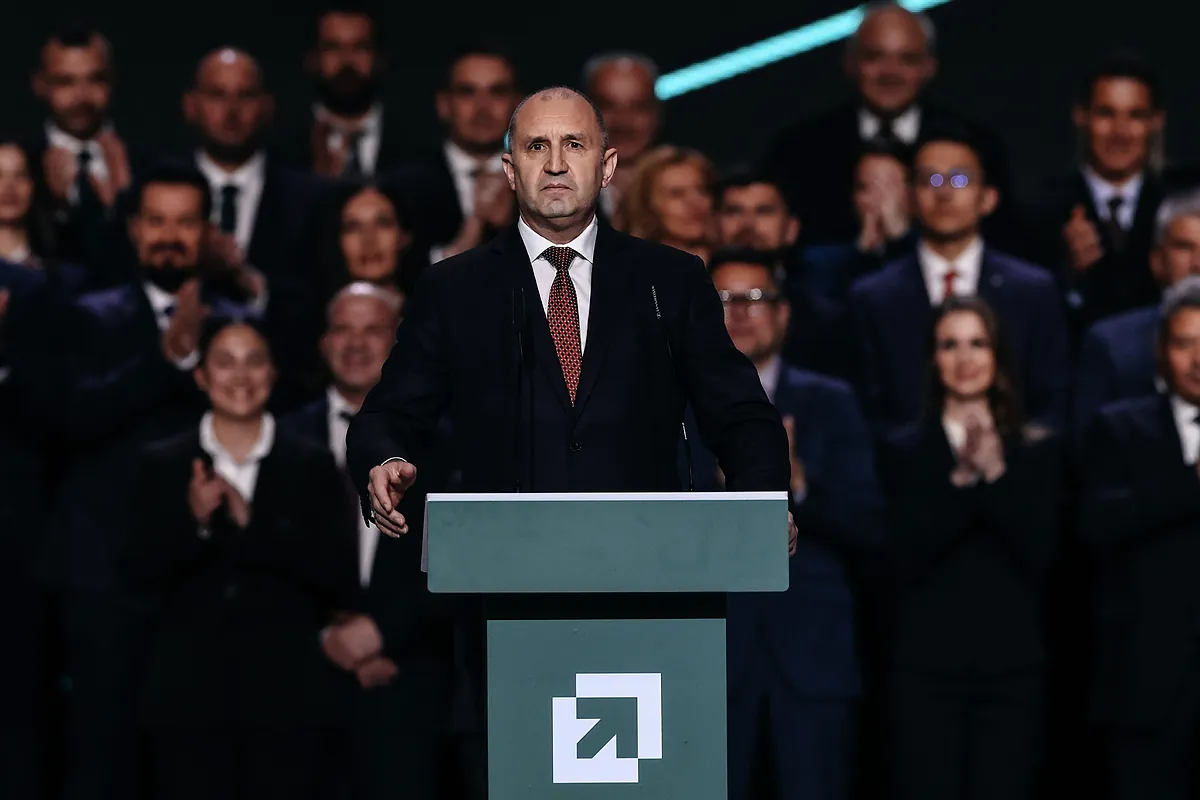
Bulgaria is heading to the polls for the eighth time in five years, a stark reflection of deepening political instability and voter fatigue in one of the European Union’s poorest member states. The April 2026 parliamentary election comes amid widespread disillusionment with traditional parties, rising concerns over corruption and governance, and the emergence of modern political figures seeking to capitalize on public frustration. Among them, former President Rumen Radev is making his first foray into parliamentary politics, leading early opinion polls with approximately 30% support according to multiple independent surveys.
The recurring elections underscore a systemic challenge: no single party or coalition has been able to form a stable government since 2021, when mass anti-corruption protests toppled the center-right GERB administration. Since then, Bulgaria has experienced a cycle of snap elections, short-lived cabinets, and caretaker governments, eroding public trust in democratic institutions. Analysts warn that without meaningful reform, the country risks prolonged governance paralysis, hindering its ability to access EU funds, implement structural reforms, and address pressing socio-economic challenges.
Radev, who served two terms as president from 2017 to 2022, resigned from the largely ceremonial role in March 2022 to enter active politics, a move that surprised many given his previous stance as a critic of partisan gridlock. Now heading the newly formed “Voice of the People” movement, he positions himself as a unifying figure above traditional party lines, advocating for judicial reform, stricter anti-corruption measures, and a reevaluation of Bulgaria’s foreign policy orientation. His campaign emphasizes national sovereignty, skepticism toward NATO enlargement, and closer ties with Russia and China—positions that have drawn both support and concern from Western allies.
According to a Gallup International poll conducted in mid-April 2026, Radev’s movement leads with 29.8% of decided voters, followed closely by GERB at 24.1% and the centrist We Continue the Change-Democratic Bulgaria (WCC-DB) coalition at 18.7%. The far-right Revival party holds steady at around 12%, while the Turkish-majority Movement for Rights and Freedoms (DPS) and the newly formed Reasonable Persons bloc each poll near 8%. These figures suggest a fragmented parliament is likely, with no single bloc approaching the 121-seat majority needed to govern alone.
The Central Election Commission confirmed on April 10, 2026, that over 6.5 million Bulgarian citizens are eligible to vote in the upcoming election, with voting set to accept place on April 19 across more than 12,000 polling stations. Approximately 600,000 Bulgarians abroad are also eligible to participate, continuing a trend of significant diaspora engagement in national elections. Voter turnout in the previous election in October 2024 stood at 39.4%, one of the lowest in recent decades, reflecting growing apathy among younger and urban voters.
Experts at the Sofia-based Center for the Study of Democracy note that Bulgaria’s political volatility is rooted in weak party institutionalization, clientelistic networks, and a justice system perceived as compromised. “We are seeing a crisis of representation,” said Dr. Elena Petrova, senior analyst at the center, in an interview with Reuters on April 12, 2026. “Voters are not rejecting democracy—they are rejecting the current version of it, which they notice as serving elites rather than the public interest.”
The economic stakes are significant. Bulgaria remains the EU’s poorest country, with a GDP per capita of just over $13,000 in 2024, according to World Bank data. Despite steady growth driven by tourism, manufacturing, and EU structural funds, nearly one in five Bulgarians lives at risk of poverty or social exclusion. Persistent shortages in healthcare and education, combined with emigration of skilled workers, have fueled public demand for change—yet frequent elections have delayed long-term policy planning.
Internationally, Bulgaria’s political instability has raised concerns among NATO allies, particularly given its strategic location on the alliance’s southeastern flank. While Sofia remains a NATO member and has contributed to regional security initiatives, Radev’s rhetoric questioning NATO’s eastward expansion and advocating for a “balanced” foreign policy has prompted diplomatic outreach from Washington and Brussels. The U.S. Embassy in Sofia issued a statement on April 8, 2026, reaffirming its commitment to Bulgaria’s sovereignty and democratic processes while urging all parties to uphold Euro-Atlantic commitments.
Should no party secure a governing majority, Bulgaria may once again face a caretaker government or prolonged negotiations, potentially delaying the disbursement of approximately €6.3 billion in EU recovery and cohesion funds allocated for 2021–2027. These funds are critical for infrastructure upgrades, green energy transition, and digital transformation—areas where Bulgaria lags behind regional peers.
As the campaign enters its final week, political leaders are intensifying outreach efforts, particularly in rural areas and among Roma communities, where voter mobilization remains uneven. Election monitors from the Organization for Security and Co-operation in Europe (OSCE) have announced plans to deploy a limited observation mission to assess compliance with international standards, citing past concerns over campaign finance transparency and media bias.
The April 19 vote will not only determine Bulgaria’s immediate political trajectory but also test whether the country can break free from its cycle of electoral repetition. With public trust at a nadir and institutional reform overdue, the outcome may hinge less on ideological alignment and more on which force can credibly promise stability, competence, and a break from the past.
What happens after the election?
Official results are expected to be released by the Central Election Commission within 48 hours of polling stations closing on April 19, 2026. If no party wins an outright majority, coalition talks will begin immediately, guided by constitutional provisions that allow the president to mandate a candidate for prime minister to attempt government formation. Observers note that the likelihood of a third consecutive failed attempt to form a government remains high, potentially leading to another snap election later in the year.
For real-time updates, readers can refer to the Central Election Commission’s official website (cik.bg) and the OSCE Election Observation Mission’s preliminary statement, scheduled for release on April 21, 2026. International media outlets including BBC News, Reuters, and Deutsche Welle will provide ongoing coverage of the political developments.
We invite our global audience to share perspectives on Bulgaria’s democratic challenges and the implications for regional stability. Join the conversation in the comments below or share this article to support inform broader understanding of one of Europe’s most persistent political puzzles.
Related reading