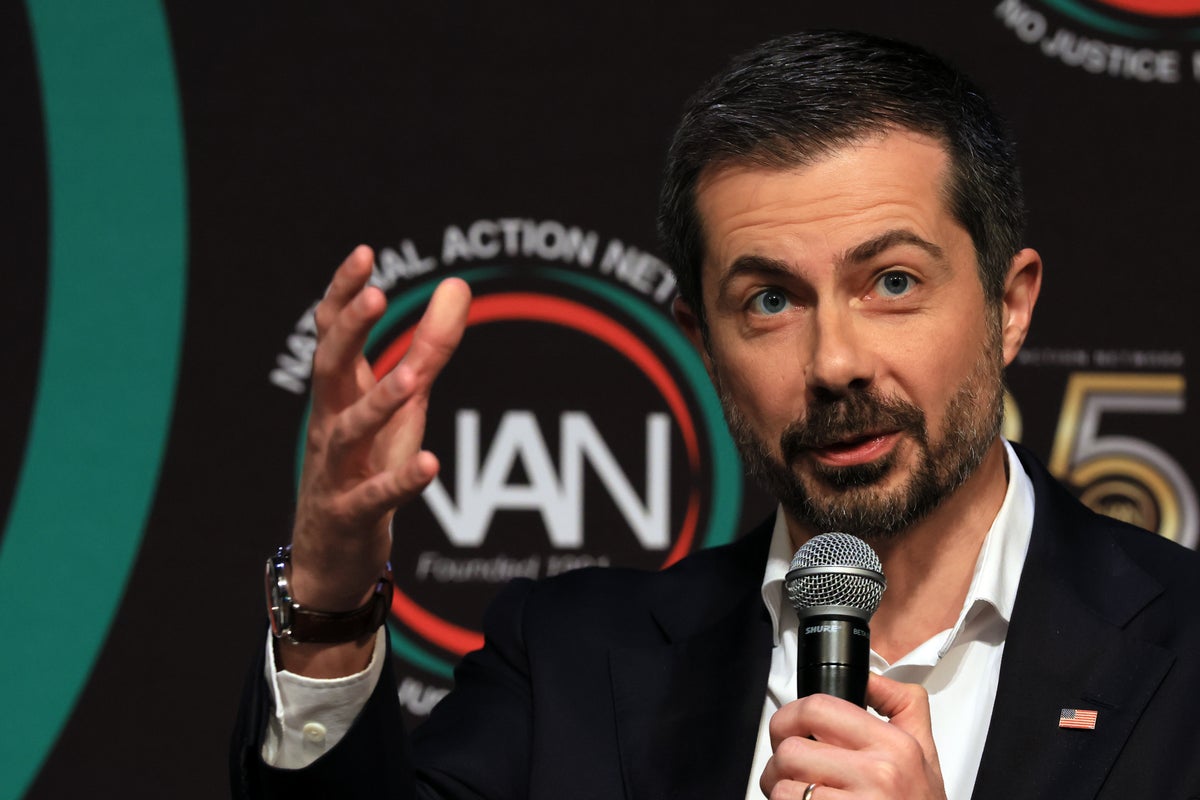
Former U.S. Transportation Secretary Pete Buttigieg has sparked significant political discourse following a pointed exchange on CNBC, where he challenged the current administration’s economic record and addressed the complexities of Middle East diplomacy. During the interview, Buttigieg pushed back against narratives regarding inflation and the geopolitical risks associated with Iran, framing the current economic climate as a continuation of challenges that have persisted beyond the previous administration’s tenure.
The exchange centered on a critical point of contention: the trajectory of U.S. Inflation. Buttigieg asserted that inflation was lower when the Biden administration left office than It’s under the current leadership, effectively challenging the premise that the previous administration’s policies were the sole drivers of current price hikes. This assertion places the focus on the volatility of global markets and the specific promises made by Donald Trump regarding the rapid reduction of inflation upon his return to power.
As the U.S. Navigates a delicate balance between domestic economic stability and the threat of a broader conflict in the Middle East, the dialogue between former officials and media figures serves as a proxy for the larger national debate. The tension in the interview highlighted a fundamental disagreement over who bears responsibility for the “cost of living crisis” and whether the current strategy toward Iran is an escalation or a necessary deterrent.
The Inflation Debate: Factoring in Global Trends
The core of the friction during the CNBC interview was the interpretation of economic data. Buttigieg’s claim that inflation was lower at the end of the Biden administration’s term than it is currently serves as a direct rebuttal to critics who argue that the 2021-2024 period was the primary catalyst for the current economic strain. To understand this claim, one must look at the Consumer Price Index (CPI), the primary measure used by the U.S. Bureau of Labor Statistics to track inflation.
Inflation is not a static number but a reflection of various pressures, including supply chain disruptions, energy costs, and monetary policy. During the latter part of the Biden administration, the U.S. Saw a gradual cooling of inflation from its 2022 peaks. However, Buttigieg argued that the current economic environment has not seen the “immediate drop” promised by the Trump campaign. By contrasting the data, Buttigieg sought to illustrate that the “broken promises” regarding inflation are not merely political rhetoric but are reflected in the actual purchasing power of American consumers.
Economists often point to “sticky” inflation—specifically in services and housing—as a primary reason why prices do not drop quickly even when the rate of inflation slows. For the global audience, this highlights the difficulty of reversing inflationary trends once they have become embedded in the economy. The argument presented by Buttigieg suggests that the current administration’s struggle with inflation is an inherited global phenomenon rather than a failure of specific domestic policy.
The Role of Expectations and Market Psychology
A significant portion of the debate revolves around “inflationary expectations.” When a political leader promises a swift end to inflation, the market reacts. If those promises are not met, it can lead to further volatility. Buttigieg’s critique of Trump’s promises suggests that unrealistic expectations can actually hinder economic recovery by creating a gap between political narrative and economic reality.
the impact of tariffs and trade policies remains a central point of analysis. Many economic analysts argue that aggressive tariff regimes can lead to higher costs for consumers, effectively acting as a tax that fuels inflation. This context is essential when evaluating Buttigieg’s assertion that the current economic state is more precarious than the one left behind by his former colleagues.
Geopolitical Tensions and the Iran Conflict
Beyond economics, the interview pivoted to the volatile situation in the Middle East, specifically the risk of an all-out war with Iran. The CNBC host pressed Buttigieg on whether the current approach is sufficient to prevent a regional catastrophe. Buttigieg’s response emphasized a strategy of “calculated deterrence,” arguing that the goal is to prevent a war even as ensuring that the U.S. Remains capable of defending its interests and allies.
The complexity of the Iran situation involves a delicate balance of sanctions, diplomatic channels, and military presence. The U.S. Has long sought to limit Iran’s nuclear capabilities, a goal that has seen various shifts in strategy across different administrations. The U.S. Department of State has consistently maintained that diplomacy is the preferred route, but that “all options remain on the table” to ensure regional stability.
Buttigieg’s defense of the current posture suggests that the “shredding” of the host’s line of questioning was rooted in the belief that the media often oversimplifies the binary choice between “appeasement” and “war.” He argued that the reality lies in a grey area of strategic patience—maintaining pressure on the Iranian regime while avoiding the triggers that would lead to a full-scale kinetic conflict.
The Impact of Regional Proxy Wars
The discussion on Iran cannot be separated from the activities of its proxies in the region. From the Houthis in the Red Sea to Hezbollah in Lebanon, the “shadow war” between the U.S. And Iran has significant implications for global trade. Disruptions in the Bab el-Mandeb strait, for instance, directly affect shipping costs, which in turn feeds back into the inflation cycle discussed earlier in the interview.
By linking these two topics—economic inflation and Middle East instability—Buttigieg provided a holistic view of how foreign policy decisions have direct domestic consequences. When energy prices spike due to conflict in the Gulf, the American consumer feels it at the pump, creating a political vulnerability that opponents are quick to exploit.
Analyzing the Political Stakes
This interview is more than a clash of opinions; it is a glimpse into the communication strategy of the Democratic party as it seeks to define the failures of the opposing side. By focusing on “broken promises,” Buttigieg is attempting to shift the narrative from “Biden’s inflation” to “Trump’s inability to fix it.”
For the global observer, this reflects a broader trend in Western politics where the focus has shifted from proposing novel visions to litigating the failures of the immediate past. The “shredding” of the interviewer’s premises is a tactic designed to project strength and intellectual dominance, signaling to the base that the administration’s records are defensible through data and logic.
Who is Affected by These Policies?
The primary stakeholders in this debate are the millions of citizens worldwide who rely on the stability of the U.S. Dollar and the security of international shipping lanes. When the U.S. Experiences internal political volatility or shifts its foreign policy abruptly, it creates uncertainty in global markets. This uncertainty often leads to higher borrowing costs and slower growth in emerging economies.
the rhetoric surrounding Iran affects the security calculations of allies in the region. A shift toward a more aggressive or unpredictable stance can force regional powers to accelerate their own armaments programs, potentially leading to a new arms race in the Middle East.
Key Takeaways from the Exchange
- Economic Narrative: Pete Buttigieg argued that inflation was lower at the end of the Biden term than it is currently, challenging the effectiveness of Trump’s economic promises.
- Foreign Policy Strategy: The former Secretary defended a policy of “calculated deterrence” regarding Iran, aiming to avoid total war while maintaining strategic pressure.
- Interconnectivity: The discussion highlighted how geopolitical instability in the Middle East directly contributes to domestic economic pressures, such as inflation.
- Political Framing: The interview served as an attempt to pivot the blame for current economic hardships away from the previous administration and toward the failures of the current leadership’s promises.
What Happens Next?
The discourse surrounding these issues is likely to intensify as the U.S. Approaches further economic reports and potential diplomatic shifts in the Middle East. The next confirmed checkpoint for economic data will be the release of the monthly Consumer Price Index (CPI) report by the Bureau of Labor Statistics, which will provide the hard data necessary to verify or refute the claims made during the CNBC interview.
On the geopolitical front, the international community will be watching for any official statements from the UN Security Council regarding sanctions or diplomatic breakthroughs concerning the Iranian nuclear program. These official filings and meetings will determine if the “calculated deterrence” mentioned by Buttigieg remains the status quo or if a new phase of escalation or negotiation begins.
We want to hear from our global readers: Do you believe the current economic challenges are a result of domestic policy or global trends? Share your thoughts in the comments below and share this article to join the conversation.
Worth a look