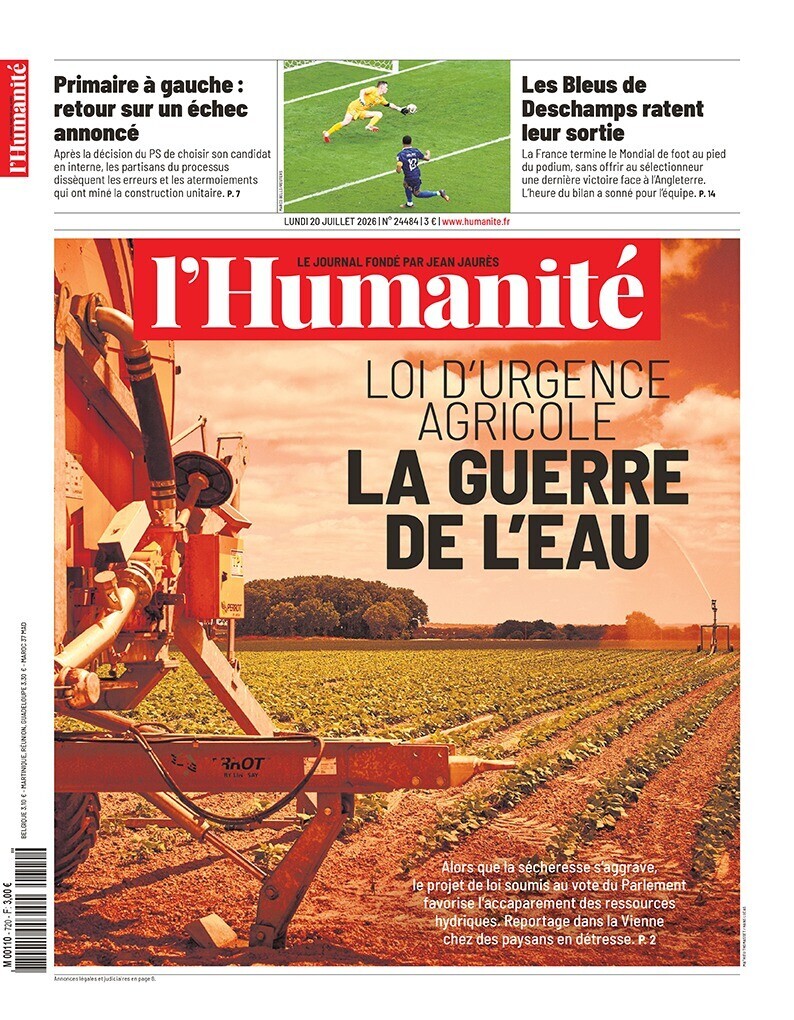
France is facing a systemic conflict over water rights as the government implements agricultural emergency laws to manage dwindling resources amid intensifying droughts. The struggle, often described as a “water war,” pits industrial farming interests against environmental protections and the needs of local municipalities, as the state attempts to balance food security with ecological preservation.
At the center of the dispute is the tension between the Loi d’urgence agricole (Agricultural Emergency Law) and the growing necessity for water sobriety. According to data from Météo-France, the country has seen a marked increase in the frequency and intensity of summer droughts, leading to stricter administrative controls on irrigation and the contentious debate over the creation of new reservoirs, known as bassines.
The conflict manifests as a clash of priorities: farmers argue that without massive water storage infrastructure, French agriculture will collapse under climate stress. Conversely, environmental groups and some local governments argue that these reservoirs deplete aquifers and accelerate the degradation of river ecosystems. This struggle is no longer just about farming; it is a broader economic and political battle over who owns and controls a finite natural resource.
The Conflict Over Agricultural Reservoirs and Groundwater
The push for “bassines” (large-scale water storage basins) has become the primary flashpoint in the French countryside. These structures are designed to collect rainwater and surface water during winter and spring for use during summer droughts. However, the French Ministry for Ecological Transition has faced criticism over the legality and environmental impact of these projects, as many rely on pumping water from groundwater tables to fill the basins—a practice critics say is unsustainable.
Agricultural unions argue that these reservoirs are the only way to maintain crop yields in a warming climate. They contend that the current regulatory framework is too rigid and fails to account for the volatility of precipitation. This has led to a surge in “wild” or unauthorized reservoirs, where farmers bypass administrative hurdles to ensure their livelihoods, creating a legal gray zone that the state is now struggling to regulate.
Environmentalists point to the “drying up” of small streams and the lowering of water tables as direct consequences of this infrastructure. The conflict is exacerbated by the fact that water rights in France are often managed through a complex web of local prefectures and regional agencies, leading to inconsistent enforcement of water-saving mandates.
Legal Frameworks and the Agricultural Emergency Law
The Loi d’urgence agricole aims to provide a safety net for farmers facing climate-driven losses, but it also introduces stringent requirements for water management. The law seeks to incentivize a transition toward “agroecology”—reducing the reliance on water-heavy crops and promoting soil health to retain moisture. However, the transition is slow, and the immediate financial pressure on farmers often outweighs long-term ecological goals.
Legal challenges have mounted against the state’s handling of water permits. In several regions, administrative courts have suspended the construction of reservoirs after finding that the environmental impact assessments were insufficient. These court rulings highlight a growing judicial trend toward prioritizing the “precautionary principle” over immediate agricultural productivity.
The government’s strategy involves a mix of subsidies for water-efficient technology, such as drip irrigation, and the implementation of “water sobriety” plans. Yet, the efficacy of these measures is debated. Critics argue that subsidies for efficiency often lead to “rebound effects,” where farmers use the saved water to expand their cultivated areas rather than leaving it in the ground.
Socio-Economic Impacts on Rural Communities
The “water war” is not limited to the fields; it has seeped into the social fabric of rural France. Tensions are rising between farmers and the residents of small villages who find their drinking water wells running dry. This competition for the aquifer is creating a divide between those who view water as a commercial input for production and those who view it as a fundamental human right and a public good.
Economic volatility is also a factor. As water becomes scarcer, the cost of insurance for crop failure has risen. This puts smaller family farms at a disadvantage compared to large industrial agricultural conglomerates that have the capital to build their own water infrastructure and navigate the legal complexities of the emergency laws.
Furthermore, the tourism sector, particularly in regions relying on vineyards and scenic landscapes, is feeling the pinch. The sight of dried-up riverbeds and scorched fields is beginning to impact the image of the French countryside, adding a layer of economic pressure to the agricultural crisis.
The Path Toward Water Sobriety
To resolve these conflicts, the French government is pushing for a comprehensive “Plan Eau” (Water Plan), which aims to reduce water withdrawals across all sectors by 10% by 2030. This plan targets not only agriculture but also industrial cooling and urban consumption. The goal is to move toward a “circular water economy” where wastewater is treated and reused for irrigation.
The success of this transition depends on the ability of the state to enforce regulations without alienating the agricultural sector. This requires a shift in the French agricultural model, moving away from water-intensive monocultures toward crops that are better adapted to a Mediterranean-style climate, which is steadily creeping northward across the country.
The ongoing struggle reflects a global trend where water is becoming the most contested commodity of the 21st century. In France, the resolution of the “water war” will likely serve as a blueprint for other European nations facing similar climatic shifts and the difficult task of balancing food sovereignty with planetary boundaries.
The next critical checkpoint for water policy will be the upcoming regional reviews of water agency plans (SDAGE), where new quotas and restrictions for the next cycle of water management will be debated and codified. These reviews will determine the legal ceiling for water extraction in the most affected basins.
We invite readers to share their perspectives on water management and agricultural sustainability in the comments below.
Worth a look