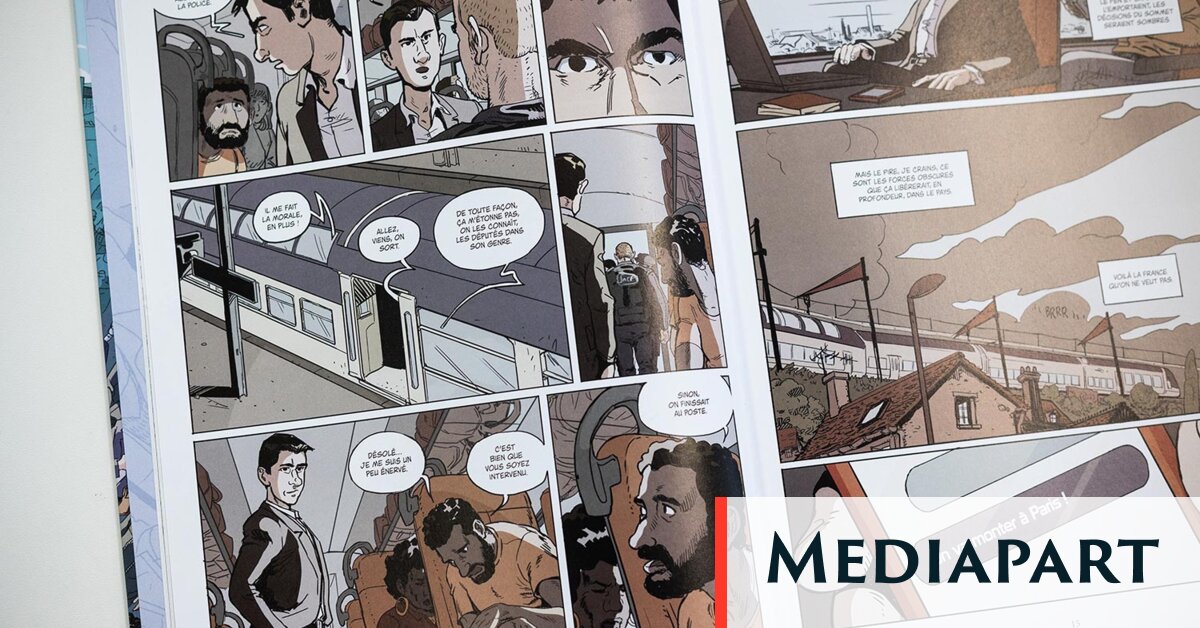
François Ruffin, the French deputy and former journalist known for his populist approach to politics, is once again at the center of a heated debate regarding the intersection of social activism and political ambition. As France begins to navigate the complex ideological landscape leading toward the 2027 presidential election, Ruffin has utilized a new medium—a comic book—to articulate his vision of struggle and solidarity. However, the release has sparked a critical conversation about the nature of anti-racism and the risk of the “savior complex” in modern political discourse.
For a global audience, Ruffin represents a specific brand of French leftism: one that blends grassroots filmmaking, investigative journalism, and a deep-seated commitment to the “invisible” working class. From his acclaimed documentary Merci Patron! to his role in the National Assembly, Ruffin has built his career on challenging the establishment by amplifying the voices of the marginalized. Yet, his latest foray into graphic storytelling has invited scrutiny over whether his methods empower the oppressed or center the activist.
The tension arises from a fundamental disagreement over the execution of anti-racist advocacy. While Ruffin frames his work as an effort to expose systemic inequality and bridge the gap between different social strata, critics suggest that the narrative structure of his work occasionally slides into a “savior” dynamic. This critique posits that the focus shifts from the agency of the marginalized communities to the role of the external advocate who “rescues” or “reveals” their plight to the wider world.
This ideological clash is not occurring in a vacuum. It’s inextricably linked to Ruffin’s positioning for the 2027 presidential race. By blending cultural production with regional campaigning, Ruffin is attempting to carve out a distinct political space within a fragmented French Left that is still struggling to find a unified voice and a singular leader capable of challenging the centrist and right-wing blocs.
The Ideological Divide: Anti-Racism vs. The Savior Complex
The core of the current controversy revolves around the distinction between genuine anti-racist solidarity and what sociologists and political critics call the “savior complex” (or syndrome du sauveur). In the context of Ruffin’s recent comic book, the debate centers on how marginalized figures are portrayed and who is credited with the impetus for change.
True anti-racism, according to its proponents, requires the dismantling of power structures and the centering of the voices and leadership of people of color. The “savior complex,” by contrast, occurs when a person from a dominant social group perceives themselves as the primary catalyst for the liberation of a marginalized group. Critics argue that when a political figure uses the struggles of others as a backdrop for their own narrative of heroism or moral clarity, they risk reinforcing the very hierarchies they claim to oppose.
In the case of Ruffin, this critique targets the perceived gap between the intent of his work and its impact. While his goal is to highlight the systemic racism and economic hardship faced by residents of the banlieues (suburbs) and industrial heartlands, some observers argue that the storytelling often positions Ruffin as the indispensable intermediary. This dynamic creates a tension between the desire to bring visibility to injustice and the danger of appropriating that struggle for political capital.
This debate reflects a broader shift within the global left, where the concept of “intersectionality” has pushed advocates to move beyond traditional class-based analysis. For Ruffin, who has long championed the “working class” as the primary political subject, the challenge lies in integrating racial and ethnic struggles without falling into the trap of paternalism. The controversy over his comic book serves as a litmus test for whether his brand of populism can evolve to meet these modern expectations of equity and agency.
Grassroots Strategy: From Caen to Valenciennes
While the intellectual debate rages in Paris, Ruffin has remained focused on the “terrain”—the physical ground of French electoral politics. His recent itinerary, including appearances in Caen and Valenciennes, underscores a deliberate strategy to bypass traditional media filters and engage directly with voters in regions that have felt abandoned by the political center.
In Caen, Normandy, Ruffin’s visit to sign his comic book was more than a literary event. it was a political mobilization. By using a graphic novel as a vehicle for engagement, Ruffin is attempting to reach a younger, more visually oriented demographic and those who may be alienated by dense political manifestos. These “dédicaces” (signing sessions) function as low-pressure entry points for citizens to engage with his political ideas, allowing him to gauge the mood of the electorate in real-time.
The choice of Valenciennes, a city in the Nord department, is particularly strategic. The region has a deep industrial history and has become a battleground between the far-left and the far-right. By positioning himself in Valenciennes, Ruffin is speaking to the “forgotten” workers—those affected by the decline of the textile and automotive industries. His presence there is a signal that his 2027 ambitions are rooted in the industrial periphery rather than the salons of the capital.
This “itinerant” style of campaigning is a hallmark of Ruffin’s approach. He views the act of traveling, listening, and documenting as a form of political legitimacy. By associating his image with the daily struggles of people in the provinces, he seeks to contrast himself with “technocratic” candidates who rely on polling data and televised debates. For Ruffin, the comic book is not just a product, but a tool for conversation and a symbol of his commitment to storytelling as a political act.
The 2027 Puzzle: A Fragmented Left
Ruffin’s individual efforts are unfolding against a backdrop of significant instability within the French Left. The coalition known as the Nouveau Front Populaire (NFP) has attempted to unify various factions—including La France Insoumise (LFI), the Socialist Party, the Greens, and the Communist Party—but internal frictions remain high.
The primary challenge for the Left heading into 2027 is the “candidacy headache.” The movement is torn between two competing strategies: supporting a single, unified candidate to avoid splitting the vote, or allowing multiple strong personalities to run to maximize the visibility of different ideological currents. Ruffin occupies a complex position in this dynamic. While he is aligned with the more radical wing of the left, his personal brand is distinct from the leadership of LFI.
The search for a “political space” is the defining struggle for Ruffin and his contemporaries. They are attempting to build a bridge between the urban, educated activists of the “metropolises” and the rural or semi-urban working class. This is a difficult needle to thread; the rhetoric that appeals to a student in Paris often clashes with the concerns of a factory worker in the North. Ruffin’s use of art and grassroots touring is a direct attempt to solve this equation, using a common language of struggle to unite disparate groups.
the 2027 election will be a test of whether the Left can move beyond “protest politics” and present a credible, governable alternative. The criticism of Ruffin’s “savior complex” is, in some ways, a proxy for a larger question: can the Left transition from being the “voice of the voiceless” to a partner in a genuine, bottom-up democratic transformation? If the movement remains centered on charismatic individuals rather than institutionalized power-sharing, it risks repeating the failures of previous cycles.
Who is François Ruffin? A Profile in Populism
To understand the current friction, it is necessary to examine the trajectory of François Ruffin. He did not enter politics through the traditional route of law school or party apprenticeship. Instead, he emerged as a journalist and filmmaker, most notably through the creation of the satirical newspaper Fakir, based in Amiens.
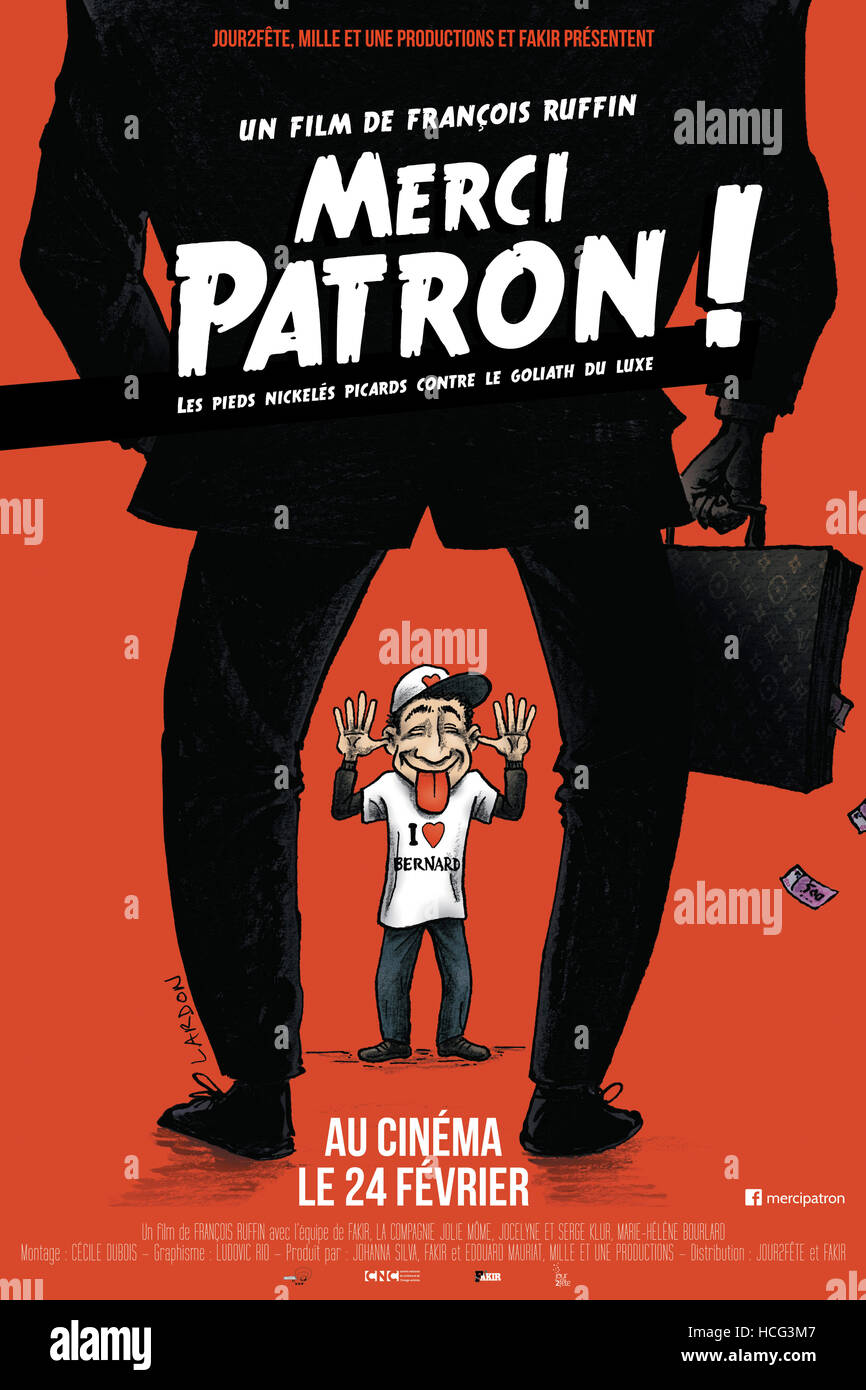
Ruffin gained international attention with the 2016 documentary Merci Patron!, which followed his attempts to convince the CEO of Auchan, one of France’s largest retailers, to meet with laid-off workers. The film’s success lay in its blend of humor, tenacity, and raw social commentary, establishing Ruffin as a champion of the “little people” against the corporate elite. This persona—the scrappy underdog taking on the giant—remains the cornerstone of his political identity.
Since being elected as a deputy to the National Assembly, Ruffin has continued to use his platform for high-visibility activism. He is known for his theatrical style in parliament and his ability to use social media to bypass traditional journalistic gatekeepers. However, this same style is what invites the “savior” critique. The line between “amplifying a voice” and “becoming the voice” is thin, and Ruffin often walks it with a confidence that some find inspiring and others find problematic.
Despite the criticisms, Ruffin’s influence remains significant. He represents a shift toward a more emotive, narrative-driven form of politics that resonates with a population disillusioned by traditional political discourse. Whether he is signing a book in Caen or debating in the Assembly, his goal is to transform the political process into a shared story of resistance.
Key Takeaways: The Ruffin Controversy
- The Core Conflict: Critics argue that François Ruffin’s latest comic book confuses anti-racist solidarity with a “savior complex,” centering the advocate rather than the marginalized.
- Strategic Campaigning: Visits to Caen and Valenciennes demonstrate a grassroots strategy to engage the industrial working class and younger voters ahead of 2027.
- Left-Wing Fragmentation: Ruffin’s ambitions are complicated by the struggle of the French Left (NFP) to find a unified candidate and a cohesive ideological space.
- Methodology: Ruffin continues to use art, film, and “terrain” work to build political legitimacy outside of traditional party structures.
The next critical checkpoint for Ruffin and the broader French Left will be the internal negotiations regarding the 2027 primary process and the potential for a unified NFP candidacy. As the election draws closer, the tension between individual charisma and collective leadership will likely intensify, and Ruffin’s ability to navigate the “savior” critique will be essential to his success.
What do you think about the role of art in political campaigning? Does the “savior complex” hinder genuine social progress, or is a visible champion necessary for systemic change? Share your thoughts in the comments below.
Keep reading