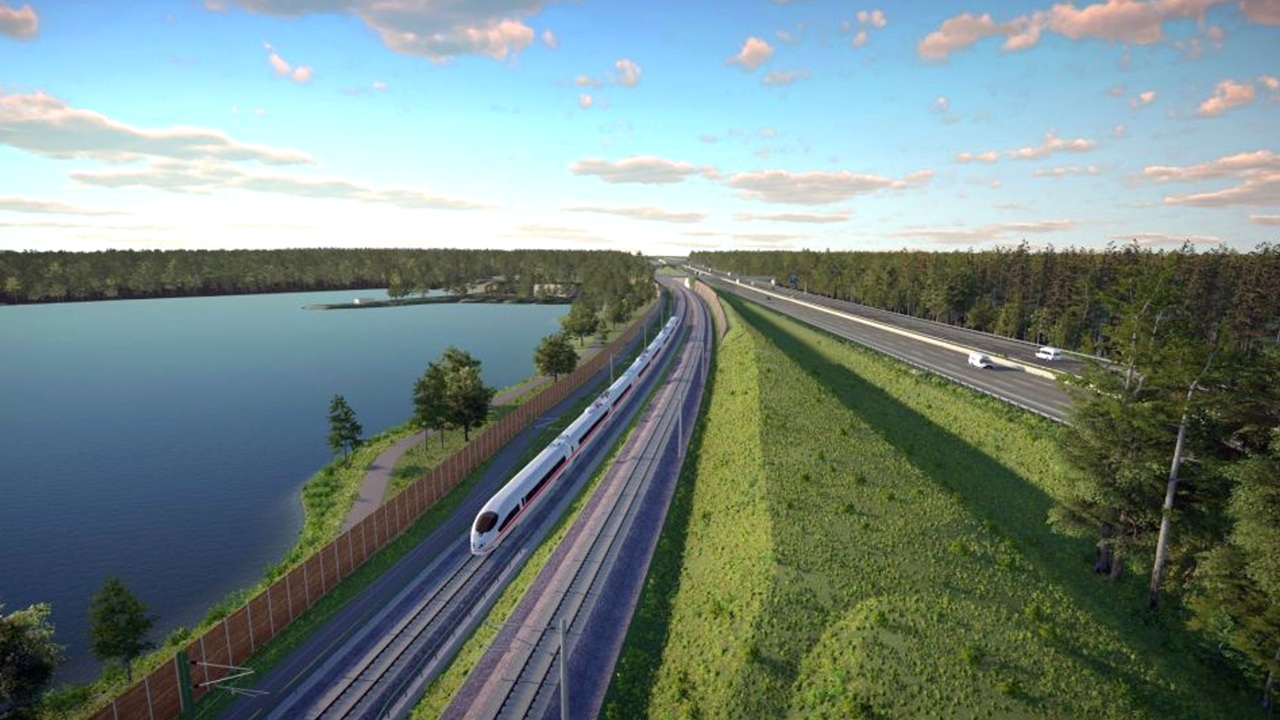
The planning for the new high-speed rail line connecting Frankfurt am Main and Mannheim has reached a significant procedural milestone, moving the project closer to construction. Deutsche Bahn confirmed that the planning approval documents for the “Neubaustrecke” (new line) have been finalized for submission, a critical step in addressing the high volume of traffic on one of Germany’s most congested rail corridors. This infrastructure project aims to significantly reduce travel times for both long-distance passenger services and freight transport between the two major economic hubs.
The Frankfurt–Mannheim high-speed rail project is a core component of the “Deutschland-Takt” initiative, a federal strategy designed to synchronize train schedules across the national network. According to the Federal Ministry for Digital and Transport, the expansion is intended to decouple long-distance rail traffic from regional and local services, thereby increasing overall network reliability. By creating a dedicated track for high-speed trains, the project seeks to alleviate bottlenecks that have historically caused delays throughout the Rhine-Main region.
Project Scope and Objectives
The proposed route spans approximately 50 kilometers and is designed to accommodate train speeds of up to 300 kilometers per hour. The primary goal is to shift long-distance traffic onto the new line, which will free up capacity on the existing Riedbahn and Main-Neckar lines for increased regional service and freight logistics. The official project portal managed by Deutsche Bahn notes that the current infrastructure has reached its performance limit, with the Frankfurt–Mannheim link serving as a vital artery for the European rail network.

Beyond speed improvements, the project addresses the long-standing issue of capacity constraints. The expansion is expected to allow for more frequent regional train connections, directly benefiting daily commuters in the metropolitan regions of Frankfurt, Darmstadt, and Mannheim. The planning process involves extensive environmental assessments, noise protection measures, and community consultation, as the route traverses densely populated areas and sensitive landscape zones.
Planning and Regulatory Milestones
The progression of the planning approval process—known in Germany as “Planfeststellungsverfahren”—is a legally rigorous path. Deutsche Bahn must demonstrate that the project adheres to strict environmental laws and urban planning regulations. The filing of these documents allows regional authorities and affected residents to review the plans, submit objections, and participate in formal hearings. This transparency is mandated by the German Administrative Procedure Act (Verwaltungsverfahrensgesetz), which ensures that public interests are weighed against infrastructure requirements.

The Federal Railway Authority (Eisenbahn-Bundesamt) oversees this approval process. Their role is to ensure that the technical design, safety standards, and environmental mitigation strategies meet federal requirements before any ground is broken. The current phase follows years of preliminary studies and route selection debates, which were necessary to navigate the complex geography of the Rhine-Main valley.
Impact on Commuters and Logistics
For the average passenger, the completion of this link promises more than just shorter trips. It represents a shift toward a more robust national rail backbone. By separating high-speed ICE (InterCity Express) trains from slower regional trains, the rail operator can implement a more stable timetable that is less susceptible to cascading delays. This is particularly important for the Frankfurt hub, which functions as a central node for both domestic and international rail travel.
The logistics sector also stands to gain. Freight trains, which currently compete for slots on the same tracks as passenger trains, will benefit from the increased capacity on the older, conventional lines once long-distance traffic is diverted. This is essential for maintaining the efficiency of the Rhine-Main-Neckar economic region, which relies heavily on interconnected transport networks. According to data from the Federal Statistical Office (Destatis), rail freight volume remains a critical metric for German industrial health, and infrastructure bottlenecks are frequently cited as a primary challenge for the logistics industry.
Next Steps in the Process
The project is now subject to the formal review period, during which citizens, environmental organizations, and local municipalities can voice their concerns. Following this consultation phase, the Federal Railway Authority will issue a planning approval decision (Planfeststellungsbeschluss). Only after this legal document is finalized can the project move toward the tendering phase and eventual construction. Further updates regarding public disclosure dates and information events are expected to be published on the official project website, where stakeholders can track the timeline for hearings and official notifications.

As the project advances, the focus will remain on balancing the urgent need for transport capacity with the regulatory requirements of modern infrastructure development. Readers interested in following the progress of the Frankfurt–Mannheim rail expansion are encouraged to monitor the official project dialogue portal for upcoming public participation opportunities and technical documentation releases.