
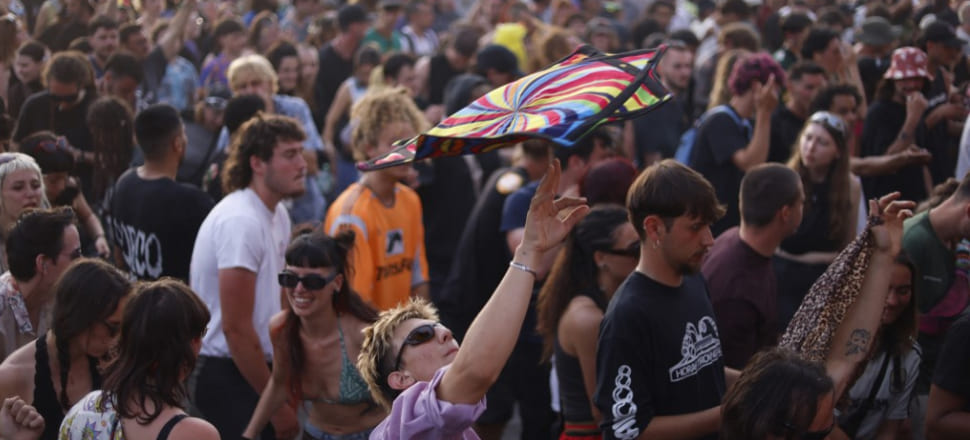
The intersection of public broadcasting and subcultural reporting has recently come under scrutiny following the editorial handling of a “free party” event in the Cher department of France. Franceinfo, a cornerstone of French public service media, has found itself at the center of a debate after listeners voiced significant concerns regarding the framing and tone used to describe the gathering.
The controversy centers on the “editorial treatment”—the specific journalistic choices regarding angle, language, and narrative structure—employed by the broadcaster. While the event itself was a manifestation of the long-standing European rave culture, the subsequent public reaction highlights a growing tension between traditional news reporting and the lived experiences of marginalized social movements.
As a public service entity, Franceinfo is tasked with providing balanced, objective coverage that reflects the diversity of the French population. However, the reactions from the audience suggest a perceived gap between this mandate and the actual delivery of the story, prompting a wider conversation about how public media navigates the reporting of illegal or semi-legal cultural gatherings.
The Controversy Over Franceinfo’s Coverage in Cher
The dispute began after Franceinfo reported on a free party—an unauthorized open-air electronic music event—located in the Cher department. In France, these events, often referred to as “teufs,” are frequently organized by collectives and held in remote locations to avoid police intervention, creating a natural friction between organizers and local authorities.
Following the broadcast, a wave of listener feedback indicated that the editorial approach was problematic. The “interrogations” raised by the audience focused on whether the reporting relied on stereotypes of the rave community or failed to provide necessary context regarding the motivations and internal organization of the free party movement. When a public broadcaster is perceived as adopting a biased lens, it often triggers a critique of the institutional power dynamics at play.
The listeners’ reactions were not merely complaints about a single story but functioned as a critique of the systemic way “free parties” are framed in mainstream media: often as nuisances, security threats, or sites of chaos, rather than as cultural or social expressions. This tension is particularly acute for Franceinfo, which serves as a primary source of news for millions of citizens and is held to a high standard of journalistic neutrality.
Understanding the “Free Party” Culture in France
To understand why the editorial treatment of the Cher event sparked such a reaction, We see necessary to examine the sociology of the free party movement in France. Emerging from the UK’s “second summer of love” in the late 1980s, the French “teuf” scene developed its own distinct identity, characterized by a philosophy of autonomy, non-commercialism, and a rejection of institutional control.
Free parties are typically characterized by several core elements:
- Non-Profit Motivation: Unlike commercial festivals, free parties are often free or operate on a “donation” basis to cover the cost of sound equipment and transport.
- Nomadic Nature: To evade the “Prefecture” (local government administration), organizers keep locations secret until the last moment, often using encrypted messaging.
- DIY Ethics: The “sound systems” are often custom-built, and the events emphasize a community-led approach to security and waste management.
From a public health and safety perspective, these events present a complex challenge. While they often foster a strong sense of community and mental release, their unauthorized nature means they may lack professional medical standby teams or regulated water supplies. This duality—cultural expression versus public risk—is where journalistic framing becomes critical. If a report focuses exclusively on the illegality or the police raid, it ignores the cultural significance; if it ignores the risks, it fails its duty to public safety.
Public Broadcasting and the Challenge of Editorial Neutrality
The backlash against Franceinfo underscores the precarious balance public broadcasters must maintain. Editorial neutrality is not simply the absence of opinion, but the inclusion of all relevant perspectives. In the case of the Cher free party, the “editorial treatment” was questioned because it may have lacked this multidimensionality.
In the field of media ethics, “framing” refers to the way a story is packaged to encourage a specific interpretation. For instance, using words like “invasion” or “chaos” to describe a rave frames the event as a security issue. Conversely, using terms like “gathering” or “cultural event” frames it as a social phenomenon. When listeners “interrogate” a broadcaster, they are essentially asking: Who is this story being told for, and whose voice is being silenced?
For a global audience, this situation mirrors similar struggles in other democracies where public media is accused of mirroring the biases of the state or the ruling class. The expectation is that a public broadcaster should act as a bridge between the state’s legal requirements and the citizen’s right to cultural expression.
Key Takeaways on the Franceinfo Editorial Dispute
- The Trigger: Listeners questioned the framing of a free party event in the Cher department.
- The Core Issue: A perceived lack of nuance and the possible use of stereotypes in the reporting of rave culture.
- The Institutional Stakes: As a public service, Franceinfo faces pressure to balance legal facts (unauthorized events) with cultural context.
- The Broader Trend: An increasing demand from audiences for “inclusive journalism” that avoids criminalizing subcultures.
The Impact of Listener Feedback on Journalistic Standards
The fact that listeners felt empowered to question the editorial treatment of the story is, in itself, a sign of a healthy democratic feedback loop. In the modern media landscape, the relationship between the broadcaster and the audience has shifted from a one-way transmission to a dialogue. Public media outlets are now more accountable than ever to the communities they cover.

When an audience challenges the “editorial treatment” of a story, it forces newsrooms to conduct internal reviews. This process typically involves examining the source diversity of the story: Did the reporter interview only the police and the mayor, or did they also speak with the party-goers and the organizers? A failure to include the “subject” of the story in the narrative is often the primary cause of such controversies.
this event highlights the need for specialized reporting on subcultures. Rather than treating a free party as a “police blotter” item, journalists are increasingly encouraged to apply a sociological lens, exploring why these movements persist and what they represent in terms of youth alienation or the desire for communal spaces in an increasingly digitized world.
Looking Ahead: Media Accountability in the Digital Age
The reaction to the Cher free party coverage is likely to be a catalyst for further discussions within French public media regarding the representation of “marginal” groups. As the line between news and social commentary continues to blur, the precision of language becomes a tool for either empathy or alienation.

For the listeners of Franceinfo, the goal is not necessarily to have “pro-rave” coverage, but to have accurate coverage that recognizes the complexity of the event. The “interrogations” serve as a reminder that the audience is no longer a passive consumer of news but an active participant in the definition of journalistic truth.
The next step in this process will be to see if Franceinfo issues a formal clarification or adjusts its editorial guidelines for covering similar events in the future. Such a move would signal a commitment to the evolving standards of public service journalism, where accountability to the audience is as important as the reporting of the facts.
World Today Journal will continue to monitor updates regarding Franceinfo’s response to these listener concerns and any subsequent changes to their editorial policy on cultural reporting. We invite our readers to share their thoughts on the balance between legal reporting and cultural nuance in the comments below.