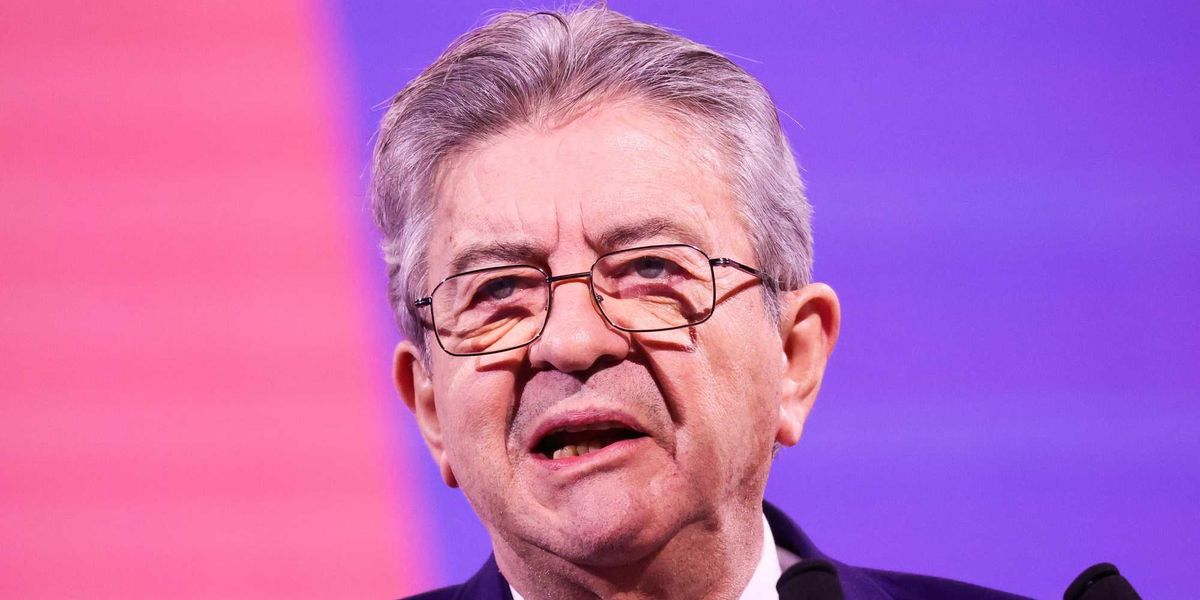
Sofia, Bulgaria – As France braces for potential political upheaval following President Emmanuel Macron’s impending departure in 2027, the figure of Jean-Luc Mélenchon is increasingly prominent, yet remains deeply divisive. While recent municipal election results suggest a resurgence of support for the left, particularly in urban centers, a significant lack of trust within the broader left-wing coalition threatens to undermine any unified front against the far-right National Rally led by Jordan Bardella. This complex dynamic is shaping the political landscape and raising questions about the future direction of French politics.
Mélenchon, leader of the France Unbowed (La France Insoumise) party, has consistently positioned himself as a champion of the working class and a vocal critic of neoliberal policies. His strong showing in past presidential elections, including a close third-place finish in 2022, demonstrated a significant appetite for an alternative to both Macron’s centrist agenda and the nationalist platform of Marine Le Pen. However, recent events, particularly the death of a far-right activist in Lyon, have brought renewed scrutiny to Mélenchon’s rhetoric and its potential impact on political violence. This scrutiny comes at a critical juncture, as France prepares for municipal elections and looks ahead to the 2027 presidential race.
Municipal Election Results Signal Leftward Shift, But Divisions Remain
Recent municipal elections have revealed a complex picture of French political sentiment. While the National Rally has made gains, particularly in certain regions, the left, spearheaded by France Unbowed, has demonstrated resilience, especially in major cities. According to Sky TG24, the left has maintained a strong position in Paris, signaling continued support for progressive policies in urban areas. However, these gains are tempered by the persistent fragmentation within the left-wing bloc. The ability of parties like France Unbowed to forge effective alliances with other left-leaning groups remains a significant challenge.
The low voter turnout in these municipal elections, as reported by Euronews, also raises concerns about voter engagement and the potential for further political polarization. The abstention rate suggests a growing disillusionment with traditional political institutions and a sense of alienation among certain segments of the population.
The Deranque Case and the Rise of Anti-Mélenchon Sentiment
The death of Quentin Deranque, a far-right activist, in Lyon earlier this year has grow a focal point of political contention. While Mélenchon and France Unbowed have vehemently denied any responsibility for the incident, the National Rally has seized upon the tragedy to portray Mélenchon as a dangerous demagogue. As POLITICO reports, Jordan Bardella, President of the National Rally, has called for a “cordon sanitaire” – an exclusion pact – against France Unbowed, effectively isolating the party from mainstream political discourse. This strategy aims to capitalize on public outrage and position the National Rally as the defender of law, and order.
The controversy surrounding the Deranque case has prompted calls from centrist figures, including President Macron and Prime Minister Sébastien Lecornu, for France Unbowed to “clean house” and moderate its rhetoric. However, critics argue that this pressure is politically motivated and serves to legitimize the far-right’s agenda. Dominique de Villepin, a former conservative Prime Minister, has suggested that the “demonization” of Mélenchon’s party is a deliberate attempt to bolster the National Rally’s electoral prospects. A recent poll conducted by Odoxa, as cited by POLITICO, found that only 11 percent of respondents believed Mélenchon’s response to the incident was appropriate, indicating a significant erosion of public trust.
Mélenchon’s Position on Macron and Le Pen
Despite the current challenges, Mélenchon continues to articulate a clear distinction between Emmanuel Macron and Marine Le Pen. In a letter to his supporters in April 2022, during the presidential election, Mélenchon emphasized that Le Pen represented a greater danger to French society, while stopping short of explicitly endorsing Macron. Radio France reported that Mélenchon allowed his supporters the freedom to choose their own course of action – voting for Macron, abstaining, or casting a blank ballot – reflecting a reluctance to impose a unified voting strategy. This position, while respecting individual conscience, contributed to a sense of division within the left, with some voters choosing to abstain or even support Le Pen in protest.
This reluctance to directly endorse Macron stems from Mélenchon’s long-standing critique of the President’s pro-business policies and perceived lack of commitment to social justice. He views Macron as a representative of the establishment and a continuation of the neoliberal agenda that has exacerbated inequality and social unrest in France. However, Mélenchon consistently maintains that Le Pen’s far-right ideology poses a fundamental threat to democratic values and social cohesion.
The Challenge of Building a Unified Left
The core issue facing the French left is its chronic inability to overcome internal divisions and present a united front. The fragmentation of the left-wing vote has historically benefited the National Rally, allowing Le Pen to capitalize on the dissatisfaction of voters who sense unrepresented by mainstream political parties. Recent agreements between France Unbowed and other left-leaning groups in cities like Limoges and Lyon, as reported by Il Manifesto, represent a tentative step towards greater cooperation, but significant challenges remain, particularly in cities like Marseille where tensions are high.
The lack of trust within the left is further compounded by ideological differences and personal rivalries. Some within the Socialist Party and the Green Party view Mélenchon’s radical proposals and confrontational style as detrimental to the broader left-wing cause. Overcoming these obstacles will require a concerted effort to build bridges, forge compromises, and prioritize common goals.
Looking Ahead to 2027
As France looks towards the 2027 presidential election, the political landscape remains highly uncertain. The departure of Emmanuel Macron will create a power vacuum, and the competition for leadership will be fierce. The National Rally, under Jordan Bardella, is well-positioned to capitalize on the growing discontent and present itself as a viable alternative to the established political order. However, the left, if it can overcome its internal divisions and present a unified candidate, could still pose a significant challenge.
The ability of Jean-Luc Mélenchon to regain the trust of the broader left and articulate a compelling vision for the future will be crucial in determining the outcome of the 2027 election. His recent efforts to distance himself from the controversy surrounding the Deranque case and emphasize the dangers of the far-right suggest a recognition of the need to broaden his appeal. The coming months will be critical in shaping the political narrative and defining the future direction of France.
The next key event to watch will be the further development of alliances and candidate selections within the left-wing parties in preparation for the 2027 presidential election. Continued monitoring of public opinion polls and the evolving political rhetoric of key figures will also be essential.
What are your thoughts on the future of French politics? Share your comments below and let us know what you think!
Related reading