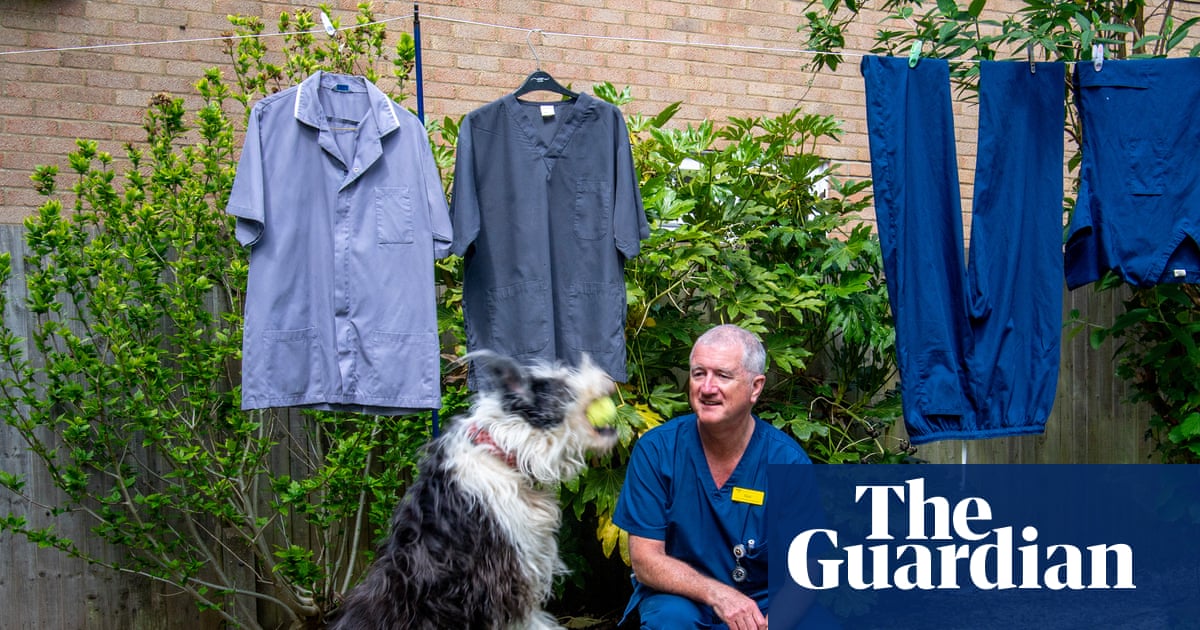
At 60, Nick Dowling—who spent decades in engineering and manufacturing—is retraining as a nursing associate in the UK, earning £14 an hour for 12-hour shifts. His decision reflects a broader trend of experienced professionals abandoning traditional careers for healthcare roles, often at lower pay and higher physical demand. Experts say his story highlights both the unmet needs of aging workforces and the systemic barriers to midlife career transitions.
Dowling’s transformation began during the COVID-19 pandemic, when he observed firsthand the critical role of nurses and healthcare support staff. “I realized I wanted to be part of something more meaningful,” he told a local newspaper. Now, as he nears qualification as a registered nursing associate—a role introduced in the UK in 2017 to address staffing shortages—his journey raises questions about the feasibility of late-career pivots in an economy where youth is often prioritized over experience.
According to the UK’s Office for National Statistics, nearly 600,000 people aged 50+ work in healthcare and social care roles—up 12% since 2019. Yet Dowling’s pay cut—from a six-figure salary in consultancy to £14/hour—mirrors a broader trend: the Trade Union Congress (TUC) reports workers over 60 earn £6,000 less annually than their younger counterparts in equivalent roles. So why are professionals like Dowling making the switch?
Why Are Experienced Professionals Switching to Nursing at 60?
Dowling’s case aligns with three key drivers identified by Ipsos research on midlife career changes:

- Purpose over profit: 68% of respondents aged 50+ cited “meaningful work” as a priority, even if it meant lower earnings.
- Flexibility: Healthcare roles often offer part-time or shift-based options, appealing to those seeking work-life balance.
- Skills transferability: Engineering and manufacturing professionals bring analytical and technical skills highly valued in patient care.
The UK’s Nursing Associate program, launched to bridge the 50,000-nurse shortage, has attracted 12,000 applicants since 2017—including 20% over age 50. However, critics warn of exploitation risks, with some employers using such roles to avoid paying higher wages for qualified nurses.
What Does the Research Say About Late-Career Pivots?
A 2023 study in The Gerontologist found that workers over 50 who switch careers face three major hurdles:

- Financial barriers: Retraining costs (like Dowling’s £3,000 apprenticeship fee) and lost income during transitions deter many. The UK’s Advanced Learner Loan scheme covers some costs but requires repayment.
- Age bias: A 2022 Age UK report found 40% of employers admit to favoring younger hires for “digital” roles—ironic given Dowling’s engineering background.
- Physical demands: Healthcare roles often require mobility and stamina, yet ONS data shows 30% of UK workers over 60 report chronic conditions.
Despite these challenges, the Chartered Institute of Personnel and Development (CIPD) notes that experienced workers bring “invaluable institutional knowledge” to healthcare. Dowling’s psychiatric unit placements, for example, leverage his decades of crisis management in manufacturing—skills directly applicable to mental health care.
How Does Dowling’s Pay Compare to Other Career Switchers?
Dowling’s £14/hour wage (~£28,000/year) is typical for UK nursing associates, according to the Nursing Times. Here’s how it stacks up against other midlife pivots:
| Career Switch | Average UK Pay (2024) | Key Barrier |
|---|---|---|
| Nursing Associate | £28,000–£35,000 | Physical demand, shift work |
| Teaching Assistant | £20,000–£28,000 | DBS checks, training costs |
| Social Worker | £30,000–£40,000 | Emotional toll, high caseloads |
| Retail Management | £25,000–£32,000 | Lower prestige, irregular hours |
Source: UK Office for National Statistics (2024), CIPD wage surveys
What Happens Next for Dowling—and Other Late Bloomers?
Dowling is scheduled to qualify as a registered nursing associate in autumn 2024, after completing 2,300 supervised hours across general practice, psychiatric care, and urgent treatment centers. His next steps include:
- Applying for permanent roles in NHS trusts, where demand for nursing associates has surged 40% since 2022.
- Exploring specializations in mental health nursing, where his manufacturing crisis-management experience is highly transferable.
- Advocating for policy changes to support midlife career transitions, including wage subsidies for experienced workers in healthcare.
For others considering similar pivots, experts recommend:
- Leveraging Skills for Care’s progression framework to map existing skills to healthcare roles.
- Seeking Age UK’s career transition support, which offers mentoring for over-50s.
- Negotiating flexible contracts to mitigate physical strain during training.
Why This Story Matters Beyond One Man’s Journey
Dowling’s story is microcosm of a global workforce shift. In the US, 40% of workers over 55 say they’d retrain for a “purpose-driven” career—yet only 8% do, citing financial risks. Meanwhile, the OECD projects that by 2030, 30% of the global workforce will be over 55, demanding new policies to retain their skills.
The UK’s nursing associate program offers a model for balancing experience with economic necessity—but its success hinges on addressing two critical gaps:
- Wage parity: While Dowling’s pay is below his consultancy earnings, it’s 20% higher than the median for care workers, thanks to structured pay bands.
- Career ladders: Only 15% of nursing associates progress to registered nurse roles due to lack of funding for further qualifications.
As Dowling prepares to graduate, his journey underscores a question for aging workers worldwide: Is the cost of reinvention worth the reward—or are systemic barriers making midlife pivots a privilege, not a right?
Have you reinvented your career after 50? Share your story in the comments—or explore resources:
Next update: Monitoring UK Nursing and Midwifery Council (NMC) reports on nursing associate qualification rates (Q4 2024).
Dr. Helena Fischer is a physician and health journalist with 11+ years in medical journalism. She holds an MD from Charité – Universitätsmedizin Berlin and is a member of the European Association of Science Editors.
Keep reading