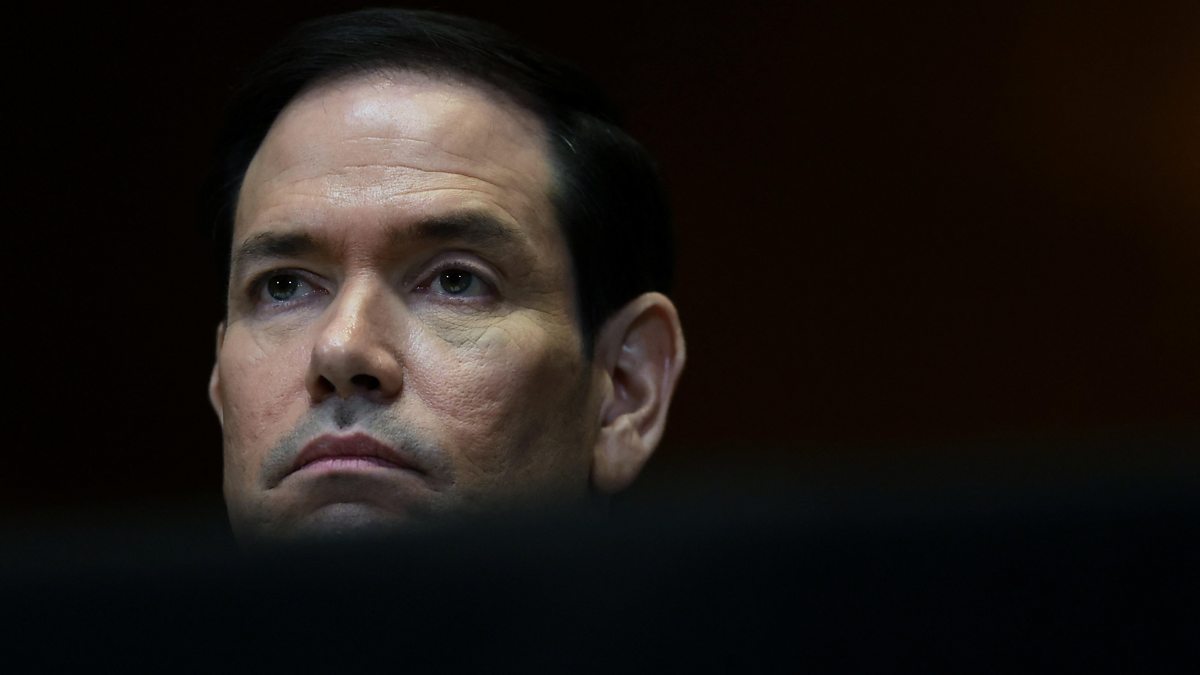
Marco Rubio, once a sharp critic of Donald Trump’s foreign policy, has become the architect of the administration’s international strategy—from Venezuela to Cuba—and is now positioned as a potential vice-presidential candidate in 2024. His transformation reflects a calculated shift toward aligning with Trump’s populist, interventionist worldview while leveraging his own hawkish credentials on Latin America and global security.
As the U.S. Secretary of State, Rubio has overseen policies that blend Trump’s transactional diplomacy with his own hardline stance on authoritarian regimes. Analysts describe his role as a bridge between Trump’s instinctive approach and the State Department’s institutional expertise, particularly in regions where Rubio has deep experience—Venezuela, Cuba, and Eastern Europe. Meanwhile, speculation about a Rubio-Vance ticket in 2024 has intensified, raising questions about whether his foreign policy influence will extend into a potential presidency.
This shift marks a dramatic reversal from Rubio’s 2016 presidential campaign, when he positioned himself as a foreign policy traditionalist critical of Trump’s isolationist rhetoric. Today, his alignment with Trump’s agenda—particularly on immigration, sanctions, and military engagement—has made him a key figure in shaping U.S. global strategy, even as critics question whether he has abandoned his earlier principles.
Key Dynamics Shaping Rubio’s Influence
- Policy Alignment: Rubio now supports Trump’s hardline stance on Venezuela and Cuba, reversing his earlier skepticism of the president’s approach.
- 2024 Speculation: Trump’s reported interest in a Rubio-Vance ticket could signal a GOP strategy to combine Rubio’s foreign policy expertise with Vance’s populist appeal.
- State Department Role: Rubio’s tenure has prioritized sanctions, military aid, and diplomatic pressure—key pillars of Trump’s “America First” foreign policy.
- Latin America Focus: His background as a Cuban-American senator has given him unique influence in shaping U.S. policy toward the region.
- Criticism vs. Pragmatism: Former allies accuse Rubio of compromising his principles, while supporters argue he has adapted to Trump’s realities without fully surrendering his hawkish instincts.
From Critic to Architect: How Rubio Repositioned Himself Under Trump
Marco Rubio’s political evolution under Donald Trump is one of the most striking reversals in modern U.S. politics. As a senator from Florida, Rubio was a vocal opponent of Trump’s 2016 campaign, calling him a “con man” and clashing with him on issues ranging from Russia to NATO funding. Yet by 2024, Rubio has not only survived as a trusted advisor but has become a linchpin in Trump’s foreign policy apparatus, particularly in Latin America.

His appointment as Secretary of State in 2023—following the resignation of Antony Blinken—was seen as a strategic move by Trump to consolidate control over diplomacy. Rubio’s background as a Cuban-American with deep ties to Florida’s exile community made him a natural fit for shaping U.S. policy toward Venezuela and Cuba, two priorities for Trump’s administration. According to The New York Times, Rubio’s confirmation was part of a broader effort to “streamline” foreign policy decision-making under Trump’s direct oversight.
One of Rubio’s earliest acts as Secretary of State was to expand sanctions on Venezuelan officials accused of drug trafficking, a move that aligned with Trump’s hardline stance on the Maduro regime. Similarly, Rubio has pushed for stricter enforcement of U.S. embargoes on Cuba, reversing earlier Trump administration rollbacks. These policies reflect Rubio’s long-standing opposition to communist regimes—a stance that now resonates with Trump’s base.
Venezuela and Cuba: Where Rubio’s Experience Meets Trump’s Agenda
Rubio’s influence in Latin America is rooted in his personal history. Born in Miami to Cuban exiles who fled Castro’s revolution, Rubio has spent decades advocating for a tougher U.S. approach to Cuba and Venezuela. As Secretary of State, he has leveraged this background to shape policies that combine his ideological convictions with Trump’s transactional diplomacy.
In Venezuela, Rubio has prioritized military and humanitarian aid to opposition groups, while also maintaining pressure on Nicolás Maduro’s government. According to the Council on Foreign Relations, Rubio’s approach has been more aggressive than Blinken’s, reflecting Trump’s preference for “maximum pressure” tactics. This aligns with Rubio’s 2016 campaign rhetoric, where he called for “regime change” in Venezuela—a position he has now translated into action.
On Cuba, Rubio has accused the Cuban government of human rights abuses and pushed for sanctions on officials involved in repression. His stance contrasts with earlier Trump administration efforts to ease restrictions, signaling a return to a harder line—a shift that has been welcomed by Cuban-American voters in Florida, a critical swing state for 2024.
The 2024 Factor: Could Rubio Become Trump’s VP?
Speculation about Rubio running as Trump’s vice-presidential candidate in 2024 has grown in recent months. Trump has publicly hinted at the possibility, praising Rubio’s work as Secretary of State and suggesting he could be a strong second-in-command. If confirmed, Rubio would bring unparalleled experience in foreign policy to a ticket that would otherwise lack deep international expertise.
Analysts at Brookings Institution argue that a Rubio-Vance ticket could signal a GOP strategy to combine Rubio’s hawkish foreign policy credentials with Vance’s populist appeal. However, critics warn that Rubio’s alignment with Trump’s policies—particularly on immigration and trade—could alienate moderates and independents. His record on issues like Ukraine aid and NATO funding remains a point of contention, even among Republicans.
Rubio’s potential VP run also raises questions about whether he will continue to advocate for his earlier foreign policy principles. During his 2016 campaign, he criticized Trump’s praise for Russian President Vladimir Putin, calling it “dangerous.” Yet under Trump, Rubio has largely avoided public clashes, focusing instead on executing policy. If he becomes VP, his ability to maintain independence from Trump’s whims will be closely watched.
The Rubio Doctrine: Hardline Pragmatism or Ideological Flip?
Rubio’s transformation from Trump critic to loyalist has led to accusations that he has abandoned his principles. Former colleagues, including Senator Lindsey Graham, have suggested that Rubio is now “fully on board” with Trump’s approach, even when it contradicts his past positions. For example, Rubio once supported NATO’s Article 5 and increased defense spending—a stance that has softened under Trump’s administration.

Defenders of Rubio argue that his shift is not ideological but pragmatic. As The Wall Street Journal noted, Rubio has adapted to Trump’s realities while still pushing for policies that align with his long-term goals. His focus on Venezuela and Cuba, for instance, reflects both his personal history and Trump’s political priorities—making him a rare figure who can deliver for both the president and his base.
Yet the question remains: If Rubio becomes VP—or even president—will he revert to his earlier foreign policy stance, or has he fully embraced Trump’s worldview? His record so far suggests the latter, but political reversals are common in Washington. What is clear is that Rubio’s influence has grown exponentially under Trump, and his potential role in 2024 could redefine the GOP’s approach to global affairs.
What Happens Next: Rubio’s Foreign Policy Legacy and 2024 Outlook
The next critical checkpoint for Rubio’s political future will be the State of the Union address in January 2024, where Trump is expected to outline his foreign policy priorities for the next term. Rubio’s presence at the podium—or his absence—could signal whether he is being groomed for a higher role.
Additionally, the Republican primaries in early 2024 will test Rubio’s political capital. If he remains popular among conservative voters, his path to the VP slot will clear. However, if his alignment with Trump’s policies draws criticism, his influence could wane. The Pew Research Center’s latest polling shows that foreign policy remains a secondary concern for most voters, but Rubio’s role as Secretary of State has kept him in the public eye.
For now, Rubio’s legacy is being written in real time. His ability to balance Trump’s transactional diplomacy with his own hawkish instincts has made him indispensable—but whether this strategy will serve him in 2024 remains an open question. One thing is certain: The world according to Marco Rubio is no longer the one he envisioned in 2016.
What do you think? Will Marco Rubio’s foreign policy influence extend into a potential presidency, or is his current role a temporary alignment with Trump’s agenda? Share your thoughts in the comments below.
For more on U.S. foreign policy and global affairs, explore our World section or follow us for updates on key developments.
Worth a look