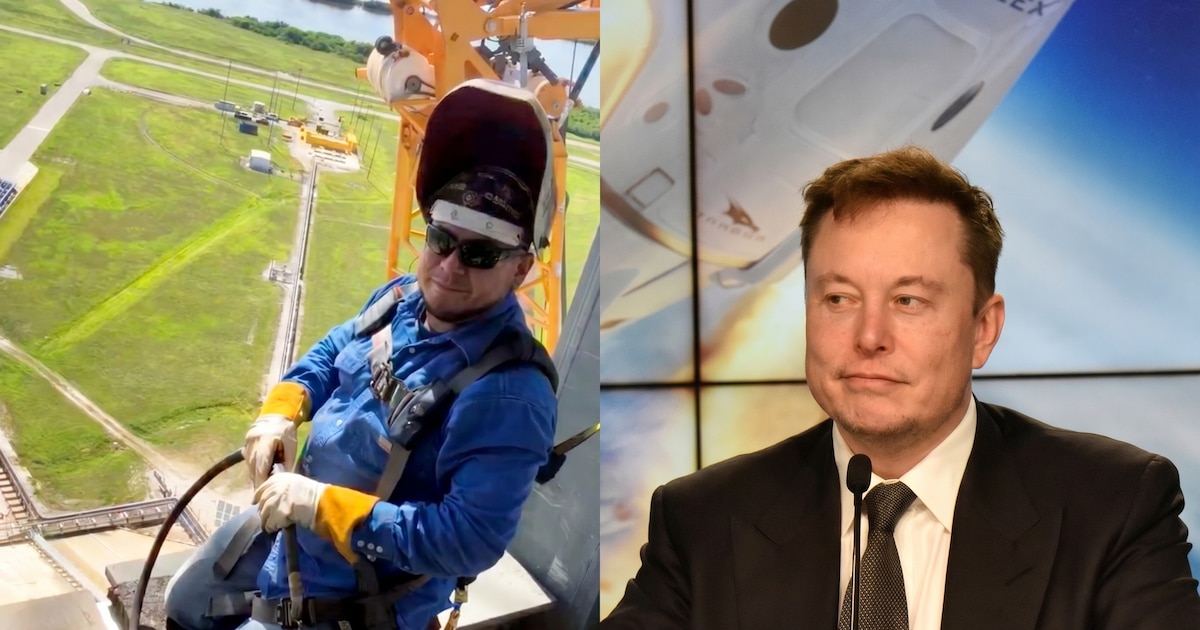
While SpaceX has not yet conducted an initial public offering (IPO) on Wall Street, reports of significant individual wealth generated through the company’s rising valuation have highlighted the growing influence of private equity markets. The story of a Mexican immigrant who transitioned from a welder to a millionaire through the acquisition of SpaceX shares underscores a shifting economic landscape where private company ownership is increasingly accessible to a broader range of investors via secondary markets.
SpaceX, the aerospace manufacturer founded by Elon Musk, remains a private entity. Despite various reports in Spanish-language media suggesting a “Wall Street debut,” the company has not listed its shares on any public exchange. Instead, the wealth described in recent reports stems from the company’s massive valuation increases and the ability of certain investors to purchase shares through private tender offers and secondary market platforms.
According to Bloomberg, SpaceX’s valuation reached an estimated $210 billion following a recent tender offer, marking a significant increase from previous funding rounds. This surge in value has allowed early investors and those participating in secondary trades to see substantial returns, even without the company going public.
How do investors acquire SpaceX shares without an IPO?
The ability to own a piece of a company like SpaceX without a public listing is made possible through secondary markets. In a traditional IPO, a company creates new shares and sells them to the public to raise capital. In a secondary market transaction, existing shareholders—often employees or early venture capital investors—sell their existing shares to new buyers.
Platforms such as EquityZen, Forge Global, and Hiive have emerged to facilitate these trades. These marketplaces allow “accredited investors” to purchase stakes in high-growth, private companies that would otherwise be inaccessible. For an individual to participate, they typically must meet specific financial criteria set by the U.S. Securities and Exchange Commission (SEC), which generally includes having a net worth exceeding $1 million, excluding their primary residence, or meeting specific income thresholds.
In the case of the Mexican immigrant reported by various outlets, the wealth accumulation appears to be a result of timing and access to these private equity channels. By acquiring shares when the company was valued at a lower threshold and holding them as the valuation climbed toward the $210 billion mark, investors have been able to realize massive capital gains. This process is distinct from public stock trading, as these shares are not liquid and cannot be sold instantly on an exchange like the New York Stock Exchange.
The rise of the secondary market for private tech giants
The phenomenon of “pre-IPO wealth” is becoming a defining characteristic of the modern technology sector. Historically, the most significant wealth creation occurred after a company went public. However, as companies like SpaceX, ByteDance, and Stripe remain private for longer periods, the secondary market has become a critical venue for liquidity and wealth generation.
This shift has created a two-tiered system of wealth. On one side are the general public, who must wait for an IPO to participate in a company’s growth. On the other are accredited investors and employees who can build significant fortunes while the company is still in its private phase. This trend is driven by the increasing complexity and scale of modern tech companies, which require more capital and longer development cycles before they are ready for the scrutiny of public markets.

Industry analysts note that the secondary market provides a vital “escape valve” for employees. In companies where the IPO is delayed for years, employees often hold “paper wealth”—millions of dollars in stock options that cannot be used to pay bills or buy homes. Secondary tender offers allow these employees to sell a portion of their holdings to outside investors, providing them with actual cash while allowing the company to continue its operations without the regulatory burdens of being a public corporation.
Why SpaceX’s valuation continues to climb
The astronomical valuation of SpaceX is not merely speculative; it is tied to several core business segments that have demonstrated significant market dominance. The company’s primary drivers include the Starlink satellite internet constellation and its dominance in the commercial launch market.
- Starlink: This division aims to provide high-speed, low-latency broadband internet globally. As more satellites are deployed, the potential for recurring subscription revenue grows.
- Launch Services: SpaceX’s Falcon 9 and Falcon Heavy rockets have become the industry standard for reliability and cost-effectiveness, securing numerous contracts with NASA and private satellite operators.
- Starship Development: The ongoing development of the Starship launch system represents a long-term bet on deep-space exploration and heavy-lift capabilities, which could fundamentally change the economics of space travel.
Market analysts at Reuters have noted that the company’s ability to reuse rocket boosters has significantly lowered the cost of access to space, creating a competitive moat that is difficult for traditional aerospace firms to breach. This operational efficiency is a primary reason why private investors are willing to pay premium prices for shares in secondary transactions.
The risks of investing in non-publicly traded companies
While the stories of sudden wealth are compelling, financial experts urge caution regarding private equity investments. Investing in companies like SpaceX carries a significantly different risk profile than investing in blue-chip stocks on the public market.
One of the primary risks is liquidity. When you buy shares of Apple or Microsoft, you can sell them in seconds. When you buy shares in a private company through a secondary market, your capital may be locked up for years. You are dependent on the company choosing to go public, being acquired, or participating in a tender offer to realize your gains.

Furthermore, there is a lack of transparency. Public companies are required by the SEC to file quarterly and annual reports (10-Qs and 10-Ks) that provide detailed financial data. Private companies have much fewer disclosure requirements, meaning investors often make decisions based on limited information regarding the company’s actual debt, cash flow, and profit margins.
Valuation volatility is another factor. The $210 billion valuation reported in 2024 is based on what investors are willing to pay in a specific transaction; it is not a guaranteed market price. If the aerospace market shifts or if SpaceX faces regulatory hurdles with the Federal Aviation Administration (FAA), that valuation could drop rapidly without the ability for investors to exit their positions.
Comparison of Public vs. Private Investment Characteristics
| Feature | Public Markets (e.g., Tesla) | Private Markets (e.g., SpaceX) |
|---|---|---|
| Accessibility | Available to all retail investors. | Generally restricted to accredited investors. |
| Liquidity | High; shares can be sold instantly. | Low; capital is often locked for years. |
| Transparency | High; mandated SEC filings and audits. | Low; limited public financial disclosure. |
| Volatility | Daily price fluctuations based on news. | Valuation updates occur infrequently. |
| Regulatory Oversight | Strict SEC reporting requirements. | Less stringent reporting requirements. |
Understanding these distinctions is essential for anyone looking to emulate the success of high-net-worth individuals in the private sector. The path from a blue-collar profession to millionaire status through private equity is a high-stakes endeavor that requires both significant capital and a high tolerance for risk.
The next major milestone for SpaceX will be any official filing regarding a potential IPO or a new round of institutional funding, which will provide more clarity on its long-term capital structure. Investors and analysts will be watching for updates from the SEC and company statements regarding its roadmap for public listing.
Do you believe private equity markets are becoming too disconnected from the average investor? Share your thoughts in the comments below and share this article with your network.
Worth a look