
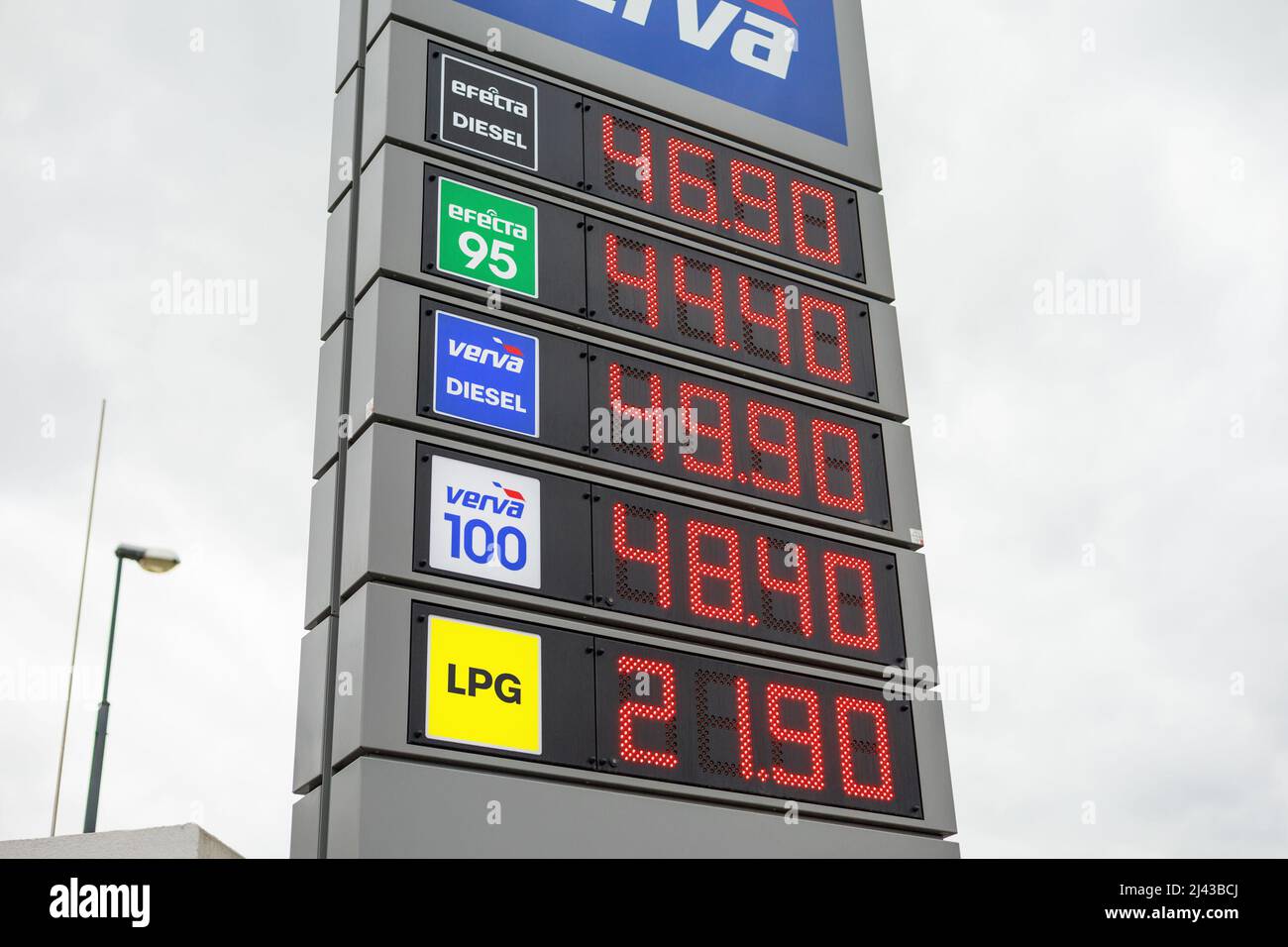
The traditional strategy for Czech drivers—exiting the highway to find cheaper fuel at regional stations—has effectively vanished. A series of aggressive government interventions aimed at stabilizing volatile energy markets has narrowed the pricing gap between motorway service stations and rural pumps to nearly zero.
This shift follows a period of extreme price volatility triggered by geopolitical instability in the Middle East, specifically the closure of the Strait of Hormuz. To prevent a total collapse of consumer affordability, the administration of Prime Minister Andrej Babiš implemented a strict regime of price caps and tax reductions that fundamentally altered how fuel is priced across the Czech Republic.
The resulting market equilibrium means that the once-common price discrepancies, which could reach as much as 7 CZK per liter, have been largely erased. For the average motorist, the financial incentive to detour for fuel has disappeared, as the state-mandated margins now force a level of pricing uniformity across all fuel distribution points.
The Mechanism of Price Uniformity
The erasure of the price gap is not a result of organic market competition, but rather a direct consequence of government mandates. On April 2, 2026, the Czech government held an extraordinary meeting to address skyrocketing fuel costs caused by conflicts in the Middle East according to the Government of the Czech Republic.

Central to this strategy was the capping of fuel distributors’ margins. The government set a maximum margin for fuel retailers at 2.50 CZK per litre
for both petrol and diesel as reported by Radio Prague International. By limiting the profit margin that a station can add to the wholesale price, the government removed the ability of highway stations to charge the premium prices typically associated with their high-traffic locations.
the government reduced the excise duty on diesel to lower the base cost for consumers. These measures, combined with the margin cap, have forced a convergence of prices. Recent market mapping during the 2026 Easter period confirmed that prices are now nearly identical regardless of whether a driver is at a motorway hub or a village pump according to Aktuálně.cz.
Volatility and the ‘Price Ceiling’ Cycle
Despite the uniformity between stations, the overall cost of fuel remains high and subject to frequent adjustments. The Ministry of Finance continues to adjust the maximum allowable prices based on wholesale averages from major providers such as MOL, Orlen, and Čepro.
For instance, on April 28, 2026, the government announced another increase in the price caps. The maximum price for diesel rose by 0.52 CZK to 44.15 CZK per litre, while the petrol cap increased by 0.24 CZK to 42.79 CZK per litre per Radio Prague International. This “ceiling” approach ensures that while no single station can gouge customers, the prices still reflect the rising cost of crude oil on the global market.
The impact of these fluctuations has been severe. Some reports indicate that diesel prices in the Czech Republic surged by nearly 50% following US and Israeli military actions in Iran, while petrol prices rose by approximately 25% according to Aktuálně.cz.
Summary of Fuel Pricing Interventions (2026)
| Measure | Detail | Objective |
|---|---|---|
| Retail Margin Cap | Maximum 2.50 CZK per litre | Prevent price gouging at high-traffic stations |
| Excise Duty Reduction | Reduced tax on diesel fuel | Lower the base cost of diesel for consumers |
| Maximum Price Limits | Regularly updated by Ministry of Finance | Align retail prices with wholesale market averages |
Impact on Driver Behavior and the Economy
The disappearance of the “highway premium” has fundamentally changed the psychology of refueling in the region. For years, the prevailing wisdom was that the time and fuel spent exiting a highway to find a cheaper regional station was a worthwhile investment. With the current price parity, that calculation no longer holds.
However, this stability comes with a caveat. While the difference between stations has vanished, the absolute price remains a burden. The government has extended these relief measures—including the reduced diesel tax and margin regulations—through May 31, 2026, to combat the ongoing instability caused by the closure of the Strait of Hormuz according to iDnes.cz.
Economists warn that while these caps protect consumers in the short term, they may create artificial pressures on fuel distributors. If the wholesale price continues to rise while margins remain frozen, some smaller stations could face liquidity issues, although the government’s current focus remains squarely on preventing social unrest driven by fuel inflation.
What Happens Next?
The current regime of price ceilings and tax breaks is scheduled to remain in effect until May 31, 2026. The Czech government’s next critical checkpoint will be the review of these measures at the complete of May to determine if the Middle Eastern energy crisis has stabilized enough to allow a return to a free-market pricing model or if further extensions of the margin caps are required.
We wish to hear from you. Have you noticed a change in fuel pricing during your recent travels through Central Europe? Share your experience in the comments below.