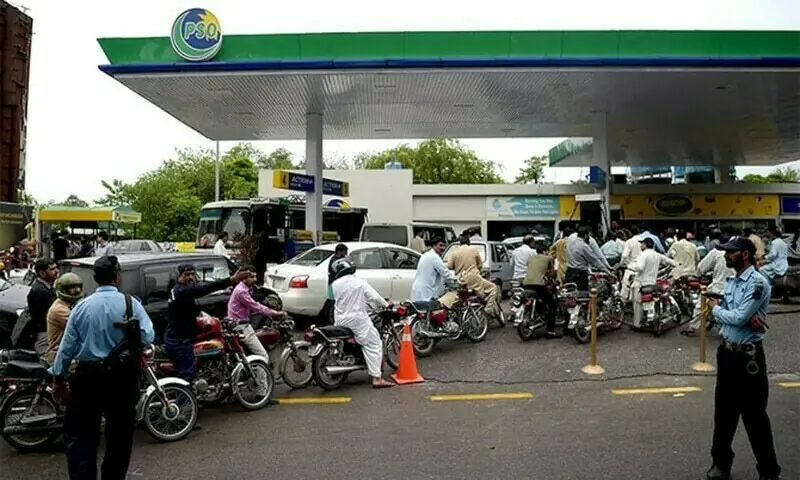
Pakistan Fuel Supply: Addressing Recent Shortage Concerns and Understanding the Regulatory Landscape
Recent reports have sparked anxieties regarding a potential fuel shortage across Pakistan. However, the oil and Gas Regulatory Authority (Ogra) has moved to quell these concerns, asserting that the national fuel supply situation is currently “fully under control.” This article provides a thorough overview of the situation, dissecting the initial reports, Ogra’s response, the underlying regulatory factors, and the broader economic context impacting Pakistan’s fuel market.
Initial Reports and Industry Concerns
the concerns originated from reports indicating that oil companies were anticipating a nationwide fuel shortage. These reports cited newly implemented taxation requirements by the Sindh provincial government as a primary contributing factor. Specifically, the new regulations were alleged to be causing delays in the clearance of fuel shipments at Pakistani ports, coupled with increased costs that oil companies were hesitant to pass on to consumers.
The Oil Marketing Association of Pakistan (OMAP) formally approached the federal energy ministry, requesting government intervention to resolve the emerging issues. This escalation underscored the seriousness of the concerns within the industry and the potential for disruption to the fuel supply chain.
Ogra’s Reassurance and Current Status
Responding swiftly to the reports, Ogra issued a statement dismissing the claims of an impending fuel shortage. The authority acknowledged that some clearance delays had been experienced with imported petroleum products, but emphasized that these issues have since been resolved.
Ogra specifically highlighted the recent clearance of a Pakistan State Oil (PSO) diesel vessel and a petrol vessel belonging to Wafi Energy, the majority shareholder of Shell Pakistan Ltd (SPL), as evidence of the normalization of supply. The statement concluded by affirming that fuel supply operations across the country are continuing without interruption, and business is proceeding as usual.
Understanding the Regulatory Framework and Taxation
Pakistan’s petroleum sector is subject to a complex web of taxes and levies, considerably impacting fuel prices and the financial viability of oil companies. While General Sales Tax (GST) currently remains at zero for all petroleum products, the government levies substantial charges through the petroleum levy and climate support levy.
Currently, the government collects approximately Rs79.50 per litre on diesel and Rs80.52 per litre on petrol and high-octane products under these levies,including a Rs2.50 per litre climate support levy. Additionally, customs duties of around Rs17-18 per litre are applied to both petrol and High-Speed Diesel (HSD), irrespective of whether the fuel is locally produced or imported. Distribution and sales margins for oil companies and dealers add another Rs17 per litre to the final price.
these levies represent a significant revenue stream for the government. In Fiscal Year 2025, the petroleum levy generated approximately Rs1.161 trillion, and projections indicate an anticipated increase of around 27% to Rs1.470 trillion during the current fiscal year.
Recent Price adjustments and Their Impact
In a recent move, the government marginally reduced the prices of both High-Speed Diesel (HSD) and petrol. The ex-depot price of HSD was reduced by Rs1.39 per litre to Rs275.41, while petrol prices decreased by Rs5.66 to Rs263.02 per litre.
These adjustments, while modest, have varying impacts across different sectors. HSD, the primary fuel for the transportation sector, influences the cost of goods and services due to its widespread use in heavy vehicles, trains, and agricultural machinery. However, the benefits of price reductions are ofen not fully passed on to consumers by transporters. Petrol, predominantly used by private vehicles, directly affects the budgets of middle and lower-middle-class households.
Fuel Consumption Patterns and market Dynamics
Petrol and HSD constitute the bulk of pakistan’s fuel consumption, with monthly sales averaging between 700,000 and 800,000 tonnes each.Kerosene consumption, in contrast, remains significantly lower, at around 10,000 tonnes per month. This disparity highlights the reliance on petrol and diesel for both transportation and industrial activities.
The stability of the fuel supply is crucial for sustaining economic activity. Disruptions, even temporary ones, can have cascading effects on various sectors, impacting inflation, transportation costs, and overall economic growth.
Evergreen Section: The Future of Pakistan’s Energy Security
Pakistan’s long-term energy security hinges on diversifying its energy sources and reducing its dependence on imported fossil fuels. Investing in renewable energy technologies – solar, wind, and hydropower – is paramount. Furthermore, improving energy efficiency across all sectors, from industry to
Worth a look