
As healthcare spending continues to climb globally, health plans are facing an unprecedented struggle to manage costs without disrupting the essential relationship between providers and members. The financial pressure is mounting, driven by the persistence of improper payments and the tightening constraints of regulatory benchmarks. For many payers, the traditional, reactive approach to managing these costs is no longer sustainable.
Central to this challenge is the need for future-proofing payment integrity. Payment integrity refers to the processes used by health plans to ensure that healthcare claims are paid accurately, preventing overpayment, fraud, and waste. When these systems are fragmented, payers often find themselves in a cycle of “pay and chase,” where errors are identified only after the funds have left the organization, leading to costly and administratively heavy recovery efforts.
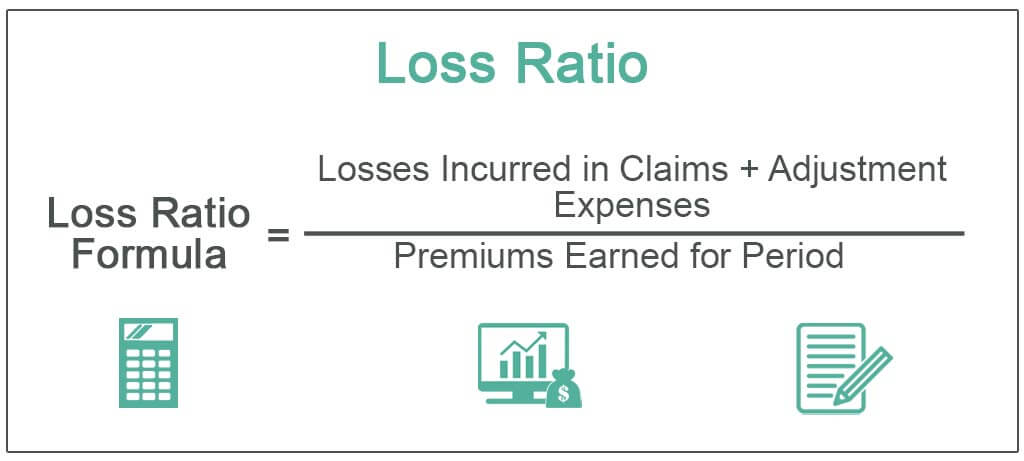
The urgency of this shift is underscored by the strict requirements of the Medical Loss Ratio (MLR). Under the Affordable Care Act, health insurance issuers must ensure that a significant portion of premium revenue is spent on clinical services and quality improvement rather than administrative overhead. Specifically, the law mandates that payers allocate at least 80% to 85% of premium dollars to medical care according to the Centers for Medicare & Medicaid Services (CMS).
Failure to meet these minimum standards is not merely an operational lapse; it has direct financial consequences. If an issuer fails to meet the applicable MLR standard in a given year, they are required to provide rebates to their customers as mandated by CMS. This creates a high-stakes environment where accuracy in claim processing is the only way to maintain financial stability and corporate reputation.
The Shift Toward Prepayment and AI-Driven Integrity
To combat rising administrative loss ratios (ALR) and MLR pressures, the industry is moving toward “shifting processes to the left.” In healthcare billing, this means moving interventions from the “post-pay” phase (after the claim is paid) to the “pre-pay” phase (before the payment is issued). By intervening earlier in the claim lifecycle, payers can avoid improper payments entirely rather than attempting to recover them later.
This evolution is being accelerated by a new wave of AI-powered payment integrity solutions. Traditional AI is being superseded by advanced automation, predictive analytics, and generative AI, which allow payers to proactively review claims and streamline operations. These tools are designed to minimize inefficiencies and enhance collaboration with providers, which is critical for maintaining trust while reducing costs as detailed by Codoxo.
The integration of “agentic AI” is further transforming the landscape. For instance, strategic partnerships, such as the one announced on December 8, 2025, between MedeAnalytics and Basys.ai, are focusing on combining enterprise healthcare intelligence with agile, explainable AI to improve utilization management and payment integrity according to MedeAnalytics. Such collaborations aim to elevate the speed and accuracy of medical necessity reviews and documentation accuracy, which are foundational to a successful payment integrity strategy.
Understanding the Impact of MLR on Operational Strategy
The Medical Loss Ratio is more than just a regulatory hurdle; it is a driver of how healthcare organizations must innovate. Because the Affordable Care Act limits administrative costs to roughly 15-20% of premium revenue, any inefficiency in how claims are processed directly eats into the allowed administrative budget per Codoxo.
When a payer relies on fragmented, reactive systems, the administrative cost of recovering an overpayment often outweighs the value of the recovered funds. By uniting prepay and postpay efforts through a single, AI-driven framework, payers can achieve several critical goals:
- Reduction of Administrative Overhead: Automating the detection of fraudulent or erroneous claims reduces the manual labor required for audits.
- Improved Provider Alignment: Clearer, faster prepayment interventions reduce the friction caused by post-payment clawbacks, which often strain payer-provider relationships.
- Compliance Certainty: Highly accurate claim processing ensures that payers consistently meet the 80-85% spending threshold on patient care, avoiding the necessity of issuing policyholder rebates.
The Role of Data Management in Cost Containment
Effective payment integrity is impossible without a unified data strategy. The ability to surface insights from clinical, financial, and administrative data allows payers to identify patterns of improper payment before they become systemic issues. Modern solutions are now leveraging multi-cloud frameworks—including AWS and Snowflake—to integrate with existing systems and deploy capabilities rapidly, often within 4 to 6 weeks as reported by MedeAnalytics.
This technological shift allows for “explainable AI,” where the reasoning behind a claim denial or a request for further documentation is transparent. This transparency is essential for meeting stringent security and regulatory requirements, including HIPAA, SOC 2, and HITRUST according to MedeAnalytics.
Key Takeaways for Health Plan Leaders
- Prepay is Priority: Shifting interventions to the start of the claim lifecycle prevents the “pay and chase” cycle and reduces administrative friction.
- AI Over Automation: Moving from simple rules-based automation to predictive and agentic AI allows for more nuanced detection of improper payments.
- MLR as a Guide: Maintaining a strong MLR compliance strategy is essential to avoid mandatory rebates and ensure financial stability.
- Unified Data: Integrating clinical and claims data is the only way to achieve the accuracy required for modern payment integrity.
As the healthcare industry continues to grapple with rising costs, the focus will remain on how to rethink the timing and method of intervention across the claim lifecycle. The goal is a system where payment integrity is not a reactive audit function, but a proactive, AI-driven component of the overall care delivery chain.
For those seeking deeper insights into these strategies, the eBook “Future-proofing payment integrity” explores the necessity of rethinking intervention points to ensure long-term operational viability.
The industry continues to monitor regulatory updates from the Centers for Medicare & Medicaid Services, with the most recent MLR guidance page modified on March 13, 2026 via CMS. We encourage health policy experts and payer leaders to share their perspectives on the transition to AI-driven integrity in the comments below.