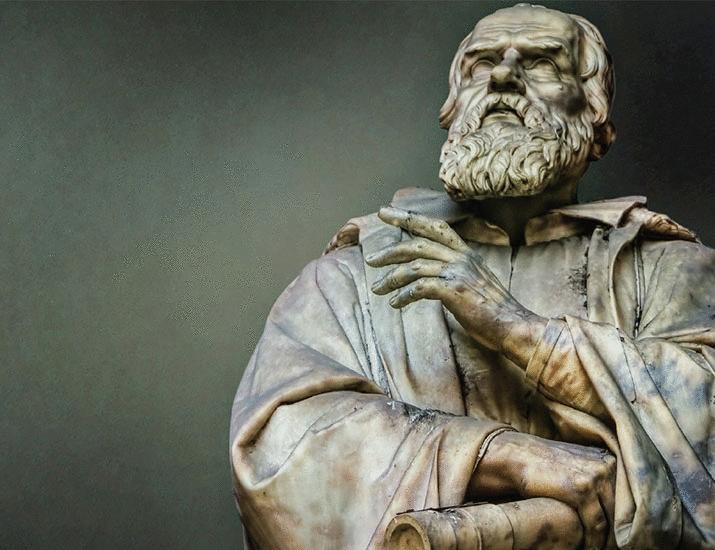
In the popular imagination, the history of science is often told as a series of solitary breakthroughs—a lone genius peering through a lens and suddenly unveiling the secrets of the cosmos. We envision figures like Galileo Galilei as isolated actors whose discoveries changed the world through sheer intellectual force. However, historical scrutiny suggests a far more complex and socially driven reality. The ascent of a scientific icon is rarely a solo flight; it is a carefully constructed narrative, shaped by the very people surrounding the discoverer.
This tension between pure discovery and the social construction of reputation is the central focus of recent scholarly examination into the 17th century. The discourse surrounding Galileo’s Fame: Science, Credibility, and Memory in the Seventeenth Century highlights a critical shift in how we understand the history of science. Rather than focusing solely on the recipient of acclaim, modern historical analysis is turning its gaze toward the “brokers” of fame—the contemporaries, institutions, and social networks that actively managed and disseminated scientific credibility.
Understanding how reputation is manufactured is not merely an exercise in historical curiosity. It provides a lens through which we can view the enduring relationship between scientific achievement and the social structures that validate it. As we explore the mechanics of 17th-century scientific fame, we find a landscape that was as much about political and institutional leverage as it was about astronomical observation.
The Architecture of Scientific Reputation
For much of the early modern period, scientific reputation was not a guaranteed byproduct of discovery. In the seventeenth century, fame was often described as volatile, ambiguous, and elastic. A discovery could be contested, ignored, or even suppressed, depending on the social and political climate. This reality necessitated the rise of “brokers”—individuals and groups who recognized that the fame of a scientist could be leveraged for broader purposes.
These brokers played a fundamental role in shaping the course of a scientific career. They understood that elevating a scientist’s status could, in turn, elevate the status of their patrons, their cities, or their universities. By managing the narrative of a scholar’s life and work, these actors were able to transform raw data and observations into a lasting legacy of credibility. This process of “appropriating fame” meant that the rise of a figure like Galileo was not a matter of course, but a result of deliberate efforts to shape his public and professional standing.
This social dimension of science challenges the traditional “great man” theory of history. It suggests that credibility is not an inherent quality of a person or an idea, but a social currency that is traded, managed, and protected by a network of stakeholders. In this sense, the history of science is also a history of communication, influence, and the strategic management of memory.
A Pivotal Window: 1609 to 1610
The period between the summer of 1609 and the winter of 1610 serves as a critical case study in this dynamic. During these months, the astronomical landscape was being fundamentally rewritten. The observations of the rugged lunar surface and the discovery of Jupiter’s four largest moons provided the empirical foundation for a new understanding of the heavens.
While many individuals were turning telescopes toward the night sky during this era, the distinction between those who made observations and those who achieved “posthumous glory” lies in the management of their findings. The ability to move from a private observation to a widely recognized scientific truth required more than just accurate measurements; it required a successful engagement with the contemporary information networks.
The rapid dissemination of these celestial findings demonstrates how quickly a reputation could be built when the right observers met the right brokers. The transition from the initial sighting of Jovian moons to their integration into the scientific canon was a period of intense competition and intense scrutiny, where the stakes of being “right” were inextricably linked to the stakes of being “famous.”
Institutional Stakes and the Value of Fame
The pursuit of scientific fame was never purely an individual endeavor; it was deeply embedded in the interests of larger institutions. In the seventeenth century, the reputation of a university or a city was often tied to the prestige of its scholars. A scientist’s success was a powerful tool for institutional branding, capable of attracting students, funding, and political influence.
When a scholar achieved widespread acclaim, the institutions that supported them stood to profit significantly. This created a symbiotic relationship between the scientist and the institution. The university provided the platform and the legitimacy, while the scientist provided the intellectual capital that enhanced the institution’s standing. Many stakeholders had a vested interest in ensuring that scientific discoveries were framed in a way that maximized their impact on the public and academic consciousness.
This institutional involvement underscores the fact that science has always been a social enterprise. The quest for knowledge is conducted within frameworks of power, where the validation of a truth is often as important as the truth itself. The ability of an institution to claim a “great scientist” as its own was a key component of its social and political authority during the early modern period.
Why Memory Matters in Science
The final component of this historical inquiry is the concept of memory. Science does not exist in a vacuum; it is a cumulative process that relies on the ability of successive generations to remember and build upon previous work. However, memory is not a perfect recording of events; it is a selective process that favors certain narratives over others.

The “memory” of science is shaped by what is recorded, what is celebrated, and what is allowed to fade into obscurity. By studying how the fame of seventeenth-century scientists was constructed, we gain insight into how scientific history is written. We see how certain figures are canonized while their contemporaries—those who may have made similar observations but lacked the same brokers—are relegated to the footnotes of history.
This selective memory serves to create a streamlined, often simplified, version of scientific progress. It reinforces the idea of inevitable advancement and singular genius, often obscuring the messy, collaborative, and highly political reality of how scientific knowledge is actually produced and sustained. Understanding this process is essential for anyone seeking to grasp the true nature of scientific progress and the social forces that dictate what we remember as “truth.”
Key Takeaways: The Social Construction of Science
- Fame as a Managed Asset: Scientific reputation in the 17th century was often shaped by “brokers” rather than being a direct result of discovery alone.
- Institutional Benefits: Universities and cities actively sought to associate themselves with famous scientists to enhance their own prestige and power.
- The Role of Timing: The period of 1609–1610 was a critical juncture where astronomical observations met the social mechanisms of fame.
- Selective Memory: The scientific canon is shaped not just by accuracy, but by the social and institutional processes that determine which discoveries are remembered.
As we continue to examine the intersection of science and society, the lessons of the seventeenth century remain strikingly relevant. The mechanisms of credibility, the influence of institutional interests, and the power of narrative continue to shape the landscape of modern scientific discourse. The story of Galileo is not just a story of a telescope; it is a story of how we decide what—and who—matters in the history of human knowledge.
For further updates on historical scientific research and upcoming academic reviews, please monitor our Science and History sections.
What are your thoughts on the role of social reputation in scientific achievement? Do you believe modern science is as insulated from these pressures as we claim? Share your comments below and join the discussion.